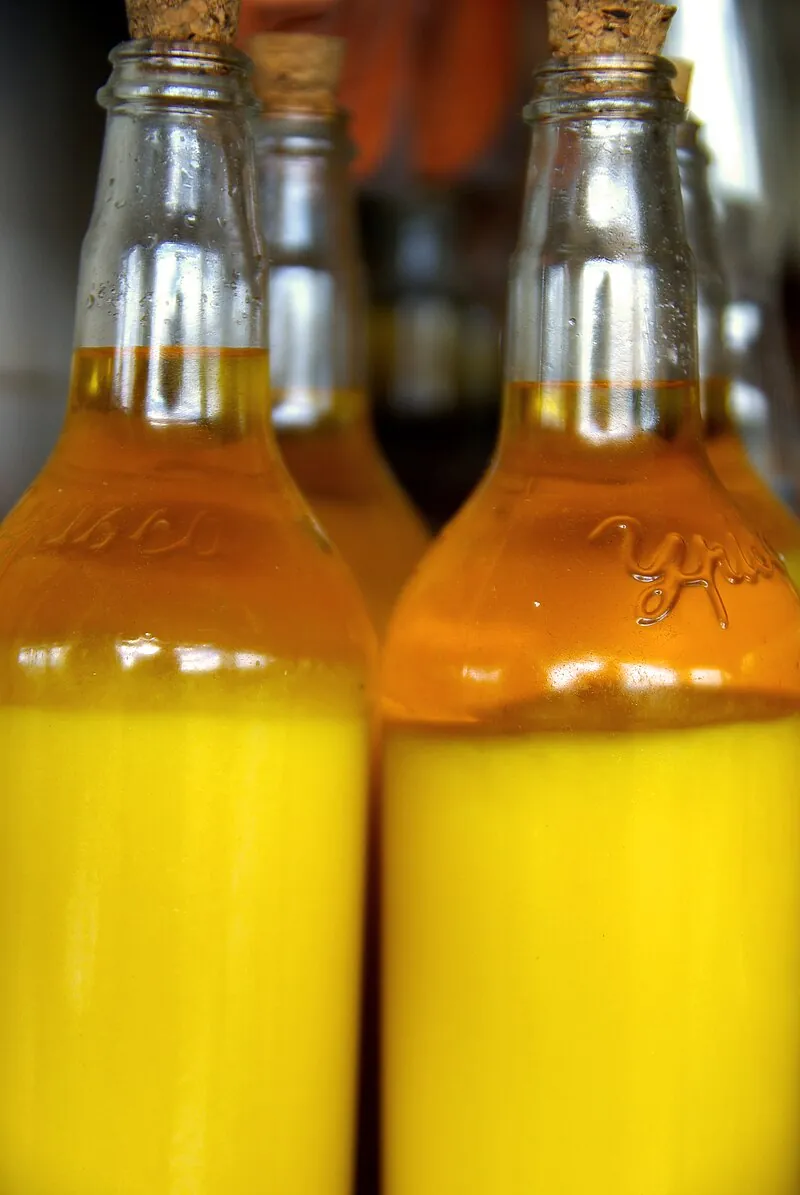
Manteiga de garrafa, literally "butter in a bottle," is a deeply flavoured clarified butter produced in the Sertão, the semi-arid interior of Brazil's Northeast region. Made by slowly rendering whole butter until all water evaporates and the milk solids are cooked out, this amber-gold fat has been central to Northeastern Brazilian cooking for centuries. It is shelf-stable without refrigeration for weeks, pourable at room temperature, and carries a rich, slightly tangy aroma that comes from the lightly fermented raw cream used in traditional production. Understanding manteiga de garrafa means understanding the ingenuity of Sertanejo food culture, where preservation and flavour developed together out of necessity in a hot, remote landscape.
What Is Manteiga de Garrafa?
At its most basic, manteiga de garrafa is clarified butter: whole butter with its water content (typically around 16%) and milk solids removed, leaving pure butterfat. However, the traditional Northeastern version differs from simple clarified butter in one important way. The cream used is often slightly soured or naturally acidic before churning, which gives the final product a more pronounced, almost funky aroma compared to mild European clarified butter. The rendering process is also typically slower and carried out at a lower temperature than standard ghee production, which further concentrates the flavour without burning the solids.
The finished product is liquid and pourable at temperatures above roughly 32°C, which in the Sertão means it is liquid for most of the year. It is typically stored in glass bottles or ceramic pots, hence the name. The fat content is essentially 100% (compared to regular butter at about 80% fat), meaning it has a very high smoke point, typically around 250°C, which makes it excellent for frying and sautéing.
How It Differs from Ghee and Regular Butter
Versus Regular Butter
Regular European-style butter contains roughly 80% fat, 16 to 18% water, and 2 to 3% milk solids (proteins and lactose). That water content causes butter to spatter and burn at high temperatures, limits its shelf life without refrigeration, and makes it unsuitable for very high-heat cooking. Manteiga de garrafa removes all of that water and those solids, leaving only the fat. The result is a product that stores without refrigeration for several weeks (longer in cooler climates), withstands very high cooking temperatures without burning, and delivers a much more concentrated buttery flavour per gram.
Versus Ghee
Ghee, the clarified butter of South Asian cooking, is produced by a similar process: butter is heated until the water evaporates and the milk solids separate and are strained off. However, ghee is typically made from cream or butter that has not been acidified, which produces a cleaner, more neutral flavour. Traditional Indian ghee is often simmered until the milk solids are lightly toasted, adding a nutty, caramel-like aroma. Manteiga de garrafa, by contrast, gets its distinctive flavour primarily from the fermentation of the cream before churning, giving it a tangier, more rustic character. The two products are functionally similar but taste noticeably different.
How Manteiga de Garrafa Is Made
Traditional production in the Sertão follows a process that has changed little in generations. Fresh milk is collected and left to rest so the cream rises to the surface (a process called nata formation). The cream is skimmed and allowed to ferment slightly at room temperature for a day or two, developing acidity and a complex flavour profile. The acidified cream is then churned to produce butter, which is already more flavourful and tangy than butter made from fresh cream.
The next stage is the rendering. The butter is placed in a heavy pot and heated gently over low to medium heat. As it melts, the water begins to evaporate (visible as sputtering and foam on the surface). The cook stirs periodically and watches carefully: once the sputtering subsides, the water has mostly evaporated. The milk solids sink to the bottom. At this point the fat is strained through a fine cloth or cheesecloth and poured directly into bottles while still hot. It sets to a clear, golden liquid as it cools. Total production time from fresh cream to finished product is typically two to three days when counting the fermentation period.
Its Role in Northeastern Brazilian Cuisine
Manteiga de garrafa is not a condiment or a finishing fat in Northeastern cuisine. It is the primary cooking fat, used the way olive oil is used in Mediterranean cooking or lard in traditional Central European cooking. It flavours beans (feijão carioca and feijão verde), fries eggs, sautés dried meat (carne de sol and carne seca), and is drizzled over tapioca crepes, couscous nordestino (a steamed cornmeal dish distinct from North African couscous), and baião de dois, the beloved rice-and-bean combination dish from Ceará and Piauí states.
In the context of baião de dois, manteiga de garrafa is not optional. The dish, made with rice, dried black-eyed peas, coalho cheese, and sun-dried meat, is finished with a generous drizzle of the fat, which pulls all the flavours together and adds a richness that no other fat quite replicates. Chefs such as Helena Rizzo and Rodrigo Oliveira have brought Sertanejo ingredients to high-end Brazilian cooking, and manteiga de garrafa has become one of the most recognisable markers of that regional identity.
Nutritional Profile and Shelf Life
As a pure animal fat, manteiga de garrafa is almost entirely saturated and monounsaturated fat. A tablespoon (approximately 14g) delivers around 120 calories and 14g of fat, with essentially no protein, carbohydrate, or lactose. Because the milk proteins and lactose have been removed during rendering, many people with lactose intolerance tolerate it well, though those with cow's milk protein allergy should consult a clinician. Unopened and stored away from direct sunlight, it keeps at room temperature for four to six weeks in Brazil's warm climate; refrigerated, it lasts several months.
Where to Buy Manteiga de Garrafa
Inside Brazil, manteiga de garrafa is sold in supermarkets throughout the Northeast and in Brazilian specialty food shops across the country. Brands including Aviação, Betânia, and São Francisco produce commercially bottled versions widely available in 200ml and 500ml glass bottles. Outside Brazil, it can be found in Brazilian import shops in cities with significant Brazilian communities, including London, Lisbon, Miami, New York, and Toronto. Online retailers including Amazon Brazil ship within Brazil, and some specialist importers in Europe and North America stock it.
If commercial manteiga de garrafa is unavailable, a reasonable substitute can be made at home by gently rendering good-quality unsalted butter from grass-fed cows (such as Kerrygold or President) over low heat for 25 to 35 minutes until the milk solids have settled and the water has evaporated. The result will lack the fermented tang of traditional Sertanejo production but will deliver a similar high-smoke-point clarified butter with a mild, clean flavour.
Cooking Tips
- Use it anywhere you would use clarified butter or ghee: scrambled eggs, sautéed vegetables, fried plantains, and bean dishes all benefit from its flavour.
- A drizzle over cooked rice or couscous nordestino just before serving is the simplest way to appreciate its taste.
- Because it is 100% fat, a little goes a long way. Start with half the amount you would use of regular butter when substituting.
- Store it in a clean, sealed bottle away from light. Do not refrigerate if you want it to remain pourable; refrigerated, it will solidify to an opaque yellow solid similar in texture to coconut oil.
Related: Butter: Full-Fat vs Clarified vs Cultured | Dairy in Northeastern Brazil: A Regional Guide