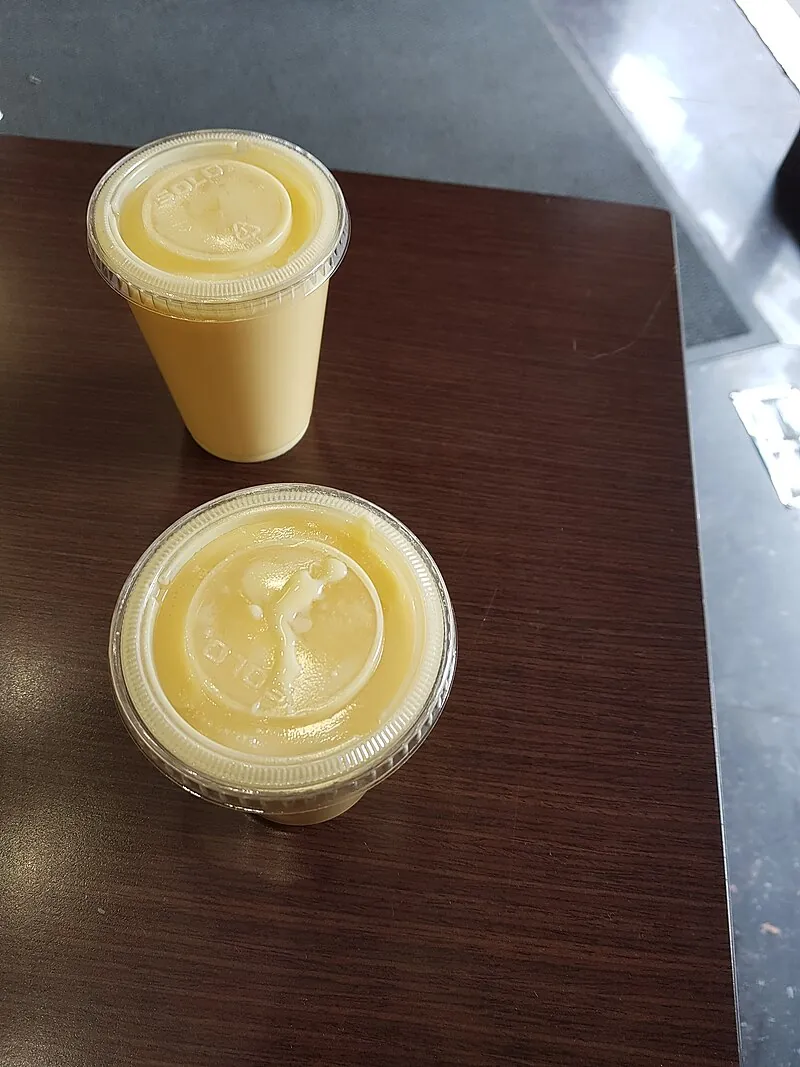
Every dairy-drinking culture that developed yogurt eventually discovered the same thing: thin it with water or milk, add a little salt or something sweet, and you have one of the most refreshing and nutritious drinks imaginable. Lassi in Punjab, ayran on the Anatolian plateau, doogh on the Iranian table, filmjölk in Swedish kitchens, and tan in Armenian villages: these drinks are not copies of one another. They evolved independently across thousands of years and diverged into distinct products with different textures, flavours, and cultural roles. But they share a common logic, and understanding that logic reveals why yogurt drinks are making a comeback in an era when consumers are rethinking sugary soft drinks.
Lassi: India and Pakistan's National Drink
Lassi originates in the Punjab region, spanning what is now northwest India and Pakistan. The base is always full-fat yogurt, traditionally made from buffalo milk or whole cow's milk, blended with water and sometimes milk. The drink splits into two fundamental categories: sweet and salted.
Sweet Lassi
Sweet lassi is made by blending yogurt with sugar and water, then flavouring. The most internationally recognised version is mango lassi: yogurt blended with ripe Alphonso or Kesar mango pulp. Rose lassi uses rosewater and often a few drops of kewra (screwpine) essence, topped with cream and pistachios. Saffron lassi (kesar lassi) incorporates a few threads of saffron bloomed in warm milk, giving a golden colour and floral depth. These versions are closer to a drinking dessert than a beverage and can reach 300–400 kcal per large glass when made with full-fat yogurt and added sugar.
Salted and Masala Lassi
Salted lassi is thinner, more acidic, and considerably more refreshing in heat. Fine sea salt, sometimes cumin powder (jeera), and occasionally a pinch of black salt (kala namak, with its characteristic sulphurous note) are blended into yogurt diluted with cold water. Masala lassi adds chaat masala (a spice blend containing amchur, cumin, coriander, and black pepper), making it tangy, complex, and intensely savoury. This version is consumed as a digestive alongside heavy meals.
Punjabi Lassi: The Original
Traditional Punjabi lassi differs from blender versions in one important way: it is made by churning full-fat yogurt in a vessel with a wooden hand-churner (madani). The churning separates small globules of butter (makhan), which rise to the top. The drink beneath is less fatty than unchrned yogurt but retains a richness and slight frothiness from the churning process that a blender cannot replicate. In Punjab, the drink is served in clay cups (kulhads) that add an earthy mineral note.
How to Make Lassi at Home (5-Minute Blender Method)
For sweet mango lassi: blend 200g full-fat yogurt, 100ml cold water or milk, 100g ripe mango pulp (fresh or canned Alphonso), 1–2 tsp sugar or honey, and a pinch of cardamom for 30 seconds. Serve immediately over ice. For salted lassi: blend 200g yogurt, 150ml cold water, 1/4 tsp fine salt, 1/4 tsp ground cumin, and a few mint leaves. Serves one large glass.
Ayran: Turkey's Official National Drink
Ayran is the Turkish yogurt drink, and it occupies a more formal cultural position than lassi does in India: in 2013, the Turkish government under then-Prime Minister Erdogan declared ayran the "national drink" of Turkey, in a move widely interpreted as a cultural-political statement. It is served ubiquitously alongside kebabs, pide, and lahmacun across Turkey and is the standard non-alcoholic pairing for grilled meat.
Ayran is simpler than lassi. It contains three ingredients: yogurt, water, and salt. The ratio is typically 1 part yogurt to 1 part cold water, with a pinch of salt. It is thinner than lassi, with a clean, sour flavour and a minimal froth. Commercially bottled ayran (brands including Sütaş, Danone's Ayran Öz, and the contentious Coca-Cola product Ayran, which caused controversy in Turkey when it launched) adds stabilisers and CO2 to create a lightly carbonated version.
The Ayran Öz controversy (2014) is worth noting: when Coca-Cola launched a bottled ayran in Turkey, nationalist politicians called for a boycott, arguing that a foreign corporation should not be commercialising a national symbol. The episode illustrated how deeply the drink is embedded in Turkish cultural identity.
Dövme ayran is the whipped version, made by churning or blending until a thick foam forms. It is considered superior by traditionalists and is the version typically served in restaurants rather than poured from a bottle.
Doogh: Iran's Carbonated Yogurt Drink
Doogh (also spelled dogh or dugh) is the Iranian equivalent of ayran, but with two characteristic differences: it often contains dried or fresh mint, and it is frequently lightly carbonated, either naturally from minor fermentation or by adding sparkling water. The word doogh comes from the Persian for "milking," and the drink predates written records in the region.
Doogh is served cold, typically alongside chelow kebab (Persian saffron rice with grilled meat) or khoresh (stew) dishes. The mint adds an aromatic freshness that distinguishes it clearly from Turkish ayran. Commercial doogh brands in Iran (Kaleh, Pegah) are carbonated and shelf-stable; homemade versions are thinner and more sour. Afghan doogh (dogh) is essentially identical and is consumed across Central Asia under similar names.
Filmjölk: Sweden's Everyday Cultured Milk
Filmjölk is not a diluted yogurt drink in the same sense as lassi or ayran: it is a pourable cultured milk product, fermented at room temperature using Lactococcus cremoris strains that produce exopolysaccharides. These long-chain polysaccharides give filmjölk a characteristic mild viscosity: thicker than milk, thinner than yogurt, and gently stringy if you pour it slowly. It is mildly sour, with a fat content of around 3%, and is eaten for breakfast in Sweden with muesli, cereal, or crispbread. It is technically a fermented beverage as much as a food.
Tan: Armenia's Carbonated Yogurt Water
Tan is the Armenian yogurt drink, distinct from all the above because it typically uses sparkling mineral water rather than still water as the diluent. The result is a lightly fizzy, cold, salty drink that functions like a probiotic sparkling water. Commercially produced tan (brands including Jermuk and various Armenian regional producers) is sold in bottles across Armenia and in diaspora communities. It is considered a digestive and a summer refresher, and the carbonation is more integral to the drinking experience than the mere fizz of dövme ayran.
Nutritional Comparison: Why Yogurt Drinks Beat Soft Drinks
A 250ml serving of plain salted lassi or ayran made from full-fat yogurt diluted 1:1 with water provides approximately:
- 75–90 kcal (vs 105 kcal in 250ml of cola)
- 5–6g protein
- 150–200mg calcium
- Live lactic acid bacteria (Lactobacillus bulgaricus, Streptococcus thermophilus) with demonstrated gut health benefits
- Zero added sugar (in the salted versions)
- Significant hydration contribution from the high water content
The protein content in particular distinguishes yogurt drinks from most other cold beverages. A large (500ml) salted lassi provides 10–12g of protein alongside its hydration, making it functionally closer to a protein drink than a soft drink. In agricultural and pastoral communities across Asia, yogurt drinks have served this dual function for millennia: hydration and nutrition in a single vessel.
Sweet mango lassi or saffron lassi with added sugar is a different nutritional proposition entirely, closer to a milkshake, but the salted versions from Turkey to Punjab to Iran are among the most nutritionally efficient cold drinks available.
How to Make Each at Home
Ayran: Combine 150g full-fat plain yogurt, 150ml cold water, and 1/4 tsp fine salt in a blender. Blend for 20 seconds until frothy. Serve immediately over ice. For dövme ayran, blend for a full minute until the foam is thick and stable.
Doogh: Follow the ayran recipe, then add 5–6 fresh mint leaves (or 1/4 tsp dried mint) before blending. For a carbonated version, replace still water with cold sparkling water and stir rather than blend to preserve the bubbles.
Tan: Stir (do not blend) 100g plain yogurt into 200ml cold sparkling mineral water with 1/4 tsp salt. The result is more delicate and less frothy than ayran, closer to a yogurt spritz.
In each case, the quality of the yogurt is the single most important variable. Full-fat yogurt made from whole milk produces a richer, more satisfying drink. Low-fat yogurt produces a thin, acidic result with less body. Where possible, use a yogurt with a clean, fresh sourness rather than one that is heavily tangy, as excessive lactic acid acidity can overwhelm the drink.
Related: Kefir vs Yogurt: Which Is Better for Gut Health? | The World's Fermented Dairy Drinks: A Global Map