Every dairy-drinking culture on earth, independently and separated by thousands of kilometres, made the same discovery: leave milk at the right temperature and it transforms. The wild lactic acid bacteria on the vessel, on the animal's udder, or floating in the air colonise the milk and produce lactic acid, which drops the pH, thickens the proteins, and preserves the milk far beyond its raw shelf life. This process, refined deliberately over millennia, produced not one global fermented milk tradition but dozens: each shaped by local bacterial strains, local livestock species, local vessels, and local climates. Kefir has become the ambassador of fermented dairy to Western markets, but it is one product in an extraordinary global family. The others are stranger, more diverse, and scientifically just as interesting.
Filmjölk: Sweden's Everyday Ropy Milk
Filmjölk (pronounced roughly "film-yolk") is Sweden's most consumed fermented milk product and is present in nearly every Swedish household refrigerator. It is not a yogurt, and it is not kefir. It occupies a distinct category: a mesophilic fermented milk, cultured at room temperature (20–22°C) rather than at the higher temperatures (42–45°C) required by thermophilic yogurt cultures.
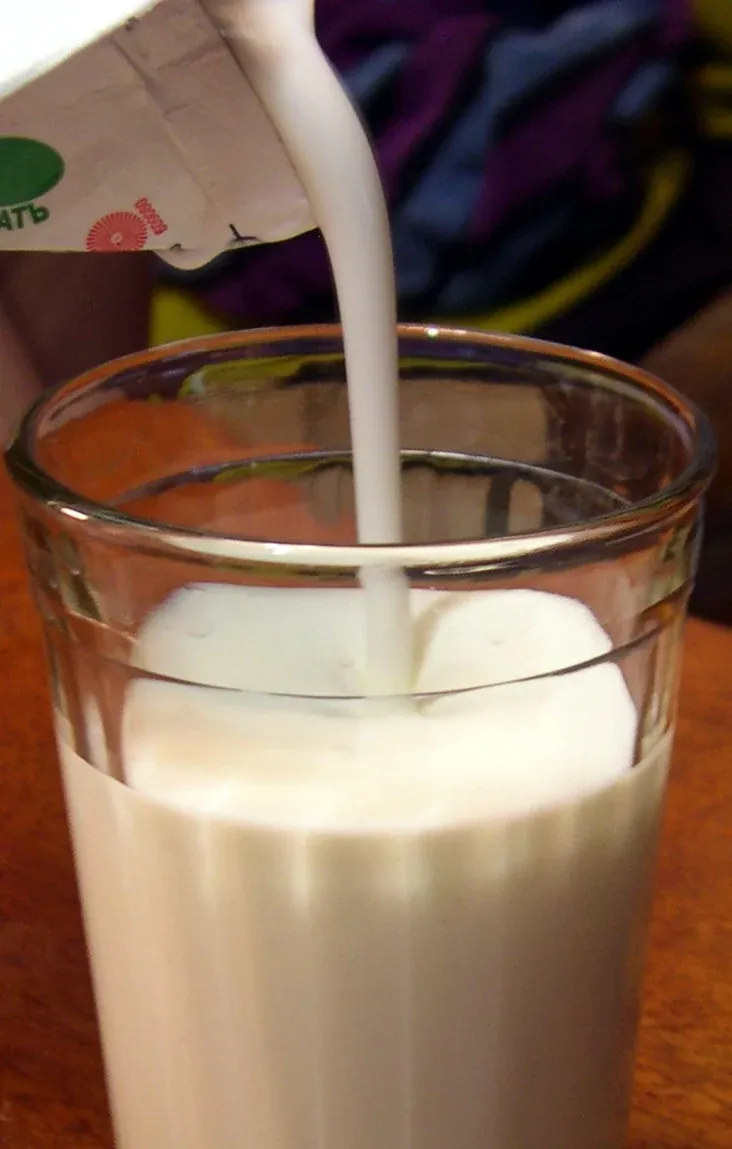
The defining characteristic of filmjölk is its texture. The starter culture, dominated by Lactococcus lactis subsp. cremoris strains, produces exopolysaccharides (EPS): long-chain sugar polymers that give the milk a characteristic mild viscosity and a slightly ropy quality. If you pour filmjölk slowly, it stretches in short threads before breaking. The sourness is much milder than yogurt, the fat content is around 3%, and the flavour is clean, lactic, and slightly buttery. Swedes eat it for breakfast with muesli or cereals, use it in baking (it activates bicarbonate of soda as a leavening agent), and give it to children as a first fermented food because of its gentle flavour. Annual consumption in Sweden exceeds 15 litres per person.
Viili: Finland's Living String Milk
Viili is filmjölk's Finnish cousin, and it takes the ropy texture to an extreme that surprises first-time observers. A spoon lifted from a container of viili stretches in threads of 10–15cm before breaking. This extraordinary viscosity comes from an even more EPS-producing culture than filmjölk, combined with the unique addition of a surface mould: Geotrichum candidum, which grows on the top of the viili as a velvety white layer and contributes a faint mushroomy or yeasty note to the flavour. Viili is a living ecosystem rather than a single-organism ferment.
Viili is nearly unknown outside Finland and the Finnish diaspora. Its culture (starter) is traditionally passed between households rather than purchased commercially, maintained in a small pot and propagated by leaving a tablespoon of old viili in fresh milk at room temperature for 24 hours. The resulting product is consistent because the culture is stable and self-selecting: the Geotrichum mould and the lactic acid bacteria have co-evolved to dominate the ferment reliably. Viili contains similar probiotic bacteria to filmjölk but a more complex microbial community owing to the mould component. It is mildly sour, very gently flavoured, and has a texture that is unlike any other dairy product in the world.
Kumiss: The Alcoholic Milk of the Steppe
Kumiss (also spelled koumiss, qymyz in Kazakh, and airag in Mongolian) is fermented mare's milk, the traditional beverage of the nomadic peoples of the Central Asian steppe. It is the only widely consumed fermented dairy product that is consistently alcoholic: alcohol content ranges from 0.7% to 2.5% ABV depending on the length of fermentation, produced by yeast strains (particularly Kluyveromyces marxianus) that ferment the high lactose content of mare's milk alongside the lactic acid bacteria.
Mare's milk has a dramatically different composition from cow's milk: lower fat (1–2%), higher lactose (5.9–7%), and a protein structure with much less casein relative to whey protein. The low casein content means kumiss does not form a gel curd like yogurt; it remains liquid throughout fermentation. The traditional preparation involves milking the mare multiple times per day (every 2 hours during peak production), storing the milk in a leather vessel (a kholdun or saaba) with previous batch residue as starter, and churning repeatedly throughout the day to prevent the fat from rising. The result is a fizzy, mildly alcoholic, sour, and refreshing drink that has been the primary beverage of the Mongolian and Kazakh steppe for at least 5,500 years (molecular analysis of pottery residues from Kazakhstan dated this as the earliest direct evidence of mare's milking, published in Nature in 2023).
Kumiss consumption peaks during Nauryz (the Central Asian spring festival) and in summer, when the mares produce most milk. In Kazakhstan alone, approximately 5,000 tons of kumiss are produced annually. Medically, kumiss was historically prescribed in 19th-century Russia for tuberculosis patients, partly because sanatorium conditions required large quantities of fresh dairy and partly because the mild alcohol content was thought to be therapeutic. The protein profile of mare's milk, dominated by whey proteins like human breast milk, means some CMPA patients tolerate kumiss, though this is not clinically documented at scale.
Chal: Fermented Camel Milk of Turkmenistan
Chal (also shubat in Kazakh) is fermented camel milk, the nomadic dairy staple of Turkmenistan, Uzbekistan, and the drier parts of Kazakhstan. Camel milk has unique properties: it contains no beta-lactoglobulin (a major whey protein and allergen in cow's milk), has a higher vitamin C content than any other commonly consumed animal milk (approximately 5mg per 100ml vs a trace in cow's milk), and is naturally high in lactoferrin and lysozyme, giving it documented antimicrobial properties. Fermented camel milk (chal) is thinner and sourer than kumiss, with a slightly salty, tangy flavour that reflects the high mineral content of the milk. It is consumed cold as a beverage and used in traditional medicine for gastrointestinal complaints.
Surmjölk and Surmelk: Scandinavian Naturally Soured Milk
Before commercial starter cultures, Scandinavian dairy farmers allowed fresh milk to sour naturally at cool temperatures, using the ambient lactic acid bacteria in their kitchens and dairy rooms. The result was surmjölk (Sweden) or surmelk (Norway and Denmark): a naturally acidified, pourable, moderately sour product closer in character to crème fraîche thinned with milk than to modern cultured filmjölk. These products are still found in specialist Scandinavian food stores and farm shops, though they have been largely displaced by standardised commercial filmjölk and yogurt. Surmelk is used traditionally in Norwegian rye flatbread (flatbrød) and in lefse dough, providing both acidity for leavening and a fermented dairy flavour that water cannot replicate.
Amasi: Southern Africa's Calabash Fermented Milk
Amasi (isiZulu) is the traditional fermented milk of the Zulu, Xhosa, and many other Southern African peoples. Fresh cow's milk is allowed to ferment in a calabash gourd (or, in contemporary production, in a plastic container) for 1–3 days at ambient temperature, using wild lactic acid bacteria from the environment and from previous batch residue adhering to the vessel. The result is thick, very sour, and white, resembling a drinking yogurt but with a more complex bacterial community and a flavour influenced by the calabash vessel itself. Calabash gourds have naturally occurring bacterial biofilms that seed the fermentation; traditional amasi made in a calabash tastes distinctly different from amasi made in plastic, because the vessel bacteria are part of the product's identity.
Amasi is eaten alongside ugali (a maize porridge known as pap in Southern Africa) as a fundamental flavour pairing: the starchy blandness of maize and the sharp, fat sourness of amasi are complementary in the same way that rice and pickles are paired in East Asian food traditions. Commercial amasi is sold in South Africa (brands including Clover and Parmalat produce commercial versions) and is now available in diaspora shops in the UK and US.
Dadih: Bamboo-Fermented Buffalo Milk from Sumatra
Dadih is a fermented buffalo milk product from West Sumatra, Indonesia, particularly associated with the Minangkabau people. Fresh buffalo milk is poured into segments of bamboo tube (each segment naturally sealed by a node at one end) and covered with a banana leaf before being left at ambient temperature for 2–3 days. The bamboo contributes unique bacterial strains from its natural internal biofilm, particularly species of Leuconostoc and Lactobacillus not found in commercially standardised dairy fermentation. The result is a firm, white curd with a mild flavour and a texture resembling a soft set yogurt, which is eaten directly from the bamboo tube.
Dadih has local PGI-equivalent cultural protection in West Sumatra. It is rarely exported and remains essentially a local specialty, though Indonesian food researchers have documented its probiotic bacterial community in detail. A 2010 study in the International Journal of Food Microbiology characterised the dominant bacterial strains in traditionally made dadih and found bacterial species unique to the bamboo-fermentation environment, not present in commercial yogurt starters.
Tan: Armenia's Sparkling Yogurt Water
Tan is the Armenian sparkling fermented dairy beverage: plain yogurt (matsun in Armenian) diluted with sparkling mineral water, salted, and served cold. The carbonation is added rather than naturally produced, distinguishing it from mildly effervescent products like kumiss. Tan is the standard beverage at Armenian tables in summer, served before and during meals as both an aperitif and a digestive. Commercial tan (produced by Armenian brands including Jermuk, which also produces mineral water) is bottled and sold across the Armenian diaspora. The drink's appeal is its combination of probiotic content, hydration, protein, and the refreshing contrast between the yogurt's sourness and the mineral water's carbonation.
The Microbiological Thread
Across all of these products, a single biological principle unifies the diversity. Every traditional fermented dairy product relies on lactic acid bacteria (LAB): specifically the genera Lactobacillus, Lactococcus, Leuconostoc, Streptococcus, and Pediococcus. These bacteria consume lactose, produce lactic acid, and drop the pH of milk to around 4.0–4.6, at which point the casein proteins coagulate and the pathogen-hostile acid environment preserves the product.
What creates the extraordinary diversity of fermented dairy products is not the core LAB activity (which is broadly similar everywhere) but the variables that sit around it: the ambient temperature during fermentation, the vessel material (calabash, bamboo, leather, ceramic, stainless steel), the additional organisms that co-ferment alongside LAB (yeasts in kumiss and kefir, moulds in viili), the species of milk used (mare, camel, buffalo, cow, goat), and the cultural tradition of starter propagation that passes bacterial communities between generations. Each fermented dairy product is a snapshot of a specific ecology: specific animals, specific vessels, specific bacteria, specific climate, preserved in taste and practice across centuries.
The growing commercial interest in kefir and other fermented dairy products in Western markets has drawn scientific attention to this diversity. Researchers at the Max Planck Institute for Evolutionary Anthropology and at INRAE (France's national agricultural research institute) have catalogued the bacterial communities of traditional fermented milks across Europe, Asia, and Africa. The biodiversity they have found is remarkable, and the health implications of consuming diverse LAB communities rather than standardised commercial starter cultures are an active area of clinical research.
Related: Lassi, Ayran, and Doogh: The World's Great Yogurt Drinks Compared | Kefir vs Yogurt: Which Is Better for Gut Health?