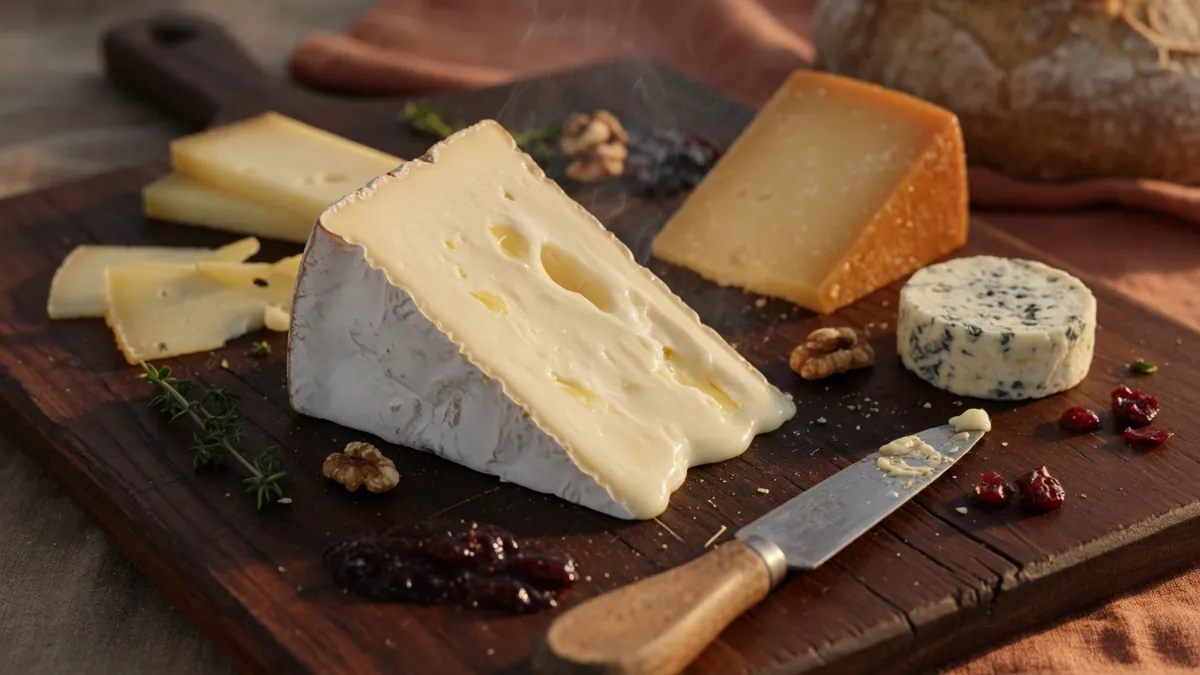
Gouda — named for the city in South Holland that historically served as its trading centre, not its production region — accounts for somewhere between 50–60% of global cheese production. It is, by volume, the world's most produced and consumed cheese. And yet when most people think of Gouda, they are thinking of the young, mild, slightly rubbery cheese sold in yellow wax-coated wheels in supermarkets worldwide — a cheese that is perfectly pleasant and utterly unlike what an aged, properly made Gouda can become. The distance between a young factory Gouda and a 36-month artisanal boerenkaas (farmhouse gouda) is roughly the distance between a supermarket Brie and a perfectly aged raw-milk Brie de Meaux. They share a name and little else.
The History: 800 Years of Dutch Cheese
Gouda has documentary evidence stretching back to at least 1184 CE, when it is mentioned in Flemish records — making it one of the oldest cheeses for which we have written records. The city of Gouda held stadsrecht (city rights) that gave it exclusive rights to weigh and trade cheese produced in the surrounding region — the city was a market, not a dairy. Dutch farmers from the polders around Gouda, Woerden, and Reeuwijk brought their cheeses to Gouda's Waagplein (Weighing Square) on market days, where buyers from across Europe traded.
By the 17th century, during the Dutch Golden Age, Dutch cheese — primarily Gouda and Edam — was one of the Netherlands' most important export commodities, shipped to markets from Scandinavia to the Caribbean and West Africa. The Dutch dairy industry's emphasis on consistent quality, standardised production, and efficient distribution made it the template for modern industrial cheese production.
Understanding Gouda's Age Spectrum
Gouda's character changes dramatically with ageing — more so than almost any other commonly available cheese:
| Age | Name | Texture | Flavour |
|---|---|---|---|
| 4–8 weeks | Jong (Young) | Soft, springy, pale | Mild, milky, slightly sweet — the supermarket standard |
| 2–6 months | Jong belegen | Firmer, more elastic | Developing nuttiness, more pronounced dairy flavour |
| 6–12 months | Belegen (Mature) | Firm, some small holes | Clearly nutty, caramel notes beginning to emerge |
| 12–18 months | Extra belegen | Firm, crystalline | Strong caramel, butterscotch, emerging sharpness |
| 18–36+ months | Oud (Old) / Extra oud | Hard, very crystalline, deep amber | Intense caramel, toffee, butterscotch, crystalline crunch from tyrosine — extraordinary depth |
The crystalline texture of aged Gouda — the crunchy, almost brittle quality that develops as tyrosine crystals form within the paste — is considered by many cheese aficionados the highest expression of the style, providing textural contrast alongside the flavour intensity.
Farmhouse Gouda: Boerenkaas
Boerenkaas (literally "farmer's cheese") designates cheese made on farms from the raw milk of the farmer's own herd — as opposed to industrial Gouda made from pasteurised milk in large factories. The distinction is legally protected in the Netherlands, and boerenkaas can only carry that name if made from raw milk on a farm.
The difference in flavour is substantial. Raw milk carries the microbial diversity of the local environment — the specific bacteria of the herd's milk, the farmhouse, the maker's hands — which develops during ageing into a complexity of flavour impossible to achieve with pasteurised milk. The best boerenkaas producers in the Netherlands (many concentrated around Gouda, Woerden, and the polders of South Holland) make cheeses that age for 2–4 years and develop flavour profiles that rival the best aged cheeses in the world.
Gouda Beyond the Netherlands
The "Gouda" style has been adopted globally, and some exceptional examples are made outside the Netherlands:
- Wisconsin, USA: Roelli Cheese, Uplands Cheese, and other artisan producers making raw-milk aged Gouda-style cheeses of serious quality
- New Zealand: The Dutch farming diaspora (Netherlands was the largest source of post-war European immigrants to New Zealand) established Gouda production that is now well-established in specialty markets
- Canada: Several Quebec and Ontario artisan producers making notable raw-milk Gouda-style cheeses
How to Buy and Serve Gouda
For everyday eating: any belegen or extra belegen Gouda is incomparably better than young Gouda and easily available. For a special experience: seek a specialist cheesemonger who stocks aged raw-milk boerenkaas (18 months minimum). Serve aged Gouda at room temperature — the aromas and crystalline texture only fully emerge when it warms from refrigerator temperature. Pair with Dutch mustard, quince paste, or a small glass of aged port or Amontillado sherry, which complement the caramel and butterscotch notes.
Related: The World's Great Aged Cheeses | Sheep's Milk: The Richest Dairy