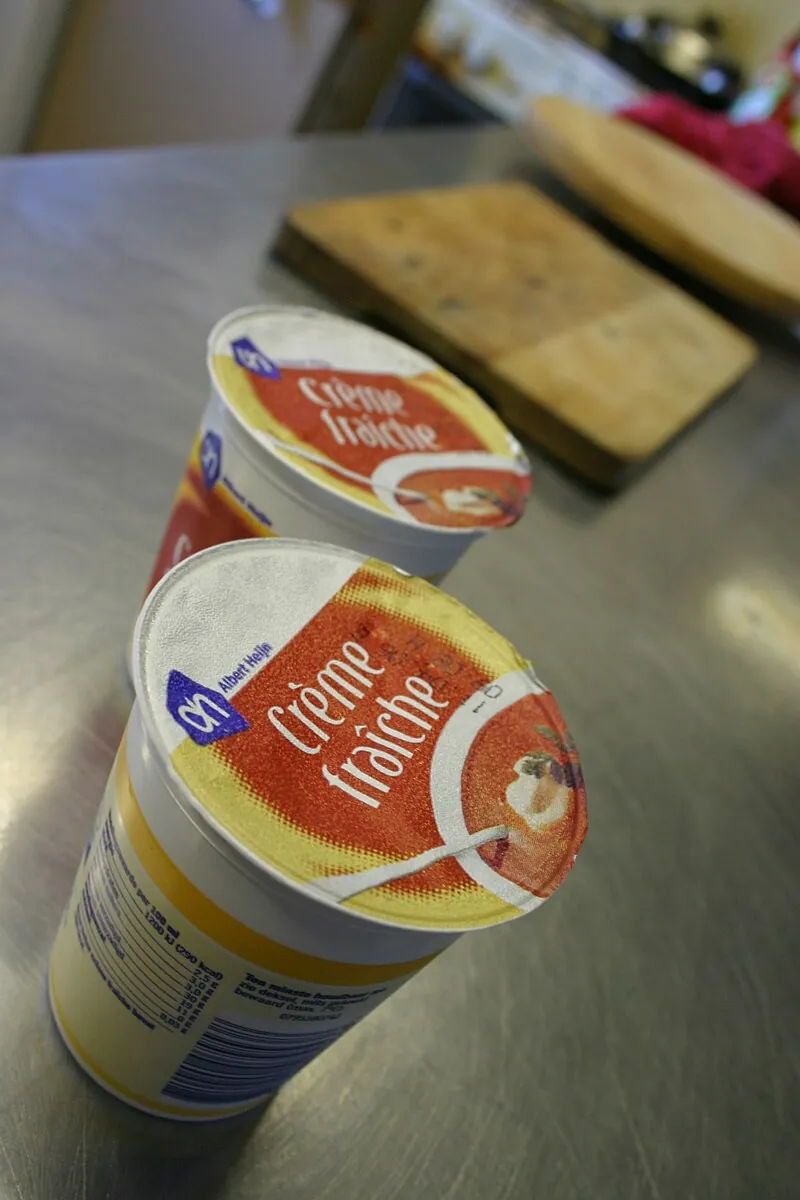
Cream terminology is one of the most genuinely confusing areas of food labelling because the names are not standardised across countries. "Heavy cream" in the United States and Canada is equivalent to "double cream" in the UK and "crème entière" in France; "half-and-half" is American terminology with no direct UK equivalent (light cream comes closest); "pouring cream" is a UK term that has no standard American parallel. Recipes that specify one country's cream terminology will produce different results if the reader uses the locally available equivalent without understanding the fat content requirements. Fat percentage is the only reliable cross-border reference point for cream: it determines what a cream can and cannot do in any recipe.
The Cream Fat Percentage Scale
Cream is classified by fat content, which determines its cooking properties:
Half-and-Half (US) / Single Cream (UK): 10% to 18% Fat
US Half-and-Half: Literally a 50/50 mixture of whole milk and light cream, containing 10% to 18% fat depending on the brand. It is used primarily as a coffee cream in the US. It cannot be whipped (insufficient fat to form stable foam) and will curdle if added to high-acid sauces without tempering. It cannot substitute for heavy cream in any recipe requiring whipping or stable emulsification at high heat.
UK Single Cream: 18% fat. Pouring consistency; used as a lighter alternative to double cream for serving with desserts or adding to soups. Cannot be whipped. Curdles in high-heat cooking unless added at the end and the heat is immediately reduced. Essentially unavailable in most other English-speaking markets.
Light Cream / Coffee Cream: 18% to 25% Fat
Available in Canada and parts of the US as "coffee cream" or "light cream" (18% to 25% fat). More stable in hot liquids than half-and-half; can be reduced in sauces without curdling if done carefully; cannot be whipped to stiff peaks. In the UK context, this category fills the gap between single cream (18%) and the next category.
Whipping Cream: 30% to 36% Fat
UK Whipping Cream: 35% fat. Can be whipped to soft and firm peaks; produces a lighter, less rich result than double cream. Holds its shape for several hours refrigerated. Suitable for use in sauces, soufflés, mousses, and most dessert applications. The standard cream for piping decorations where a lighter texture is preferred.
US Whipping Cream: 30% to 35% fat (the label "whipping cream" without "heavy" indicates the lower end of this range). Whips well but produces a less stable foam than heavy cream; not recommended for decorations that need to hold shape for extended periods.
Heavy Cream (US) / Double Cream (UK): 36% to 48% Fat
US Heavy Cream / Heavy Whipping Cream: 36% to 40% fat. The richest standard cream available in the US. Whips to stiff peaks, holds shape for 24+ hours when properly whipped, stable at high heat, and can be reduced in sauces without curdling. The all-purpose cream for both sweet and savoury cooking where richness and stability are required.
UK Double Cream: 48% fat, the highest fat cream commercially available and uniquely rich for a fluid product. Whips to very stiff peaks in under a minute (too much whipping quickly turns it to butter); produces a denser, richer whipped cream than US heavy cream. When used in soups and sauces, double cream can be added to boiling liquids without curdling and reduces to a glossy, intensely flavoured sauce. It is the cream standard in UK recipes and is richer than anything commercially available in the US.
Speciality Cream Products
Clotted Cream: 55% to 60% Fat
A uniquely British product made by slowly heating unpasteurised (traditionally) or pasteurised cream at 82°C until the fat rises to the surface and forms a thick, golden crust. The result is a spreadable, extremely rich cream with a thick, almost buttery texture and a slightly cooked, caramelised flavour. Served with scones and jam for cream tea; also used in fudge and some desserts. Produced primarily in Devon and Cornwall; the Devonian tradition places cream first, then jam on a scone; the Cornish tradition places jam first, then cream. This distinction is taken seriously in both counties.
Crème Fraîche: 30% to 40% Fat
A cultured cream product (cream fermented with Lactococcus lactis bacteria), producing a thick, slightly sour, pourable or spoonable cream. Full-fat crème fraîche (30% to 40% fat) does not split when added to hot sauces, making it the preferred cream for high-heat applications. Reduced-fat crème fraîche (15% fat) is less stable at high heat. Can be used as a richer, tangier substitute for sour cream, yogurt, or double cream depending on context. French full-fat crème fraîche (such as Isigny Sainte-Mère) has a more developed, nutty flavour than UK supermarket versions.
Sour Cream: 12% to 20% Fat
Cream fermented with lactic acid bacteria to a thick, sour, tangy product similar to crème fraîche but lower in fat. The lower fat content makes it less stable in high-heat cooking; it will curdle if boiled. Used as a topping for baked potatoes, in dips, in cold sauces, and in baking (its acidity activates baking soda as a leavening agent).
Cross-Reference Table for Recipes
| US Term | UK Term | Fat % | Can Whip? |
|---|---|---|---|
| Half-and-half | No direct equivalent (closest: single cream) | 10 to 18% | No |
| Light cream | Single cream | 18 to 25% | No |
| Whipping cream | Whipping cream | 30 to 35% | Yes (soft peaks) |
| Heavy cream | No direct equivalent (closest: extra-thick double cream) | 36 to 40% | Yes (firm peaks) |
| No equivalent | Double cream | 48% | Yes (very stiff) |
| No equivalent | Clotted cream | 55 to 60% | No (already solid) |
Related: How to Make Butter at Home: The Complete Guide | Milk Substitutes for Baking: What Works and What Doesn't