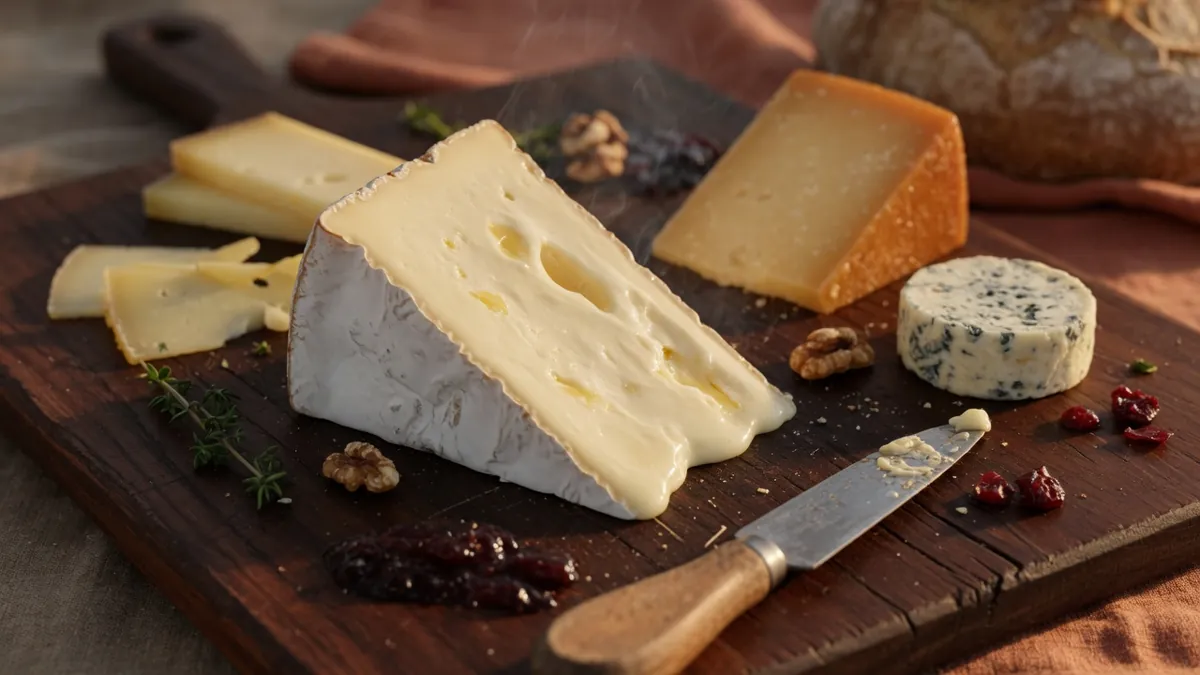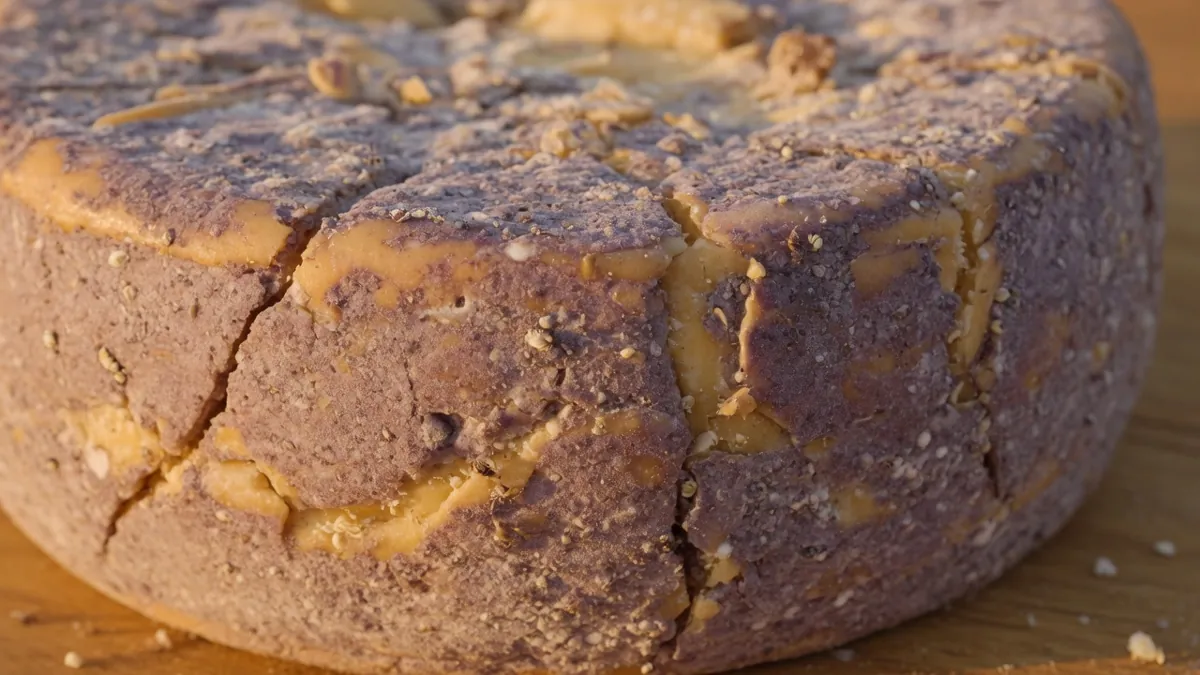
This cheese is legal. The crust is still crawling. Not maggots, not a black-market dare — live cheese mites, deliberately invited to dinner. Meet Milbenkäse, the mite cheese of Würchwitz in Saxony-Anhalt, Germany: a dairy craft that looks like a grocery meme and behaves like conservation biology.
Not Casu Marzu
If your brain jumps straight to Sardinia’s infamous maggot cheese, pause. Casu Marzu is fly larvae. Milbenkäse is cheese mites — commonly named as Tyrophagus casei — in Germany. Different organism, different country, different paperwork. Collapsing every “living cheese” story into one internet horror remake erases the actual science.
How mite ripening works
The mites are not a bug in the system. They are the ripening crew. Makers dust a young cheese with a living mite culture and a little rye flour, then let the colony establish on the surface. As mites graze, digestive enzymes help break down proteins and fats in the rind from the outside in — a managed smear of micro-fauna rather than a washed bacterial rind alone.
Ripening stretches across months. The finished cheese develops a distinctive dusty crust. Locals historically treated that powder as part of the experience; producers set the safe way to enjoy it. Taste descriptions in the tradition run from lemony-sharp toward nutty aged cheese — lived language, not a lab sensory panel.
A village specialty that almost vanished
Popular accounts place the craft in Würchwitz for roughly five centuries — treat that as tradition length, not a notarized founding year. For a long time it stayed a regional specialty rather than a grocery aisle meme. Then twentieth-century industrial food systems, including East German standardization, nearly erased mite ripening. Lose the living culture and you lose the cheese.
The teacher revival
Biology teacher Helmut Pöschel is central to the modern revival narrative: find remaining mites, protect the culture, teach the method again. The village leaned in — Würchwitz even celebrates the cheese mite in local iconography, peak small-town food pride. Today Milbenkäse sits in a rare dairy category: traditional, weird on purpose, and still legally sold in its home context.
Legal craft vs internet myth
Legal status matters. This is not forbidden fruit branding. It is a managed product with specific ripening practices — not a free pass to eat random pantry pests, and not a medical claim. Compared with Casu Marzu’s underground internet reputation, Milbenkäse’s story is quieter: microscopic workers, enzymatic drama, and a revival rather than a dare challenge.
Tyrophagus mites like stored foods in the wild; here that niche was domesticated into dairy craft. The rye flour is not random seasoning — it feeds the mites and helps them colonize the rind. What looks like dust is a dinner-plate ecosystem you invite on purpose.
Why the grocery aisle is a museum
Milbenkäse is a reminder that ripening is not only chemistry in a vault. Sometimes it is ecology: milk, microbes, flour, and a workforce you need a hand lens to see. The revival also shows how fragile traditional foods become when industrial systems standardize everything that used to be alive. Keep the mites, keep the niche.
Sources / References
- Atlas Obscura and regional reporting on Würchwitz Milbenkäse and the Helmut Pöschel revival narrative (popular history; verify current producer practices).
- ASM-style / dairy-microbiology explainers on cheese mites (Tyrophagus / T. casei) and stored-food mite ecology.
- Producer and regional culinary pages for legal sale context, ripening practice, and serving guidance for the dusty crust.
- Cross-check: Milkiry episode framing notes distinguishing mite cheeses from fly-larva cheeses (Casu Marzu) and from banned-foods listicles.
Method note: tradition ages (~“500 years”) are soft; mite species naming follows common popular-science usage; food-safety guidance belongs to producers — this is food history and dairy ecology, not medical advice or a dare.