Cheddar cheese is one of the most popular and versatile foods in the world. Ranging from mild, buttery block cheddars to sharp, crumbly, and earthy clothbound varieties, its appeal spans from simple everyday cooking to high-end artisanal tasting boards. However, while we are familiar with its culinary uses, the biochemistry behind how Cheddar is made and how it develops its signature sharpness over years of aging is a fascinating study in food science.
At its core, Cheddar is a product of controlled microbial activity and enzymatic protein breakdown. The journey from fluid cow's milk to a mature, crystal-flecked block of aged cheese requires precise control of variables like moisture levels, acidity, temperature, and salt concentrations. By exploring the molecular changes that occur during the unique "cheddaring" process and the subsequent aging phases, we can understand what makes this cheese so unique.
The Cheddaring Process: Engineering the Curd Structure
Cheddar cheese production begins similarly to other cheeses: warm cow's milk is inoculated with mesophilic starter cultures (lactic acid bacteria) and coagulated with rennet, an enzyme complex that splits the milk protein casein, transforming liquid milk into a firm gel of curds and liquid whey. The curd is cut into small cubes, heated, and stirred to expel moisture.
What defines Cheddar, however, is the subsequent step known as **cheddaring**. Once the curds are drained of whey, they form a warm, sponge-like mass at the bottom of the vat. Dairymen cut this mass into large blocks and stack them on top of one another. The weight of the stacked blocks presses down on the lower blocks, squeezing out remaining whey and stretching the curd particles under the influence of heat and accumulating lactic acid.
During cheddaring, the round casein micelle clusters stretch out and align in parallel, horizontal sheets. This physical restructuring transforms the texture of the cheese from a rubbery gel to a dense, fibrous mass with a chicken-breast-like structure. The blocks are then milled into small pieces, salted (which stops lactic acid bacteria from over-acidifying), and pressed tightly into molds to begin the long aging process.
The Biochemistry of Aging: Proteolysis and Lipolysis
Young Cheddar is firm, springy, and relatively mild in flavor. The transformation of this simple curd into a complex, crumbly, and sharp mature cheese is driven by two primary chemical processes: **proteolysis** (the breakdown of proteins) and **lipolysis** (the breakdown of fats).
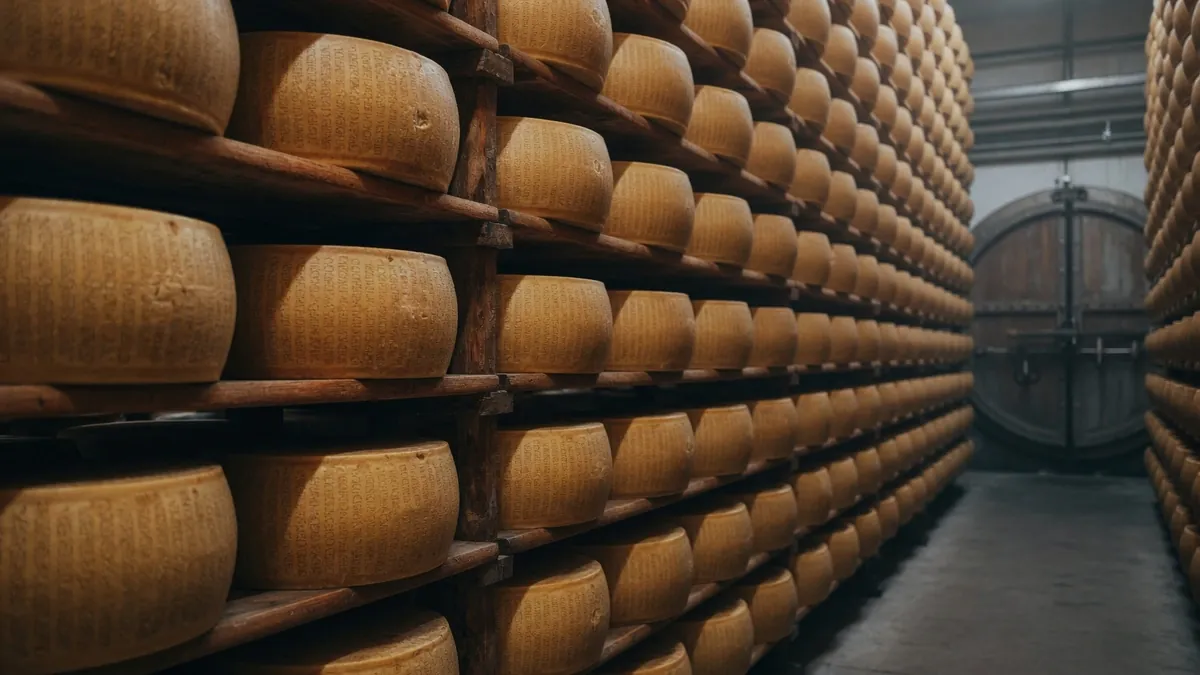
Over months or years of aging in temperature-controlled caves (typically kept at 8°C to 12°C), residual rennet enzymes and enzymes released by dying starter cultures slowly break down the large, intact casein protein chains into smaller peptides and free amino acids. This proteolysis has a double impact: it breaks down the elastic protein matrix, making the cheese crumbly and meltable, and releases compounds like glutamate, which generate the savory, umami flavor we perceive as sharpness.
Simultaneously, lipase enzymes break down milk lipids into free fatty acids. These fatty acids undergo further chemical conversions, creating volatile aromatic compounds that add complex buttery, nutty, and sharp notes to the mature cheese.
The Chemistry of Crunchy Crystals
If you have ever eaten a highly aged Cheddar (typically matured for 12 months or longer), you have likely noticed tiny, crunchy white specks scattered throughout the cheese or on its surface. Many consumers mistake these for salt grains or mold, but they are actually **calcium lactate crystals**.
As lactic acid bacteria ferment lactose into lactic acid, the acid dissolves colloidal calcium phosphate in the milk, releasing free calcium ions and lactate ions into the cheese moisture. During the long aging process, the cheese slowly loses moisture through evaporation. When the concentration of calcium and lactate exceeds their solubility limit, they bind together and crystallize out of solution, forming the pleasant, crunchy granules that home gourmets prize as a marker of highly aged cheese.
| Age Range | Texture Profile | Biochemical Activity |
|---|---|---|
| Mild (1 - 3 Months) | Smooth, elastic, easy to slice | Minimal protein breakdown; high intact casein |
| Sharp / Mature (6 - 12 Months) | Firm, slightly crumbly, full flavor | Moderate proteolysis; accumulation of free amino acids |
| Extra Sharp (12 - 24+ Months) | Very dry, highly crumbly, crystal-flecked | High proteolysis and lipolysis; crystallization of calcium lactate |
The Impact of the Joseph Harding Method
Historically, Cheddar production was highly inconsistent, with each farm using its own crude tools and variable methods. In the 19th century, a Somerset dairyman named **Joseph Harding** revolutionized the industry. Described as the "father of Cheddar", Harding standardized the scientific parameters of cheese making: introducing the use of strict temperatures, standardized rennet quantities, and automated curd-cutting implements.
Harding's most important contribution was the invention of the "curd mill", a mechanical device that shredded the cheddared curd blocks into uniform, finger-sized pieces before salting. This mechanical innovation ensured even salt distribution, preventing localized mold growth and guaranteeing a uniform moisture level across the entire batch, laying the foundation for modern Cheddar cheese production globally.
Related: The Art of Affinage: The Microbiology of Cheese Aging Caves | The Chemistry of Melt: Why Some Cheeses Flow and Others Burn