There are over 1,800 documented varieties of cheese in the world — and every single one begins with the same raw material: milk. The transformation of liquid, perishable milk into solid, complex, shelf-stable cheese is one of humanity's oldest and most sophisticated food technologies. It is also, by any measure, one of its greatest achievements.
The Basic Science: Turning Liquid into Solid
Cheese-making exploits a fundamental property of milk protein. Milk contains casein proteins in tiny particles called micelles, suspended in the watery liquid (whey). Cheese-making causes these micelles to clump together and form a solid network — the curd — separating from the liquid whey.
This coagulation can be achieved two ways:
- Acid coagulation: Lactic acid bacteria convert milk sugars (lactose) into lactic acid, lowering the pH until the casein proteins destabilise and clump. This produces fresh, soft cheeses — ricotta, fresh chèvre, cream cheese, cottage cheese, paneer. Simple, fast, and ancient.
- Rennet coagulation: Rennet enzymes (originally from the stomach lining of young ruminants, now also produced by microbial and genetically engineered sources) cut a specific site on kappa-casein, causing the micelles to aggregate into a firm gel. This produces the firm, cuttable curd that is the basis of most aged cheeses.
The Steps of Cheese-Making
- Milk selection and standardisation: The milk is selected (cow, goat, sheep, buffalo, or blends) and the fat content adjusted if necessary
- Starter culture addition: Specific bacterial cultures are added to begin fermentation, producing lactic acid and the flavour precursors that will develop through ageing
- Coagulation: Rennet is added; the milk sets into a firm gel within 30–60 minutes
- Cutting the curd: The gel is cut into small pieces. Smaller cuts → drier cheese (for hard aged varieties). Larger cuts → moister cheese (for soft varieties)
- Cooking and stirring: Many cheeses are cooked at this stage. Higher temperatures and more stirring expel more whey, producing firmer cheeses. Parmigiano-Reggiano is cooked to 55°C; fresh mozzarella is not cooked at all.
- Draining and pressing: Whey is drained and the curd is pressed into moulds. Hard cheeses like Cheddar and Gruyère are pressed for hours or days under significant weight.
- Salting: Either rubbed with dry salt or brined. Salt controls moisture, forms the rind, suppresses unwanted bacteria, and contributes to flavour.
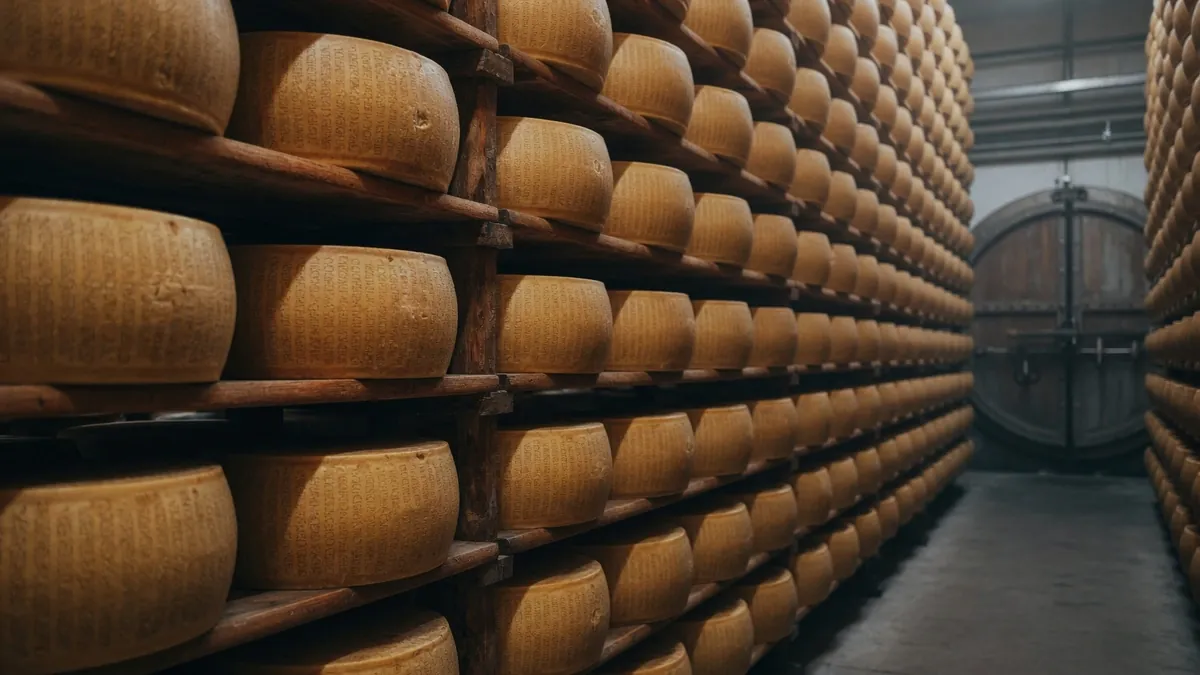
- Ageing (affinage): This is where the magic happens.
The Art of Ageing: Where Cheese Becomes Extraordinary
During ageing (affinage in French), a cascade of biochemical changes transforms the bland, rubbery curd into something of astonishing complexity:
- Proteolysis: Enzymes from the starter culture, rennet, and milk itself break down proteins into peptides and amino acids — creating the savoury, umami depth of aged cheese and the characteristic crunch of aged Parmesan (tyrosine crystals)
- Lipolysis: Fats are broken down into free fatty acids and their derivatives — responsible for the pungency of blue cheeses, the sharpness of aged Cheddar, and the distinctive flavour of sheep's milk cheeses
- Rind development: Surface moulds (Penicillium camemberti for Brie; P. roqueforti for blue cheeses), yeast cultures, bacteria (Brevibacterium linens for washed-rind cheeses like Époissses), and natural wild microflora all contribute to rind formation and flavour development
The affineur — the cellar master who manages ageing — is one of the most skilled practitioners in the food world. Turning, washing, brushing, piercing, and monitoring temperature and humidity over months or years is an art form as demanding as winemaking.
Milk's Influence on the Final Cheese
The character of the milk shapes the cheese profoundly:
- Cow's milk: Mild, sweet base — extremely versatile. From alpine Gruyère to blue Stilton to fresh ricotta.
- Goat's milk: Higher capric and caprylic acid content creates the characteristic "goaty" tang. Lower alpha-S1 casein means softer, more delicate curd. Chèvre, Crottin, Valençay.
- Sheep's milk: High in fat (6–8%) and protein — produces rich, dense, complex cheeses. Pecorino Romano, Manchego, Roquefort, Ossau-Iraty.
- Buffalo milk: Very high fat (8%+) and casein — produces the extraordinary creaminess of real mozzarella di bufala campana. Nothing in dairy compares to fresh buffalo mozzarella eaten within hours of production.
A World of 1,800 Cheeses
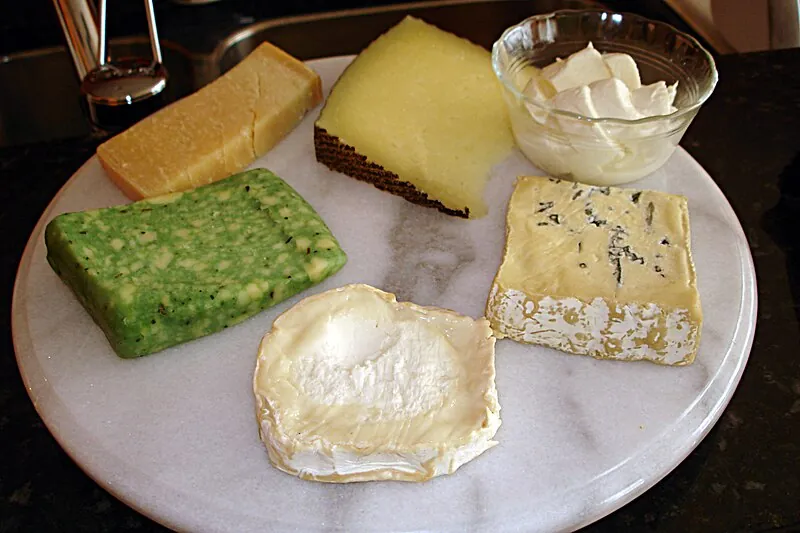
The diversity of cheese reflects the diversity of milk sources, climates, cultures, and traditions that produce it. France alone has over 400 varieties (de Gaulle famously complained about governing a country that has 246 kinds of cheese). Italy, the UK, Switzerland, Spain, Greece, and now artisan cheesemakers across the United States, Australia, and Brazil are contributing new classics to the canon.
Every great cheese is a portrait of its place — of the pasture, the season, the animals, the culture (in every sense of the word), and the hands that made it. Milk is the beginning. Cheese is the destination.
Related: The History of Milk | What Makes Good Quality Milk?