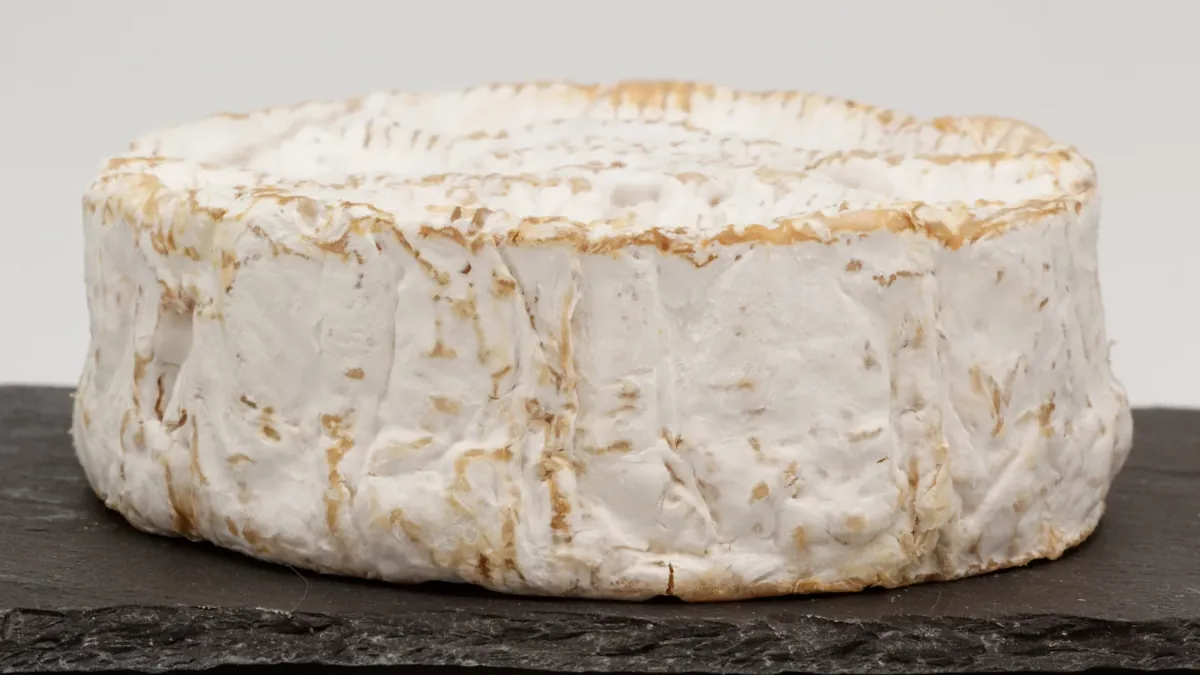
When most people think of French cheese, the first image that comes to mind is a small, round wooden box containing a disc of white, velvety cheese. Camembert has achieved global ubiquity, found in supermarkets from Tokyo to Toronto. However, there is a massive gulf in quality, taste, and tradition between the mass-produced, factory-made Camembert and the authentic, artisanal product known as Camembert de Normandie AOC.
To truly appreciate this iconic dairy product, one must look past the generic labels and understand the specific terroir of northwestern France. Authentic Camembert is a living, breathing product of its environment, requiring raw milk, specific bacterial cultures, and centuries of inherited agricultural knowledge. Today, we are exploring what makes true Camembert de Normandie one of the culinary wonders of the world.
The History and Legend of Marie Harel
The origins of Camembert are intertwined with the chaos of the French Revolution. According to popular legend, in 1791, a dairy farmer named Marie Harel from the village of Camembert in Normandy provided refuge to a Catholic priest fleeing the anti-clerical violence in Paris. The priest hailed from the Brie region, an area already famous for its large, soft-ripened cheeses.
In gratitude for her protection, the priest allegedly shared the secrets of Brie-making with Harel. She adapted his techniques to her own smaller molds and local Norman milk, creating a cheese that was richer, more pungent, and easier to transport. While historians debate the exact details of this story, it is undeniable that by the late 19th century, the invention of the iconic round wooden box by engineer Eugène Ridel allowed Camembert to be shipped securely on the new French railway system, cementing its status as a national treasure.
The Strict Rules of the AOC
Because the name "Camembert" was never trademarked internationally, anyone in the world can legally produce a cheese and call it Camembert. This led to a flood of bland, pasteurized imitations. To protect their heritage, French farmers successfully campaigned for an Appellation d'Origine Contrôlée (AOC) designation in 1983. If a box reads Camembert de Normandie, it must adhere to incredibly strict, legally enforced standards.
| Requirement | AOC Specification |
|---|---|
| Milk Type | Must be strictly raw, unpasteurized cow's milk. |
| Cow Breed | At least 50% of the herd must be the traditional Normande breed. |
| Diet | Cows must graze on local Normandy pasture for at least 6 months of the year. |
| Production | The curd must be ladled into molds entirely by hand, in exactly five successive layers. |
These rules ensure that the cheese retains the distinct flavors of the Normandy terroir—a landscape famous for its lush, rain-soaked meadows and apple orchards. The raw milk retains natural enzymes and local microflora, which are completely destroyed in the pasteurization processes used by industrial manufacturers.
How to Select and Serve Camembert
A true Camembert de Normandie undergoes a dramatic transformation as it ages. The white, bloomy rind is created by the mold Penicillium camemberti. When young (about 2-3 weeks), the cheese has a firm, chalky center and mild, lactic flavors. As it matures to 4-5 weeks, enzymes break down the proteins, turning the interior paste soft, runny, and incredibly complex.
- Look for the Label: Always search for the red and yellow European AOP (Appellation d'Origine Protégée) logo and the words "Camembert de Normandie" and "Au Lait Cru" (raw milk).
- Check the Firmness: Gently press the center of the cheese. It should yield slightly but not collapse completely. A strong smell of ammonia indicates it is overripe.
- Serving Temperature: Never serve Camembert straight from the refrigerator. It must be brought to room temperature for at least 45 minutes to allow the fats to relax and the complex aromas of mushroom, wet earth, and garlic to emerge.
When paired with a crusty baguette and a glass of dry Normandy cider or a light, fruit-forward red wine like Pinot Noir, an authentic Camembert de Normandie offers a tasting experience that simply cannot be replicated by factory alternatives. It is a testament to the enduring power of traditional, raw-milk dairy farming.