Cheese fondue, in the form most people recognise today, is a product of organised Swiss nationalism as much as culinary tradition. The Swiss Cheese Union (Schweizerische Käseunion) actively promoted fondue as Switzerland's national dish from the 1930s onward, distributing caquelon pots to Swiss embassies worldwide and lobbying successfully to have fondue included in the 1932 edition of Auguste Escoffier's Le Guide Culinaire. By the 1964 New York World's Fair, fondue had become synonymous with Swiss identity abroad. But beneath the marketing history lies a genuinely excellent dish: a smooth, rich, deeply savoury emulsion of melted cheese and wine that, made correctly, is one of the great communal eating experiences of European gastronomy.
The Two Classic Swiss Fondues
Fondue Fribourgeoise
The fondue of Fribourg (Freiburg in German), in western Switzerland, is made exclusively with Vacherin Fribourgeois, a semi-soft washed-rind cheese with a distinctly earthy, pungent character. What makes Fondue Fribourgeoise unusual is that it is traditionally made without wine: the cheese is melted in water, sometimes with a small addition of kirsch (cherry brandy). The result is a thicker, creamier, more intensely flavoured fondue with a pronounced aroma. True Fondue Fribourgeoise carries AOC (Appellation d'Origine Contrôlée) protection in Switzerland, meaning only fondue made in the traditional manner with Vacherin Fribourgeois from the Fribourg region can use the name.
Fondue Moitié-Moitié
The most famous Swiss fondue internationally is Moitié-Moitié ("half and half"), combining equal weights of Gruyère and Vacherin Fribourgeois. Gruyère adds nuttiness, depth, and a longer melt, while Vacherin Fribourgeois adds creaminess and earthiness. This blend is considered by many Swiss chefs the ideal balance: the two cheeses complement each other in a way neither achieves alone. Moitié-Moitié is the fondue typically served in upmarket fondue restaurants in Geneva and Zurich and is the version most often encountered in Switzerland's tourist areas.
Other Regional Variations
- Fondue Neuchâteloise: Equal parts Gruyère and Emmental, melted in Neuchâtel white wine with a touch of kirsch. Emmental adds a milder, slightly sweet note and a stringier, more elastic texture.
- Fondue Appenzelloise: Made with Appenzeller, a firm cheese washed with a secret herbal brine during affinage, adding a spicy, herbaceous character.
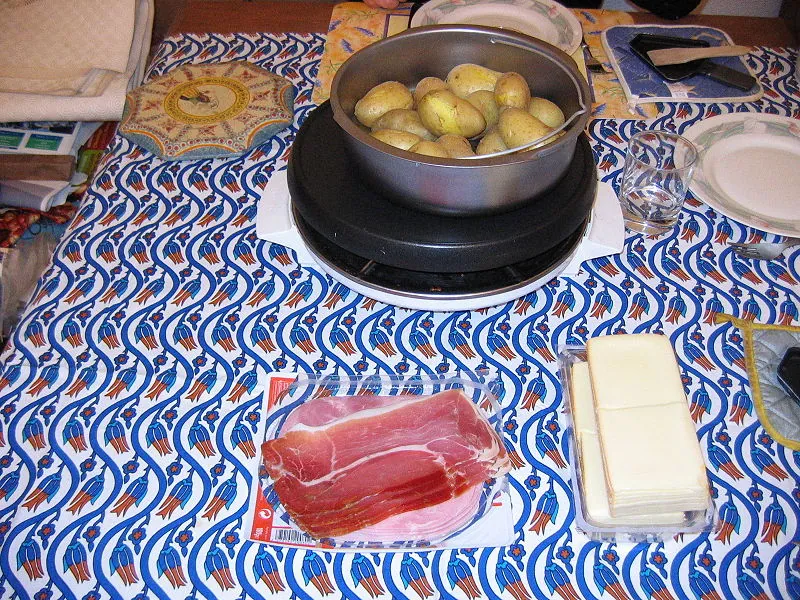
- Fondue Valaisanne: From the Valais canton, using Raclette cheese (yes, the same cheese used in raclette dishes), creating a particularly buttery, rich fondue.
The Cheeses
Gruyère AOP
Gruyère is produced in the Gruyères district of Fribourg canton and neighbouring areas, under Swiss AOP (Appellation d'Origine Protégée) status since 2001. It is a firm, cooked, pressed cheese aged for a minimum of 5 months (young), though 8 to 12 month examples are standard for fondue, and reservé versions aged 14 months or more are available. Gruyère melts smoothly because of its low moisture content and its relatively high fat content (typically 49% fat in dry matter), which lubricates the melt. It contributes the backbone of fondue: the nutty, savoury, slightly fruity notes that define the dish.
Vacherin Fribourgeois AOP
Vacherin Fribourgeois is a washed-rind, semi-soft cheese made from raw or thermised cow's milk in the Fribourg region. Its texture is supple and creamy, with an aroma that becomes more pronounced with age. In fondue, it melts at a lower temperature than Gruyère and contributes a creamier, smoother consistency to the blend. It is available in several affinages ranging from mi-doux (mild) to extra (extra aged). For fondue, the classic or extra style is preferred for its stronger flavour contribution.
Emmental
The cheese with the characteristic holes (formed by Propionibacterium freudenreichii releasing carbon dioxide during secondary fermentation), Emmental has a mild, slightly sweet, buttery flavour and a notably stretchy melt, which gives fondue made with it a more elastic, stringy quality. It is higher in moisture than Gruyère and must be balanced carefully in a blend to avoid excess water diluting the fondue.
The Role of Wine and Kirsch
White wine serves two critical functions in cheese fondue. First, it provides acidity (pH around 3.0 to 3.5). This acidity is essential for a smooth, stable fondue: the low pH denatures some milk proteins and allows the calcium ions from the casein structure to be absorbed by tartrate and citrate ions in the wine, which disrupts the casein network and allows the cheese to melt smoothly rather than clumping into a stringy, oily mass. A dry, high-acid Swiss white wine is traditional: Chasselas (also known as Fendant or Gutedel) is the classic choice, from the Vaud or Valais cantons. A good dry Riesling, Aligoté, or other crisp, low-oak white wine works if Chasselas is unavailable. Avoid oaked or sweet wines.
Kirsch (kirchwasser), a clear cherry brandy distilled in the Alpine regions of Switzerland, Germany, and Alsace, is added in small quantities (typically 1 to 2 tablespoons per 400g of cheese). The high-proof alcohol (around 40% ABV) in kirsch helps to prevent separation by further disrupting the casein network and adding a mild antimicrobial effect that slows the fondue from separating. Its flavour is subtle in the final dish but contributes a characteristic nuance that distinguishes a proper Alpine fondue from an imitation. Traditionalists insist kirsch is non-negotiable; Fondue Fribourgeoise dispensed with wine entirely but kept the kirsch.
Step-by-Step Technique
Equipment
- A caquelon: a traditional fondue pot, ideally ceramic or enamelled cast iron. Ceramic is better for cheese fondue (it distributes heat more gently); cast iron is heavier but works well. Stainless steel pots typically distribute heat too unevenly and increase the risk of burning on the base.
- A fondue burner (spirit lamp or small butane burner) to keep the fondue warm at the table. Gas burners allow better temperature control than tea lights, which are usually too weak for a full fondue pot.
- Long fondue forks for dipping.
Ingredients (serves 4)
- 400g Gruyère, coarsely grated
- 400g Vacherin Fribourgeois, coarsely grated (or all Gruyère for a simpler version)
- 300ml dry white wine (Chasselas, Riesling, or similar)
- 1 clove garlic, halved
- 1 tablespoon cornstarch (cornflour)
- 1.5 tablespoons kirsch
- Freshly ground black pepper and freshly grated nutmeg to taste
Method
- Prepare the caquelon: Rub the inside of the pot thoroughly with the cut sides of the garlic clove. Discard or leave the garlic in the pot as preferred.
- Toss the cheese with cornstarch: In a large bowl, combine the grated cheeses and toss with the cornstarch until evenly coated. The cornstarch stabilises the emulsion by binding excess moisture and reducing the tendency for the fat to separate.
- Heat the wine: Pour the wine into the caquelon and heat over medium heat on the hob until just beginning to simmer. Do not boil hard.
- Add the cheese gradually: Add the cheese mixture in three or four additions, stirring constantly in a figure-eight or zigzag pattern (not circles) to promote even melting without clumping. Each addition should be fully melted and smooth before the next is added.
- Add kirsch and seasoning: Once all the cheese is melted and the fondue is smooth, stir in the kirsch, black pepper, and nutmeg. Taste for seasoning.
- Transfer to the burner: Move the caquelon to the table burner set to low to medium heat. The fondue should remain at a gentle simmer, just enough to see occasional lazy bubbles.
Troubleshooting: Splitting and Seizing
If the Fondue Splits (Fat Separates)
A split fondue shows a greasy oil layer on top with stringy, solid cheese beneath. This is caused by overheating (above about 70°C the fat separates from the protein network), too little acid in the wine, or insufficient cornstarch. To fix: add a small splash of cold white wine or lemon juice and stir vigorously over low heat. The acidity often re-emulsifies the mixture. If it remains split, dissolve an extra teaspoon of cornstarch in a tablespoon of cold wine and stir it in quickly.
If the Fondue Seizes (Becomes Stringy and Thick)
Seizing (also called "knotting" by Swiss cooks) happens when the temperature drops too low and the proteins re-aggregate. Return the caquelon to direct heat on the hob, add a splash of warm wine, and stir vigorously in a figure-eight pattern while heating gently. This almost always restores the smooth consistency.
What to Dip
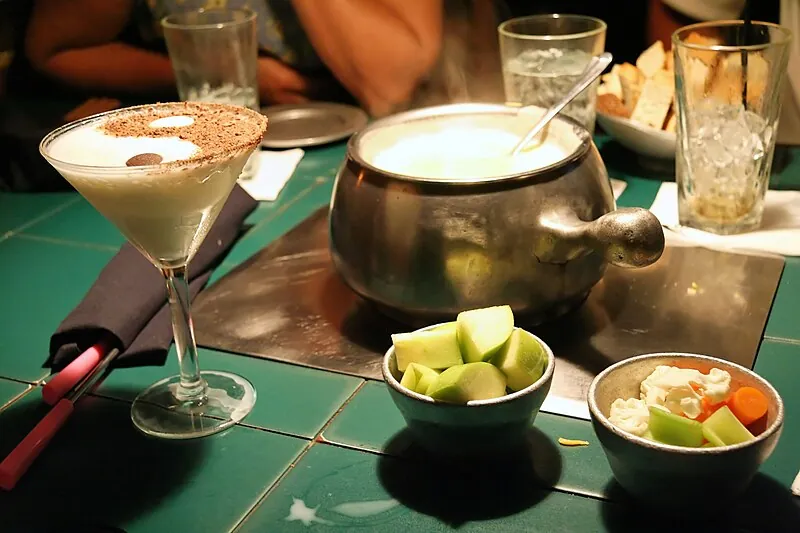
Day-old crusty bread cut into cubes is the traditional dipper, the crust side on the fork to prevent the bread falling into the pot. Beyond bread, accompaniments include: steamed new potatoes or baby potatoes (the most popular addition in Switzerland), pickled cornichons (their acidity cuts the richness), pickled pearl onions, cured meats such as dried beef (Bündnerfleisch), apple slices, broccoli florets, and blanched cauliflower.
Related: Raclette: Switzerland's Other Great Melted Cheese Dish | Guide to Gruyère: Switzerland's Most Famous Cheese