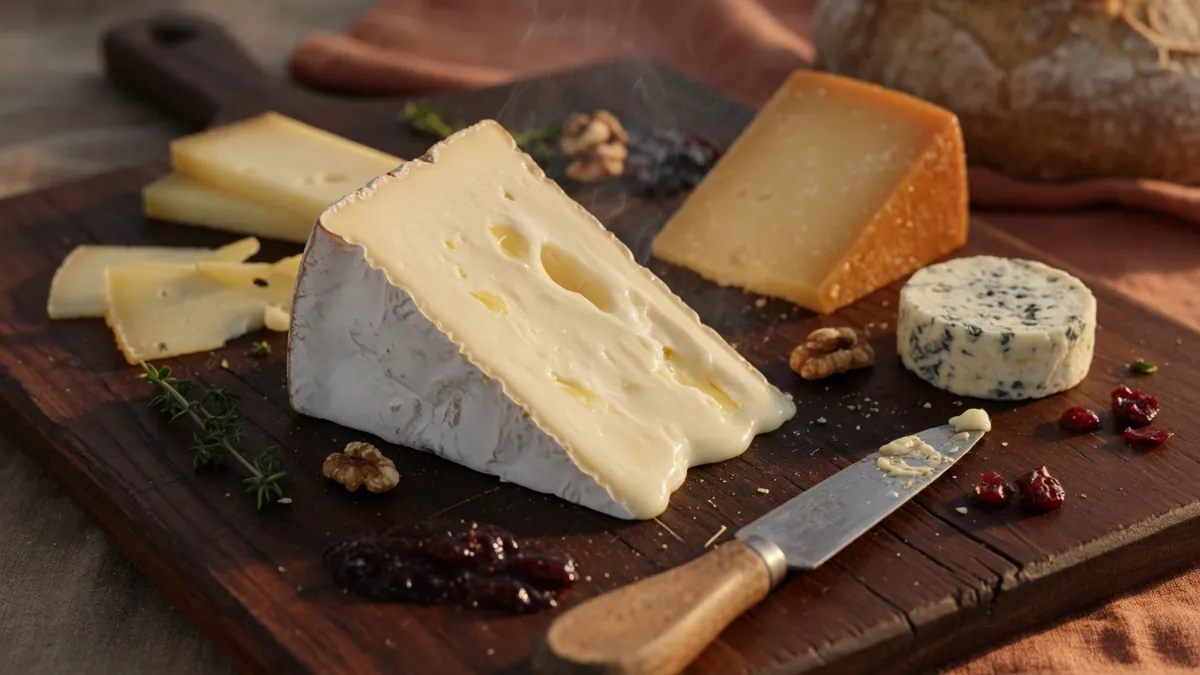
Cheese occupies an awkward position in nutritional guidance: it is high in saturated fat (a nutrient formally classified as cardiovascular risk-raising by most health authorities) yet the epidemiological evidence consistently shows that habitual cheese consumption is not associated with elevated cardiovascular disease risk, and in some studies is associated with modestly lower risk. This disconnect between the expected pharmacological effect of saturated fat and the observed epidemiological pattern of cheese consumption has generated substantial research interest and has contributed to the re-evaluation of saturated fat recommendations in recent years. The most credible explanation for cheese's neutral cardiovascular effect is the "food matrix" hypothesis: the specific combination of proteins, fats, calcium, phosphorus, and fermentation products in cheese alters how the saturated fat affects cardiovascular risk markers in ways that isolated saturated fat analysis cannot predict.
The French Paradox (and the Broader Dairy Paradox)
The "French paradox" was first described by epidemiologist Serge Renaud in a 1992 presentation on 60 Minutes (the US TV programme): France had relatively low rates of coronary heart disease despite high saturated fat consumption, predominantly from dairy and fatty meats. The term has since been extended to the "dairy paradox" more broadly: multiple high-income countries with high dairy consumption show no excess cardiovascular mortality compared to lower-dairy-consuming populations when other lifestyle factors are controlled.
Several explanations have been proposed beyond the food matrix effect:
- The French diet was historically high in vegetables, olive oil (in the south), wine (with its polyphenol content), and flavonoids; saturated fat consumption did not occur in isolation
- The specific saturated fats in dairy (particularly odd-chain saturated fatty acids C15:0 and C17:0, found almost exclusively in ruminant fats) may not have the same cardiovascular effects as the even-chain saturated fatty acids (palmitic acid, C16:0, myristic acid, C14:0) that dominate processed food fats
- The substitution effect: people who eat more cheese may be eating less of other cardiovascular risk factors (e.g., refined carbohydrates or processed meats)
What the Epidemiology Shows
Several large prospective cohort studies and meta-analyses have examined cheese consumption and cardiovascular outcomes:
- A 2016 meta-analysis in European Journal of Nutrition (Alexander et al., covering 15 prospective cohort studies with 1.4 million participants) found that cheese consumption was associated with a statistically significant 10% lower risk of cardiovascular disease compared to low cheese consumption. Higher total dairy consumption was associated with 6% lower CVD risk.
- A 2018 systematic review and meta-analysis in Lancet (Dehghan et al., the PURE study, 21 countries, 135,000 participants) found that higher total dairy consumption (including full-fat dairy) was associated with lower cardiovascular disease mortality and all-cause mortality. The inverse association was stronger in lower-income countries where dairy intake was generally lower, suggesting a dose-response relationship.
- A 2019 analysis in BMJ (De Oliveira Otto et al.) using biomarkers of dairy fat intake (plasma odd-chain saturated fatty acids C15:0 and C17:0) found that higher dairy fat biomarkers were associated with lower risk of type 2 diabetes, consistent with the observational findings on full-fat dairy and metabolic health.
The Food Matrix Effect
The food matrix effect refers to the interaction between nutrients within a whole food that differs from the effect of the same nutrients consumed in isolation or in different food forms. For cheese specifically, the proposed mechanisms include:
- Calcium-fat soap formation: Calcium in cheese binds to saturated fatty acids in the gut, forming insoluble calcium soaps that are excreted rather than absorbed. Studies using faecal fat excretion measurements have found that dairy fat consumed as cheese is less absorbed than the same fat consumed as butter, with approximately 10 to 15% higher faecal fat excretion from cheese consumption.
- Protein effects on LDL: The casein and whey proteins in cheese may modulate cholesterol synthesis and LDL particle characteristics independently of the fat content.
- Fermentation products: Bacteria in aged cheeses produce short-chain fatty acids, conjugated linoleic acid, and vitamin K2 (particularly in hard, long-aged cheeses) that may have protective cardiovascular effects. Vitamin K2 (menaquinone MK-7, produced by Lactobacillus bacteria) has been associated in observational studies with reduced arterial calcification.
- Phosphorus content: The high phosphorus in cheese forms calcium phosphate complexes that reduce calcium bioavailability to some extent and may also influence fat absorption.
Practical Implications
The current evidence does not support restriction of cheese for people at average cardiovascular risk:
- UK NICE guidelines (2014, last updated) still recommend limiting saturated fat as a general principle, but acknowledge that the effects of saturated fat depend on the food source and what replaces it in the diet
- The European Atherosclerosis Society (2017 statement) identified dairy saturated fat as less atherosclerotic than processed food saturated fat and noted the neutral-to-positive findings from dairy observational studies
- For people with familial hypercholesterolaemia (genetic high LDL), restriction of all saturated fat sources including dairy is more likely to be clinically relevant than for the general population; individual GP advice is appropriate
The most practical summary of the evidence: moderate habitual cheese consumption (30 to 60g per day, roughly one to two portions) appears not to increase cardiovascular risk in most people and may provide beneficial effects through the food matrix mechanisms described above. The strongest cardiovascular risk from diet remains from processed meats, trans fats, and excess refined carbohydrates, none of which have the same food matrix protections as cheese.
Related: Full-Fat vs Low-Fat Dairy: What Does the Research Actually Show? | The Saturated Fat Debate: What We Know and Don't Know