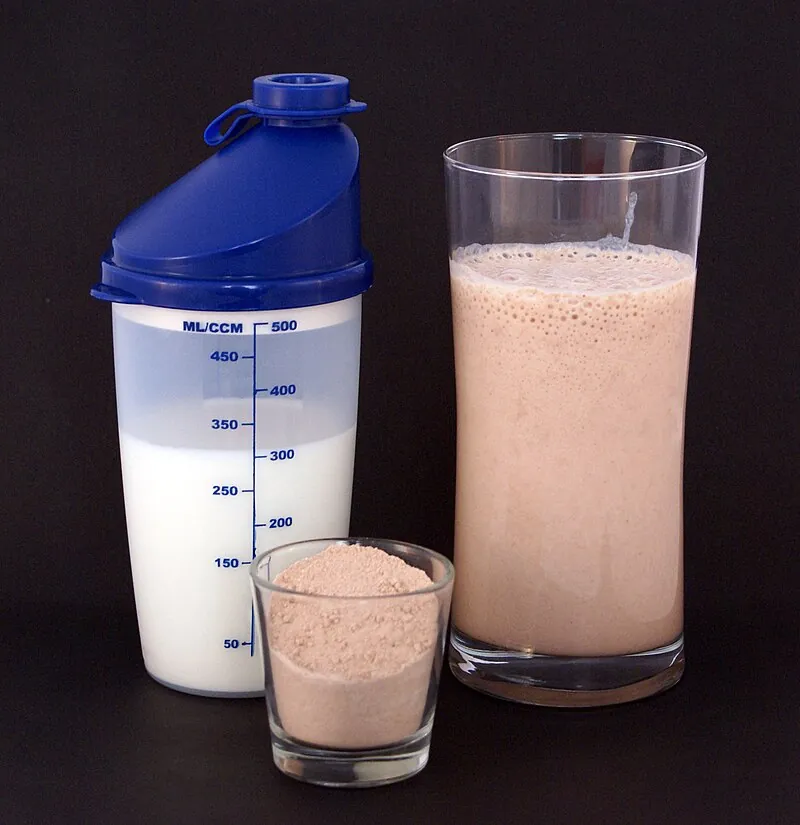
Dairy protein has been at the centre of sports nutrition research for more than 30 years, and its position there is well deserved. Cow's milk provides the two best-studied proteins in exercise science: whey, the fast-digesting fraction responsible for rapid amino acid delivery to muscle, and casein, the slow-digesting fraction that sustains amino acid availability for hours. No plant protein combination has yet matched their combined performance in head-to-head trials of muscle protein synthesis, recovery from exercise-induced muscle damage, and lean mass accrual over months of resistance training. Understanding the mechanisms behind these effects, the relevant research, and the practical implications for training nutrition turns general awareness of dairy protein into actionable strategy.
The Two Dairy Proteins: Whey and Casein
Cow's milk is approximately 3.5 percent protein by weight, with that protein split into two main fractions: approximately 20 percent whey (alpha-lactalbumin, beta-lactoglobulin, and immunoglobulins) and approximately 80 percent casein (alpha-S1-casein, alpha-S2-casein, beta-casein, and kappa-casein). This ratio was established in the foundational work of Yves Boirie and colleagues at INRA (Institut National de la Recherche Agronomique) in Clermont-Ferrand, France, published in the Proceedings of the National Academy of Sciences in 1997, which introduced the terms "fast" and "slow" protein to describe the different amino acid absorption kinetics of whey and casein.
Whey protein, when consumed in isolation (as whey protein concentrate, isolate, or hydrolysate supplement), produces a rapid and high peak of plasma amino acids within 60 to 90 minutes of ingestion, followed by a return to baseline by approximately 3 to 5 hours. Casein, when consumed as micellar casein or casein protein concentrate, clots in the acid environment of the stomach, slowing gastric emptying and producing a slower, lower, but more sustained rise in plasma amino acids lasting 5 to 7 hours. The practical importance of this distinction was confirmed in a 2001 follow-up study by Boirie's group showing that whey stimulated a greater acute (short-term) increase in muscle protein synthesis while casein was superior at suppressing protein breakdown over a longer period.
The Leucine Threshold: Why Dairy Protein Quality Matters
The amino acid most directly responsible for triggering muscle protein synthesis is leucine, a branched-chain amino acid that directly activates the mTORC1 (mechanistic target of rapamycin complex 1) signalling pathway. Research by Professor Stuart Phillips at McMaster University in Hamilton, Ontario, and Dr. Donald Layman at the University of Illinois has established that there is a minimum leucine dose required to maximally stimulate muscle protein synthesis, typically estimated at 2.5 to 3 grams of leucine per meal.
Whey protein is exceptionally rich in leucine: whey protein isolate contains approximately 10 to 11 percent leucine by weight, meaning a 25-gram serving provides approximately 2.5 to 2.75 grams of leucine, close to or at the threshold for maximal mTORC1 activation. Casein contains approximately 9 percent leucine by weight. Whole milk, reflecting the 20:80 whey-to-casein ratio, provides approximately 9.5 percent leucine in its protein fraction. Plant proteins generally contain less leucine: soy protein isolate provides approximately 7.8 percent, pea protein approximately 8 percent, and rice protein approximately 8.2 percent, all below the leucine density of dairy proteins.
This is not a trivial distinction. A 2009 study by Wilkinson and colleagues in the American Journal of Clinical Nutrition directly compared skim milk with a soy milk drink providing equivalent protein and energy after resistance exercise in young men. After 12 weeks, the milk group accrued significantly more lean mass and lost more fat mass than the soy group, despite identical protein and calorie intakes, a finding the researchers attributed partly to whey protein's leucine content and faster absorption kinetics.
Chocolate Milk as a Recovery Drink: The Research
One of the more surprising findings in sports nutrition research involves low-fat chocolate milk as a post-exercise recovery beverage. A 2006 study by Karp and colleagues published in the International Journal of Sport Nutrition and Exercise Metabolism compared chocolate milk to a carbohydrate-electrolyte sports drink (Gatorade) and a fluid-only placebo in cyclists performing exhaustive intervals. Cyclists who consumed chocolate milk between bouts showed superior time to exhaustion in the second bout compared with the sports drink group, a finding the researchers attributed to chocolate milk's combination of carbohydrate (for glycogen resynthesis), protein (for muscle repair initiation), and electrolytes (sodium, potassium for rehydration).
Subsequent studies have extended these findings. A 2012 meta-analysis by Thomas and colleagues in the European Journal of Sport Science reviewed 9 studies comparing milk-based recovery beverages to carbohydrate-only drinks and found that milk produced significantly greater exercise performance outcomes in subsequent exercise bouts. A 2018 systematic review in the Applied Physiology, Nutrition, and Metabolism specifically focused on chocolate milk, finding it superior to commercial recovery beverages in 11 of 15 studies reviewed.
The physiological rationale is straightforward: post-exercise muscle glycogen synthesis (carbohydrate storage) is maximised when carbohydrate and protein are consumed together within 30 to 60 minutes of exercise, a phenomenon confirmed in foundational research by Roy and Tarnopolsky published in the Journal of Applied Physiology in 1998. Chocolate milk provides approximately 26 grams of carbohydrate and 8 grams of protein per 240 mL, with a carbohydrate-to-protein ratio of approximately 3.25:1, close to the 3:1 to 4:1 ratio identified as optimal for combined glycogen and muscle protein synthesis. Low-fat chocolate milk (approximately 130 kilocalories per 240 mL) also provides this profile at lower cost than commercial recovery products, which retail at 2 to 5 dollars per serving compared with approximately 0.30 to 0.50 cents for a glass of chocolate milk.
Whey Protein for Muscle Protein Synthesis: Dose-Response Data
The dose of protein that maximises muscle protein synthesis after resistance exercise has been studied extensively. A landmark 2012 study by Moore and colleagues published in the American Journal of Clinical Nutrition fed young men increasing doses of egg white protein (5, 10, 20, and 40 grams) after a leg extension session. Muscle protein synthesis increased dose-dependently up to 20 grams of protein, beyond which no additional stimulation occurred (and the 40-gram dose produced significantly more urea excretion, indicating oxidation of excess amino acids). This established the commonly cited figure of 20 to 25 grams of high-quality protein per meal as sufficient to maximally stimulate acute muscle protein synthesis in young adults.
Subsequent research by Witard and colleagues (published in the American Journal of Clinical Nutrition in 2014) replicated this finding specifically using whey protein isolate, finding that 20 grams was adequate in rested young men but that older adults may require higher doses to overcome the "anabolic resistance" that develops with ageing. A 2016 meta-analysis by Morton and colleagues in the British Journal of Sports Medicine, covering 49 randomised controlled trials, found that protein supplementation significantly increased lean mass gains during resistance training programs, with the effect plateauing at approximately 1.62 grams of protein per kilogram of body weight per day. At body weights above this threshold, additional protein provided no further benefit to lean mass accrual.
Casein Protein Before Bed: Overnight Muscle Synthesis
The most studied application of casein's slow-release properties is pre-sleep protein intake for overnight muscle repair. The research group of Luc van Loon at Maastricht University in the Netherlands has published extensively in this area. A 2012 study by Res and colleagues in Medicine and Science in Sports and Exercise fed 40 grams of casein protein or a non-caloric placebo to young men 30 minutes before sleep, following an evening resistance training session. The casein group showed significantly higher rates of whole-body protein synthesis during sleep, measured by continuous infusion of labelled amino acid tracers, as well as higher net protein balance. This established pre-sleep casein as a legitimate nutritional strategy for enhancing overnight recovery.
A 2015 follow-up by Snijders and colleagues in the Journal of Nutrition extended this to a 12-week resistance training program. Men who consumed 28 grams of casein protein before sleep every night gained significantly more muscle mass and muscle fibre cross-sectional area (measured by muscle biopsy) than those who consumed a non-caloric placebo, while performing the same training program. The casein group also gained more strength on leg press and leg extension (10.9 kilograms more on leg press in 12 weeks). This was among the first long-term intervention studies to demonstrate practical lean mass accrual from pre-sleep protein consumption, converting a mechanistic finding into a training-relevant outcome.
In practice, the pre-sleep casein strategy is commonly implemented using micellar casein powder (typically 25 to 40 grams providing 20 to 32 grams of protein) mixed with water or low-fat milk, or by consuming cottage cheese (approximately 85 grams of 2% cottage cheese provides 12 grams of casein-dominant protein) or Greek yogurt (approximately 170 grams provides 17 to 20 grams of protein with a casein-rich profile). These whole-food options provide the protein alongside additional micronutrients (calcium, B12, potassium) not present in protein powder.
Milk Protein and Muscle Recovery in Older Adults
The relevance of dairy protein extends beyond athletic performance into the clinical domain of sarcopenia prevention in ageing populations. Sarcopenia, the age-related loss of muscle mass and function, affects an estimated 10 to 20 percent of adults over 60 and is associated with increased falls, hospitalisation, and all-cause mortality. The European Working Group on Sarcopenia in Older People (EWGSOP2) published updated diagnostic criteria in 2019 and identified dietary protein intake as a primary modifiable risk factor.
A 2015 Cochrane review by Malnutrition Advisory Group researchers found that protein supplementation in older adults engaged in resistance exercise significantly increased lean mass and strength compared with exercise alone. Studies using dairy protein specifically, including a 2014 randomised controlled trial by Vikberg and colleagues in Nutrients involving adults aged 70 to 87, found that dairy protein supplementation (combined with resistance exercise) produced significantly greater improvements in muscle mass, grip strength, and chair-stand performance than exercise alone. Whey protein's superior leucine content appears to be particularly important in overcoming the anabolic resistance of ageing muscle, which requires higher leucine concentrations to trigger the same mTORC1 activation that lower doses achieve in younger muscle.
Practical Recommendations: Implementing Dairy Protein in a Training Diet
The available evidence supports the following practical applications of dairy protein in a training nutrition context:
- Post-workout (within 30 to 60 minutes of training): 20 to 25 grams of whey protein from a whey isolate supplement, or one to two glasses (480 mL) of low-fat milk, or 500 mL of low-fat chocolate milk for sessions lasting over 60 minutes where glycogen resynthesis is also a priority.
- Pre-sleep: 25 to 40 grams of casein protein from micellar casein powder, or 150 to 200 grams of low-fat cottage cheese or Greek yogurt. This strategy is most beneficial for people training in the evening and for older adults seeking maximum muscle protein synthesis opportunity.
- Throughout the day: Distribute protein intake across 3 to 4 meals or snacks of 20 to 40 grams each (higher doses for older adults and heavier individuals) rather than consuming the daily total in one or two large meals. Research by Areta and colleagues published in the Journal of Physiology in 2013 showed that distributing 80 grams of protein across four servings of 20 grams stimulated significantly more muscle protein synthesis than the same total in two 40-gram boluses or eight 10-gram servings, confirming the importance of meal distribution rather than just daily total.
- Daily protein target: 1.6 to 2.2 grams of protein per kilogram of body weight per day for individuals engaged in regular resistance training, based on the Morton et al. 2018 meta-analysis. For a 75-kilogram person, this means 120 to 165 grams of protein daily, which can be substantially met through 2 to 3 servings of dairy (milk, yogurt, or cottage cheese) alongside other dietary protein sources.
Dairy Protein vs Plant Protein for Muscle: Current Evidence
The debate between animal and plant protein for muscle building has intensified as plant-based diets have grown in popularity. The current evidence suggests that dairy protein (and animal proteins generally) produce greater muscle protein synthesis responses per gram than most plant proteins at equivalent doses, primarily due to higher leucine density, more complete essential amino acid profiles, and faster absorption kinetics for whey specifically. However, this advantage can be partially offset by consuming higher doses of plant protein (to compensate for lower leucine density) or by combining plant proteins with leucine supplementation.
A 2023 randomised controlled trial by van Vliet and colleagues published in the Journal of Nutrition compared whey protein isolate to a mycoprotein (Quorn)-based protein supplement matched for leucine content in older adults. When leucine was equated, the mycoprotein produced a similar muscle protein synthesis response to whey, suggesting that the leucine content of the protein source is a key determinant of the response independent of the protein source itself. This nuanced finding does not eliminate dairy's advantage in convenience (naturally high leucine content without manipulation) but suggests that the gap between well-formulated plant proteins and dairy proteins is narrowing as plant protein technology improves.
Related: Whey Protein Isolate vs Concentrate vs Hydrolysate: Which Form Is Best? | Casein Protein: The Slow-Digesting Dairy Protein Explained