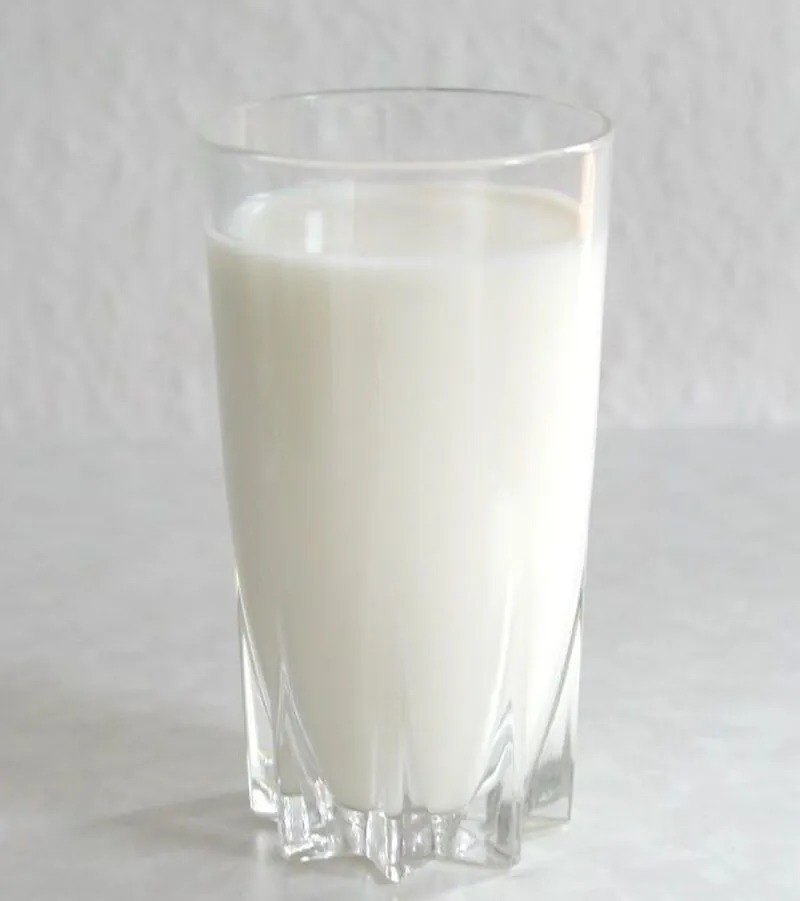
For roughly four decades, official dietary guidelines told us the same thing: full-fat dairy raises LDL cholesterol, LDL cholesterol causes heart disease, so full-fat dairy causes heart disease. Millions of people switched to skim milk and low-fat yogurt. Then, in 2021, the results of the Prospective Urban Rural Epidemiology study, known as PURE, landed in The Lancet and complicated everything. Covering 130,000 participants across 21 countries and 9 years of follow-up, PURE found that higher dairy consumption, including full-fat varieties, was associated with lower total mortality and lower rates of cardiovascular disease. The saturated fat story turned out to be considerably more nuanced than the guidelines acknowledged.
The PURE Study: Scale, Design, and Key Findings
The PURE study, led by Mahshid Dehghan and colleagues at McMaster University's Population Health Research Institute, enrolled participants from low-, middle-, and high-income countries spanning five continents. This geographic breadth was deliberate. Earlier studies had focused almost exclusively on Western populations eating Western diets. PURE captured people in Bangladesh, Pakistan, Zimbabwe, Colombia, and China, among many others, giving it statistical power to detect signals invisible in narrower cohorts.
The dietary assessment used validated food frequency questionnaires adapted for local foods, and researchers tracked outcomes including heart attacks, strokes, heart failure, and death over a median follow-up of 9.1 years. The dairy findings, published in The Lancet in September 2021 (Dehghan et al., Lancet 398:237–251), were striking. Compared with no dairy intake, consuming two or more servings per day was associated with a 22% lower risk of cardiovascular disease, a 34% lower risk of stroke, and a 23% lower risk of total mortality. Crucially, the associations held for full-fat dairy as well as lower-fat options. There was no statistically significant harm signal for full-fat consumption.
The Saturated Fat Debate: A 70-Year Rethink
The conventional model linking saturated fat to heart disease traces to Ancel Keys's Seven Countries Study from the 1960s. Keys observed that populations eating more saturated fat had higher rates of coronary mortality and proposed a causal chain: saturated fat raises total cholesterol, total cholesterol causes atherosclerosis, atherosclerosis causes heart attacks. This model drove the dietary guidelines of the 1980s and 1990s. It was never as clean as it appeared.
A 2010 meta-analysis by Ronald Krauss and colleagues at the Children's Hospital Oakland Research Institute, published in the American Journal of Clinical Nutrition, pooled data from 21 prospective cohort studies covering nearly 348,000 adults and found no significant association between saturated fat intake and incident cardiovascular events. A 2020 review in the Journal of the American College of Cardiology by Ronald Krauss again, along with Arne Astrup and other researchers, concluded that saturated fatty acids from dairy sources appear to have a neutral or even beneficial effect on cardiovascular risk markers, partly because the specific fatty acids and the food matrix they come in modify their metabolic effects.
The central complication is that saturated fat is not one thing. Dairy contains more than a dozen different saturated fatty acids. Lauric acid (C12) raises HDL cholesterol substantially. Stearic acid (C18) is rapidly converted to oleic acid in the body and has a neutral effect on LDL. Odd-chain fatty acids like pentadecanoic acid (C15:0) and heptadecanoic acid (C17:0) are found almost exclusively in dairy and have been proposed as biomarkers for dairy fat intake. A 2021 paper in PLOS Medicine by Kathy Trieu and colleagues found that higher circulating C15:0 and C17:0 were associated with lower risk of incident cardiovascular disease across 18 prospective studies. These are not nutrients you find in vegetable oils or processed foods.
The Dairy Fat Matrix Concept
Perhaps the most important conceptual shift in nutrition research over the past decade is the move away from thinking about individual nutrients in isolation and toward thinking about food matrices. The dairy fat matrix refers to the idea that the fat in cheese, butter, or whole milk does not behave in the body the same way as the same quantity of saturated fat extracted and consumed in isolation, because the fat is packaged inside a complex biological structure alongside proteins, minerals, phospholipids, and bioactive peptides.
Cheese provides a clear example. Several studies have compared isocaloric diets where participants consume equal amounts of saturated fat either as cheese or as butter. Despite similar fat intakes, cheese consistently produces smaller increases in LDL cholesterol than butter. A 2015 randomized controlled trial published in the American Journal of Clinical Nutrition by Tine Tholstrup and colleagues at the University of Copenhagen found that cheese consumption led to significantly lower LDL cholesterol than butter consumption despite matching fat content. The proposed mechanism involves the calcium in cheese binding to fatty acids in the gut, reducing intestinal fat absorption.
Fermented dairy products add another layer of complexity. The fermentation process in yogurt and cheese produces short-chain fatty acids, vitamin K2, and bioactive peptides that have measurable anti-inflammatory and vasodilatory effects. A 2018 meta-analysis in the British Journal of Nutrition found that fermented dairy consumption was specifically associated with lower cardiovascular disease risk, distinct from the effect of total dairy intake.
What Cardiologists Now Say
Cardiology as a field has not reached a unanimous position, but the conversation has shifted noticeably. The American Heart Association still recommends low-fat dairy in its dietary guidance as of 2021, but this guidance is increasingly contested within the literature. The European Society of Cardiology's 2021 guidelines on cardiovascular disease prevention take a more permissive stance on fermented dairy products, specifically noting that yogurt and cheese may have neutral or beneficial effects.
Dr. Dariush Mozaffarian, dean of the Tufts Friedman School of Nutrition Science and Policy, has written and spoken extensively on the need to move beyond simple saturated fat targets. In a widely cited 2021 BMJ editorial, he argued that the evidence no longer supports broad restrictions on dairy fat and that replacing full-fat dairy with refined carbohydrates, which is what many people did during the low-fat era, likely made cardiovascular outcomes worse, not better. The PURE study data support this concern: across the 21 countries studied, the people with lowest dairy intake were not eating more olive oil. They were eating more refined grain and sugar.
That said, context matters. The PURE study population skewed toward low- and middle-income countries where dairy is a scarce, high-quality food source. The results may not translate directly to a high-income Western population already consuming large quantities of ultra-processed foods alongside dairy. And no researcher in this field argues that dairy is a treatment for heart disease. The question being debated is far more specific: is full-fat dairy a meaningful contributor to cardiovascular risk in the context of an otherwise reasonable diet? The most current evidence suggests the answer is no, and may even be the opposite.
Practical Takeaways
Based on the current body of evidence, several conclusions seem reasonable for most adults without specific medical contraindications:
- Fermented dairy first: Plain yogurt, kefir, and aged cheese carry the strongest favorable evidence. Aim for 1 to 2 servings daily.
- Whole milk over low-fat if switching from refined carbs: If the alternative is a sweetened low-fat product, the full-fat unsweetened version is almost certainly preferable for heart health.
- Butter remains debatable: Unlike cheese, butter lacks the mitigating matrix effects. The evidence for butter is genuinely more mixed. Replacing butter with extra-virgin olive oil in cooking retains the strongest support in the literature.
- Individual LDL response matters: Roughly 25% of people are hyper-responders to dietary saturated fat, meaning their LDL rises significantly with high saturated fat intake. If you fall in this group, working with a physician or registered dietitian to tailor your dairy intake is sensible.
- Total diet context: Dairy's cardiovascular effect cannot be separated from the rest of your diet. Two servings of full-fat yogurt alongside abundant vegetables, legumes, and whole grains is a very different metabolic situation than two servings of cheese alongside a diet of processed meat and refined starch.
The PURE study did not close the dairy-heart debate. Science rarely ends cleanly. But it did provide the most geographically diverse and numerically powerful evidence yet that the decades-long instruction to avoid full-fat dairy was not grounded in the quality of evidence people assumed it was. Nutrition science, slowly and not without controversy, is correcting the record.
Related: A2 Milk and Digestibility: What the Science Says | Dairy and Inflammation: Friend or Foe?