Denmark is a small country with a large dairy footprint. With fewer than 6 million people, it exports dairy products to over 140 countries. Its two flagship products, Lurpak butter and Havarti cheese, are stocked in supermarkets from Tokyo to Toronto. Danish dairy cooperatives pioneered industrial food quality standards in the nineteenth century, and that legacy of precision and consistency continues to define how the world perceives Scandinavian dairy. Behind the familiar silver packaging and the mild semi-hard cheese slices lies a tradition of agricultural science, cooperative economics, and a few spirited international trade disputes.
The Danish Cooperative Model and Its Dairy Roots
Modern Danish dairy is inseparable from the cooperative movement. In the 1880s, Danish farmers responded to falling grain prices and rising competition from American imports by reorganising around high-quality animal products. The first dairy cooperative, Hjedding Mejeri, was founded in Jutland in 1882. By 1890, over 700 cooperative dairies operated across the country, collectively setting quality standards, sharing equipment costs, and collectively negotiating export contracts.
That movement created the institutional infrastructure for what is now Arla Foods, the Danish-Swedish cooperative that is the largest dairy company in Europe and the fourth largest in the world by revenue. Arla's 2023 revenue exceeded 13 billion euros, and its membership includes approximately 8,700 farmer-owners in Denmark, Sweden, Germany, the UK, and other countries. Lurpak and the Castello cheese brand are both Arla products. The cooperative structure means that profits flow back to member farmers rather than to external shareholders, a model that has maintained relatively stable farm incomes even through volatile global commodity cycles.
Lurpak: The Silver Standard of Butter
Lurpak was first produced in 1901 by a Danish dairy cooperative in the town of Lurø on the Limfjord in northern Jutland. The name combines "Lurø" with "pak" (the Danish word for package). The iconic silver packaging was introduced in the 1950s and has remained largely unchanged, becoming one of the most recognised dairy brand identities in the world.
Lurpak's defining characteristic is its use of lactic acid starter culture in its production process. After cream is separated from milk, it is fermented with selected bacteria, typically Leuconostoc mesenteroides and related strains, before churning. This fermentation generates diacetyl and other flavour compounds that give Lurpak a subtle, slightly tangy, complex flavour distinct from sweet cream butters like most American brands. The technique is sometimes called "cultured butter" or "lactic butter," and it is the standard across most of continental Europe. Many butter enthusiasts regard cultured butter as superior for table use, bread spreading, and finishing sauces.
Lurpak is available in unsalted, slightly salted, and spreadable (blended with rapeseed oil) varieties. The spreadable version, introduced in the 1980s, became particularly popular in the UK, where it now holds a significant share of the premium butter market. Lurpak commands a retail price roughly 20 to 30 percent above private-label European butters in British supermarkets, sustained by consistent quality and strong brand recognition.
In 2022, Lurpak made international headlines when the United Kingdom's post-Brexit import conditions and global supply chain disruptions pushed a 400-gram pack to over £9 (approximately $11) in some UK supermarkets. The price spike became a symbol of food inflation, and news photographs of security-tagged Lurpak blocks went viral on social media. By 2023, prices had moderated, but the episode illustrated how premium dairy branding can intersect with macroeconomic anxieties in unexpected ways.
Havarti: Denmark's Most Exported Cheese
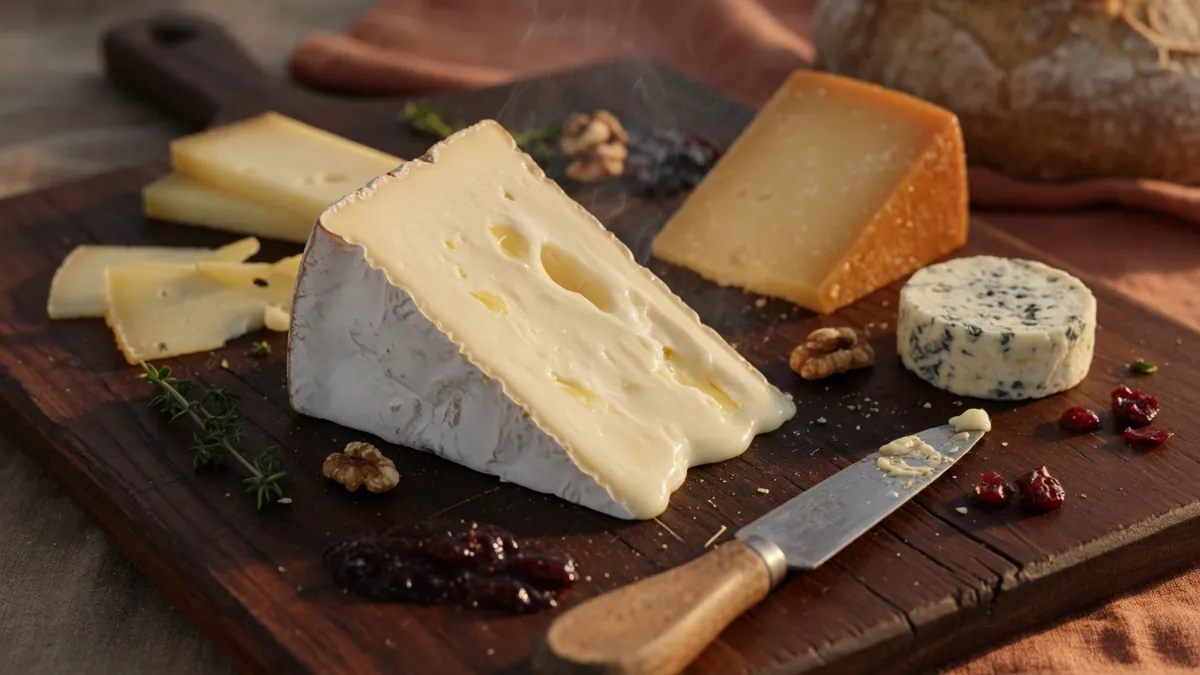
Havarti is a semi-hard, interior-ripened Danish cheese with a pale yellow, smooth body and small irregular holes. It takes its name from Havartigaard, the experimental farm outside Copenhagen run by dairy pioneer Hanne Nielsen in the 1850s. Nielsen travelled across Europe to study cheese-making techniques and brought those methods back to Denmark, developing what would eventually be standardised and named Havarti.
Modern Havarti is produced from pasteurised cow's milk with a fat content of at least 45 percent in dry matter. It is aged for a minimum of three months, though most commercially sold Havarti is mild and sliceable at around that minimum age. Longer-aged Havarti (sometimes called "aged Havarti" or "Havarti reserve"), matured for nine months to a year, develops a firmer texture, a golden colour, and a more pronounced, nutty flavour that some cheese specialists compare to aged Gouda.
The flavour profile of young Havarti is deliberately approachable: buttery, slightly acidic, with a mild creamy finish. This makes it an exceptionally versatile cheese. It melts evenly, making it a popular choice for sandwiches, quesadillas, and grilled cheese. It pairs well with fruit, honey, and light wines. It is one of the few Continental cheeses that is genuinely embraced in the American mainstream grocery market, where it sits alongside Muenster and Monterey Jack as an everyday option.
Havarti Varieties
Arla and other Danish producers offer Havarti in several flavoured versions. Dill Havarti, with dried dill herb incorporated into the paste, is the most common variant in North America. Caraway Havarti, more popular in Scandinavia itself, carries the distinctive anise-like flavour of caraway seeds. Jalapeño Havarti and smoked Havarti are also available from some producers, reflecting efforts to adapt the cheese to American flavour preferences.
Smørrebrød and the Role of Dairy in Danish Food Culture
To understand Danish dairy, one must understand smørrebrød, the traditional open-faced rye bread sandwich that forms the backbone of Danish lunch culture. The name translates literally as "butter bread," and that butter is not incidental. A proper smørrebrød begins with a thick, even layer of butter spread to the edges of dense, dense dark rye (rugbrød). The butter serves both as flavour and as a moisture barrier preventing the toppings from making the bread soggy.
Classic smørrebrød toppings with dairy connections include leverpostej (liver pâté) with pickles and topped with a curl of cold butter, sild (pickled herring) with sour cream and chives, and æggemad (egg salad) bound with mayonnaise and often finished with a smear of cold butter. Copenhagen's dedicated smørrebrød restaurants, called smørrebrødsforretninger, such as the historic Ida Davidsen (founded 1888) or the Michelin-recognised Aamanns, continue to serve these constructions as serious culinary expressions.
Dairy also features prominently in Danish baking. Wienerbrød, the pastry that English speakers call "Danish" (the Danes themselves use the Austrian/Viennese name), is a laminated pastry requiring substantial quantities of high-fat butter. The combination of yeast dough and cold butter sheets, folded and chilled repeatedly, produces the characteristic flaky, layered structure. Danish bakeries (bagere) are extraordinarily common; Copenhagen has more bakeries per capita than almost any other European capital.
The Danish Feta Dispute
One of the more contentious chapters in European dairy politics involves Denmark and the word "feta." For decades, Danish dairies produced a brined white cheese made from cow's milk that they marketed as "Danish feta" or "feta-style" cheese. Denmark was, at various points, one of the largest producers and exporters of this product, selling it at significantly lower prices than Greek sheep-milk feta.
Greece, which produces traditional feta from sheep milk (or sheep and goat milk blends) in defined geographic regions, lobbied aggressively within the European Union for Protected Designation of Origin (PDO) status for feta. PDO status would mean only cheese made in Greece from traditional methods could legally be called "feta" within the EU. Denmark, Germany, and France all contested this, arguing that "feta" had become a generic term for any white brined cheese.
The European Court of Justice ruled in favour of Greece in 2002, and feta received full PDO status. Danish producers were given a transition period to rebrand their product. Most rebranded as "white cheese," "Danish white," or "salad cheese," absorbing a significant marketing challenge. The legal precedent set by the feta case has since been cited in dozens of other geographic indication disputes across Europe and internationally, making it one of the most consequential intellectual property decisions in food history.
Danish "salad cheese," the product that emerged from that rebranding, remains widely sold and is cheaper than Greek PDO feta. It is made from cow's milk rather than sheep milk, producing a firmer, less tangy, and less complex product. Nutritionally it is comparable in protein and calcium, but flavour enthusiasts generally prefer traditional Greek feta for its depth and characteristic tang. The dispute is not entirely resolved in common usage; many consumers still informally call the Danish product "feta," to the continued frustration of Greek dairy interests.
Other Danish Dairy Products of Note
Danbo
Danbo is Denmark's most widely consumed domestic cheese, though it is less well known internationally than Havarti. It is a mild, semi-hard cheese with small holes, produced in rectangular blocks, and eaten daily in Danish households primarily as a breakfast and lunch cheese. It has a faintly rubbery texture and a clean, milky flavour, making it a staple on smørrebrød and open sandwiches. Some varieties include caraway seeds.
Esrom
Esrom, also known as Danish Port Salut, is a semi-soft washed-rind cheese with a more pungent aroma than Havarti or Danbo. It was originally made by monks at Esrom Monastery in the twelfth century. The modern commercial version, revived in 1951 by the Danish Cheese Export Board working from historical descriptions, has an orange rind, a supple paste, and a flavour that ranges from mild to quite assertive depending on age.
Cream and Cultured Products
Danish dairy culture extends to high-fat cream products. Piskefløde (whipping cream) and fraiche (a cultured cream with around 18 percent fat) are kitchen staples in Denmark. Skyr, though more associated with Iceland, is also produced in Denmark and has experienced rapid growth in Danish supermarkets following the global skyr trend of the 2010s. Danish-produced skyr typically has a slightly less sharp flavour than Icelandic versions.
Danish Dairy Exports Today
Denmark exported dairy products worth approximately 3.4 billion euros in 2022, according to Statistics Denmark. Its primary markets are Germany, the UK, Sweden, and the United States. The country's dairy herd numbers around 560,000 cows, producing approximately 5.5 billion kilograms of milk annually. While the gross production numbers are modest compared with Germany or the Netherlands, the value per unit of export is high, reflecting Denmark's emphasis on branded premium products rather than commodity bulk supply.
Related: Irish Dairy and Kerrygold: Why Ireland Makes the World's Best Butter | Feta Cheese: Everything You Need to Know | Cheese and Wine Pairing Guide