When butter lovers in the United States reach for something special, a gold foil wrapper frequently ends up in the cart. Kerrygold, the Irish cooperative butter brand, has become the second best-selling butter in the United States by retail volume, trailing only Land O'Lakes. That achievement did not happen by accident. It reflects a genuine and measurable quality advantage rooted in Ireland's geography, its Atlantic climate, and a centuries-old pastoral tradition that places grass-fed cows at the centre of its food identity.
The Geography That Makes Irish Dairy Different
Ireland occupies a temperate island in the North Atlantic, buffeted by the Gulf Stream and receiving frequent rainfall throughout the year. Average annual precipitation in dairy-farming counties such as Cork, Kerry, Tipperary, and Kilkenny ranges between 900 and 1,400 millimetres. That moisture, combined with mild winter temperatures that rarely drop below freezing for sustained periods, allows perennial ryegrass and clover to grow for approximately 270 to 300 days per year. Most northern European dairy regions cannot match that grazing calendar.
The consequence is straightforward: Irish dairy cows spend significantly more time outdoors eating fresh grass than their counterparts in Germany, the Netherlands, or the United States. Teagasc, Ireland's Agriculture and Food Development Authority, estimates that cows on well-managed Irish farms consume grass as 90 to 95 percent of their diet over the full year. That figure shapes every aspect of the milk those cows produce.
What Grass Feeding Does to Milk and Butter
Grass-fed milk has a measurably different fatty acid profile compared with grain-fed milk. A 2013 study published in the journal Food Chemistry found that milk from cows grazing on fresh pasture contains roughly two to five times more conjugated linoleic acid (CLA) than milk from cows on total mixed rations. CLA is a naturally occurring fatty acid associated in preliminary research with anti-inflammatory effects and favourable body composition outcomes, though clinical evidence in humans remains mixed.
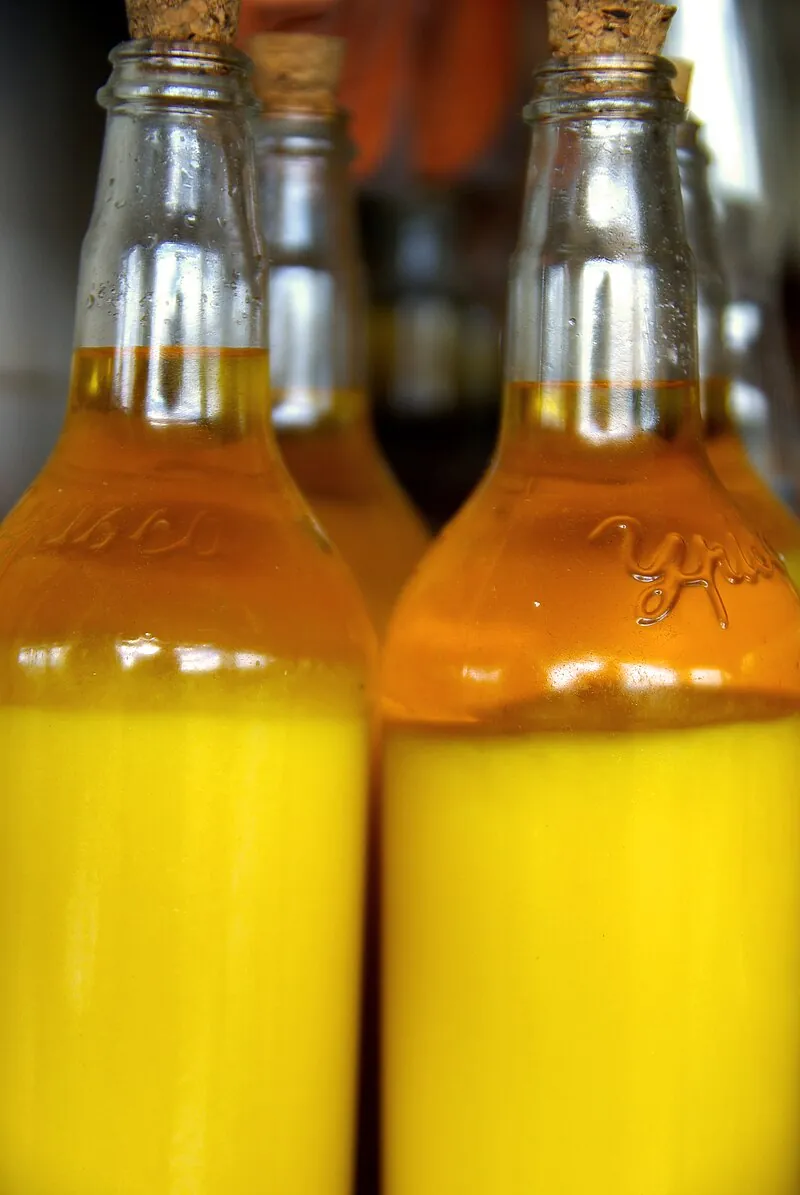
More immediately perceptible to consumers is the beta-carotene content. Grass is rich in beta-carotene, and cows convert a portion of it into vitamin A while excreting the rest into the milk fat. That excretion gives Irish butter its characteristic golden-yellow colour, which is visible and distinct from the pale white or ivory shade of grain-fed butter. Kerrygold's colour is not dye or artificial colouring; it is beta-carotene from the grass itself.
The flavour profile is also affected. Grass-fed butter tends to carry more pronounced dairy complexity, described variously as grassy, floral, or nutty, because the volatile compounds in fresh forage pass into the milk fat. Chefs who work with Irish butter regularly note that it performs differently in pastry, producing a more flavourful shortcrust and a more aromatic brown butter.
Kerrygold: From Cooperative to Global Brand
Kerrygold is a brand owned by Ornua, the Irish dairy cooperative formerly known as the Irish Dairy Board. Ornua was established in 1961 under the Dairy Produce Marketing Act as the statutory export body for Irish dairy. The Kerrygold brand was created that same year to give Irish butter a unified export identity, replacing the fragmented regional brands that had competed against each other in export markets with limited marketing budgets.
The cooperative structure behind Ornua is important. Member cooperatives include Kerry Co-op, Dairygold, Lakeland Dairies, and others, collectively representing thousands of family farms across the Republic of Ireland. Those farms supply milk to processing facilities where cream is separated and churned. The butter is then exported to more than 110 countries. Annual Kerrygold butter sales exceed 900 million US dollars globally as of 2023, making it one of the most commercially successful dairy export brands in European history.
The United States breakthrough came gradually. Kerrygold entered the US market in the 1990s, initially finding its audience in specialty food stores and among consumers interested in European-style butter. The low-carbohydrate and ketogenic diet movements of the 2010s dramatically accelerated its growth, as those communities specifically sought high-fat, minimally processed dairy products. Bulletproof coffee, which calls for blending brewed coffee with grass-fed butter, introduced Kerrygold to millions of American households who had previously paid little attention to butter provenance.
Irish Dairy Beyond Butter
Butter may be the international face of Irish dairy, but the sector is far broader. Ireland is one of the world's largest exporters of dairy products per capita. Its dairy exports, valued at over 5 billion euros annually according to Bord Bia (the Irish Food Board), include cheese, infant formula, whey proteins, and milk powders that supply food manufacturers and infant nutrition companies across Asia, the Middle East, and North Africa.
Irish Cheddar
Cheddar production in Ireland has deep historical roots, and Irish Cheddar is the country's most produced cheese by volume. Brands such as Kerrygold Mature Cheddar, Dubliner (also Ornua), and Tipperary Cheddar are widely exported. Dubliner, which carries a slightly sweeter, nutty flavour reminiscent of aged Gouda, has found particular success in the United States, winning multiple awards at the World Cheese Awards.
Cashel Blue
For artisan cheese, Cashel Blue from Tipperary is Ireland's most internationally recognised farmhouse cheese. Made by the Grubb family since 1984 from their own herd's milk, Cashel Blue is a semi-soft blue-veined cheese with a creamy, relatively mild flavour compared with Roquefort or Stilton. It has been served at state dinners and is stocked in high-end cheese shops across the UK and US.
Irish Butter Traditions
The Irish relationship with butter predates Kerrygold by several thousand years. Archaeological excavations of Irish bogs have recovered what researchers call "bog butter," wooden containers filled with aged butter that was buried, possibly for preservation or ritual purposes, during the Iron Age and early medieval period. The National Museum of Ireland in Dublin holds several examples, the largest weighing approximately 35 kilograms, carbon-dated to around 400 BCE. That tradition of valuing and preserving butter speaks to how central dairy fat was to the Irish diet.
Medieval Ireland organised dairy labour around the Beltane season (May), when cattle were moved to summer pastures and butter-making intensified. Surplus butter was paid as rent, used in trade, and stored in bogs. The cultural centrality of butter persisted through the plantation era, through the Great Famine of the 1840s (during which dairy production collapsed catastrophically), and into the revival of Irish agriculture in the twentieth century.
Grass-Fed Certification and Verification
One complexity facing Irish dairy exporters is the gap between marketing language and verifiable standards. Kerrygold markets itself as coming from "grass-fed cows," but Ireland does not use a single legally defined national standard for that claim. Bord Bia operates the Sustainable Dairy Assurance Scheme (SDAS), which audits Irish farms and verifies that cows graze on pasture for a minimum of 250 days per year and that grass constitutes at least 90 percent of the annual diet. As of 2022, over 18,000 Irish farms were certified under SDAS, covering the substantial majority of Ornua's milk supply.
That verification matters because the US Department of Agriculture has no binding federal definition for "grass-fed" on dairy products, only on beef. Consumers relying on Kerrygold's grass-fed messaging are, in practice, relying on Bord Bia's third-party auditing system rather than a US regulatory standard. Independent testing by organisations such as the Good Food Institute has generally found Irish butter to have the elevated CLA and beta-carotene levels consistent with a predominantly grass-based diet.
Price, Value, and Practical Cooking Use
Kerrygold unsalted butter retails in the United States at approximately $4.50 to $6.00 for a 250-gram block, compared with roughly $3.50 to $4.50 for a pound (454 grams) of commodity butter such as Land O'Lakes. On a per-gram basis, Kerrygold costs roughly twice as much. Whether that premium is justified depends on application. For bread and finishing uses where flavour is primary, most cooks find the difference noticeable. For high-heat frying where delicate butter volatiles are destroyed, the premium has less practical impact.
European-style butters, including Kerrygold, typically have a higher fat content than American butter: around 82 percent butterfat versus the 80 percent minimum mandated in the US. That extra 2 percent matters in laminated pastries like croissants and puff pastry, where higher fat content produces more distinct, flakier layers. French pastry chefs have long used high-fat butters such as Échiré and Beurre de Bresse for this reason; Kerrygold occupies a similar quality niche at a lower price point than those prestige French brands.
Environmental Considerations
Irish dairy's grass-based model has genuine environmental advantages in some dimensions and genuine challenges in others. Lower reliance on imported feed and compound concentrates reduces the embedded land use associated with Irish dairy compared with systems that depend on soy or corn. However, ruminant livestock are significant emitters of methane, a potent greenhouse gas, and Ireland's dairy herd expansion since EU milk quota abolition in 2015 has made agriculture the country's largest source of greenhouse gas emissions, at approximately 37 percent of national output according to the Environmental Protection Agency Ireland.
Teagasc and Irish dairy companies are investing in research on methane-reducing feed additives, selective breeding for low-emission animals, and soil carbon sequestration in managed grasslands. The sustainability story is therefore genuinely mixed, and consumers who value grass-fed provenance for health or taste reasons should be aware that environmental impact is a separate and more complicated question.
Related: Grass-Fed Dairy: What the Research Actually Shows | Butter vs. Ghee: Which Should You Cook With? | Danish Dairy and Lurpak: Europe's Other Great Butter Tradition