Donkey milk costs between €15 and €30 per litre fresh, and up to €150 per 100g as a freeze-dried powder. It is used in skincare formulations by premium brands, studied as an infant formula alternative for children with severe cow's milk protein allergy, and turned into the world's most expensive cheese in a Serbian nature reserve. The price is not marketing mythology: a jenny (female donkey) produces only 0.5–1.5 litres of milk per day, compared with 25–30 litres for a Friesian dairy cow, and the milking process cannot be mechanised in the same way as commercial dairy. What makes donkey milk genuinely interesting, however, is not its scarcity or its price. It is its composition, which is unlike any other commercial dairy and closer to human breast milk than any other animal milk currently available.
The Composition of Donkey Milk
Donkey milk occupies a unique position in the dairy spectrum. Its macronutrient profile differs fundamentally from cow's milk, goat's milk, and sheep's milk, and aligns more closely with human breast milk than any other species' milk commonly used in food or nutrition.
The protein structure is the most significant difference. In cow's milk, casein proteins make up approximately 80% of total protein, with whey proteins comprising the remaining 20%. In donkey milk, this ratio is almost exactly reversed: whey proteins (primarily alpha-lactalbumin, beta-lactoglobulin, and lysozyme) constitute approximately 65% of total protein, with casein at 35%. This composition mirrors human breast milk, where whey proteins also dominate. The practical consequence: donkey milk forms a much softer, more digestible curd in the stomach than cow's milk, a characteristic shared with human breast milk that reduces the gastric emptying time and may explain its tolerability in some infants with CMPA.
The fat content of donkey milk is strikingly low: 0.3–1.8% fat, compared with 3.5–4% in whole cow's milk. This makes donkey milk less calorically dense and explains why donkey milk alone cannot meet the energy needs of a growing infant. The lactose content, however, is high: 5.8–7.4%, compared with 4.8% in cow's milk and 7.3% in human breast milk. Individuals with lactase deficiency will not find donkey milk any easier to tolerate than cow's milk on this basis.
Lysozyme: The Antimicrobial Advantage
The most remarkable single component of donkey milk is its lysozyme content. Lysozyme is an enzyme that attacks the cell walls of Gram-positive bacteria, making it a natural antimicrobial agent. Human breast milk contains approximately 130–300mg of lysozyme per litre. Cow's milk contains a trace amount, typically 0.13mg per litre. Donkey milk contains 1–4mg per litre of lysozyme: 10–30 times higher than cow's milk and approaching levels found in some samples of human breast milk.
In vitro studies (laboratory studies using cell cultures) have confirmed that donkey milk lysozyme shows antibacterial activity against Staphylococcus aureus, Listeria monocytogenes, and Escherichia coli. Whether this translates into meaningful antimicrobial protection in humans who consume donkey milk is not yet established in clinical trials. The enzyme is partially inactivated by pasteurisation and by stomach acid, which limits the amount that reaches the gut intact. However, the high lysozyme content is part of the biological basis for the traditional use of donkey milk in infant and sick-child feeding across Mediterranean and Middle Eastern cultures.
Donkey milk also contains vitamins A, B1 (thiamine), B2 (riboflavin), B6 (pyridoxine), C, D, and E, and a polyunsaturated fatty acid profile rich in linoleic acid (omega-6) and alpha-linolenic acid (omega-3) relative to its total (very low) fat content.
Cleopatra's Baths and Pliny the Elder
The association between donkey milk and beauty is ancient and documented. Pliny the Elder's Historia Naturalis, written in 77 CE, records that Poppaea Sabina, wife of the Emperor Nero, bathed daily in donkey milk, travelling with a herd of 500 jennies. The same text attributes to Cleopatra the practice of bathing in donkey milk to preserve skin suppleness, though this specific claim predates Pliny's account in popular tradition. Whether Cleopatra's milk baths are strictly historical or partly legendary, the cosmetic use of donkey milk in the ancient Mediterranean world is documented in Roman sources.
The dermatological rationale is not entirely without scientific basis. Donkey milk contains alpha-hydroxy acids (lactic acid in particular), vitamins A and E, and fatty acids that have demonstrated skin-penetrating properties in formulated cosmetic preparations. Topical application of lactic acid is a well-established skin exfoliating treatment in modern dermatology. Whether bathing in diluted donkey milk achieves the same effect as a formulated topical acid treatment is a different question, but the ingredients are genuinely present.
Donkey Milk in Modern Cosmetics
Several European cosmetics brands have developed donkey milk skincare lines. Karawan Authentic (a French brand) produces a range of donkey milk soaps and creams sourced from a French artisan farm. Italian cosmetics brands including Athena's (founded in 2004 in Lecce, Puglia) have built their entire product lines around donkey milk formulations, positioning the ingredient at the premium end of the natural cosmetics market.
Donkey milk soap is made by the cold-process method, in which the milk replaces water in the saponification reaction with oils. The resulting soap retains the milk's proteins and fats in the finished bar, though the alkaline pH of saponification (typically pH 8–10) denatures most of the proteins and inactivates the lysozyme. The skin feel of donkey milk soap is genuinely distinct from standard soap: its high lactose content produces a mild glycolic acid effect, and the emollient fatty acids contribute to a soft-skin sensation. Whether this constitutes "anti-aging" activity in any measurable clinical sense is not supported by peer-reviewed trials, but the cosmetic experience is real.
Pule: The World's Most Expensive Cheese
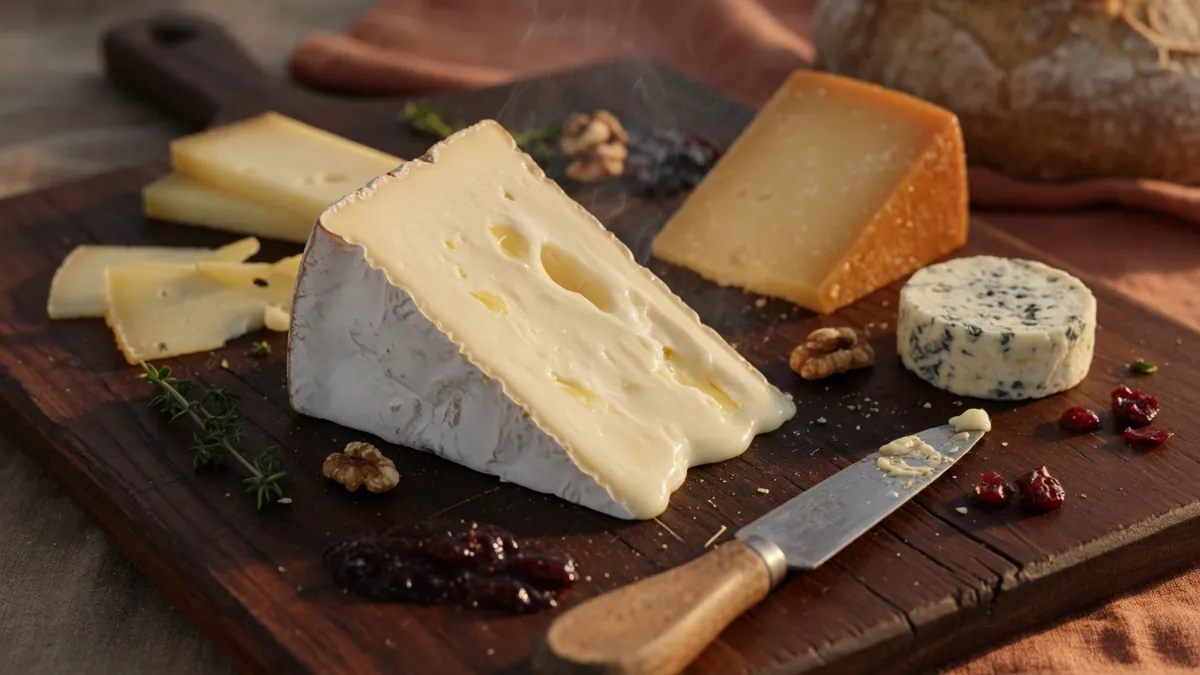
Pule is a Serbian cheese made from 100% Balkan donkey milk, produced exclusively at the Zasavica Special Nature Reserve in northwestern Serbia. It holds a consistent claim to the title of the world's most expensive cheese, typically cited at £800–£1,000 per kilogram (the exact price fluctuates with production quantities and exchange rates).
The reason for the price is straightforward mathematics: making one kilogram of Pule requires approximately 25 litres of donkey milk, and the reserve's herd of Balkan donkeys produces only a limited daily yield. Milking is done three times per day by hand; the animals cannot be mechanically milked because of their temperament and udder anatomy. The cheese itself is a crumbly, white, semi-hard cheese with a mild, slightly sweet flavour, not wildly different from some varieties of feta in character. The extraordinary price buys the scarcity, the production story, and the animal conservation dimension (the Balkan donkey is a rare breed maintained partly by the commercial value of Pule production), not a proportionally extraordinary flavour experience.
Slobodan Simić, the founder of the Zasavica reserve's Pule production programme, began making the cheese commercially around 2012. The reserve also uses the donkey herd for conservation grazing and eco-tourism. Pule has been featured in Guinness World Records as the most expensive cheese by weight.
Donkey Milk for Infants with CMPA
The most clinically significant application of donkey milk is in infant nutrition for children with cow's milk protein allergy (CMPA) who cannot tolerate hydrolysed formula. Italian paediatric researchers have been the primary investigators in this field.
A 2012 study published in Clinical and Experimental Allergy (Vita et al., University of Messina) examined 81 Italian infants with confirmed IgE-mediated and non-IgE-mediated CMPA who could not tolerate extensively hydrolysed formula or amino acid formula. Donkey milk was offered as an alternative. Tolerability rate: approximately 80% of infants tolerated donkey milk without reaction. A follow-up study from the same group in 2015, also published in Clinical and Experimental Allergy, reported similar findings in a larger cohort, with good growth outcomes over a 12-month follow-up period.
The biological basis for this tolerability is the whey-dominant protein profile and the absence of the specific casein epitopes (protein surface regions recognised by IgE antibodies) that trigger the most common IgE-mediated CMPA reactions. However, donkey milk is not appropriate for all CMPA infants: some react to donkey milk whey proteins, and the low fat content means it must be supplemented with additional caloric sources for infant growth adequacy. No commercial donkey milk infant formula is currently licensed in the EU or UK. Its use in infants is off-label and should only be supervised by a paediatric allergist or specialised dietitian.
The 20% of infants who did react to donkey milk in the Italian studies typically reacted to beta-lactoglobulin, a whey protein present in donkey milk (and cow's milk) but absent from human breast milk. For this subgroup, amino acid formula remains the only safe alternative.
Production Realities and the Future
Global donkey milk production is concentrated in a handful of European countries: Italy, France, Serbia, and Greece account for most commercial output. The niche but growing skincare market has created modest economic incentives for small-scale donkey dairy farms, particularly in Southern Italy and rural France. Several Italian farms (including Azienda Agricola La Fattoria dei Ciuchi in Piedmont and various Pugliese producers) now sell donkey milk direct to consumers online, both as fresh refrigerated milk and as freeze-dried powder for longer shelf life.
Scaling donkey milk production to volumes that could make it a competitive alternative dairy for CMPA infants faces structural limits. The species biology, the daily milk yield ceiling, and the hand-milking requirement mean that donkey milk will remain a specialty and premium product indefinitely. It is one of the most scientifically interesting dairy products in the world, not despite its obscurity, but partly because of it: its unusual composition preserves characteristics that industrial breeding and feeding practices have long since eliminated from commercial cow, goat, and sheep dairy.
Related: Cow's Milk Allergy in Babies: A Parent's Complete Guide | The World's Fermented Dairy Drinks: A Global Map