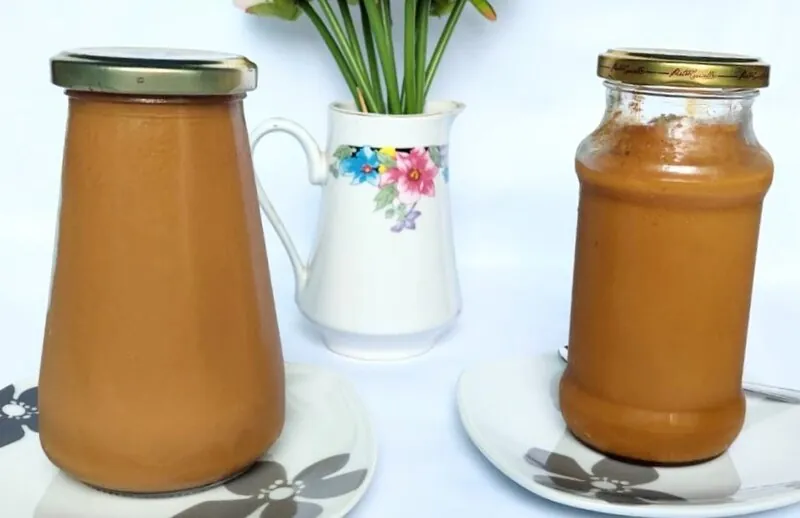
Imagine spreading something onto toast that is simultaneously caramel, toffee, milk, and something subtly more complex than any of those — a brown, glossy, slow-flowing substance with a flavour that lingers long after eating and a texture that somehow manages to be both light and intensely rich. Dulce de leche (Spanish) or doce de leite (Portuguese) — the sweet of milk — is one of the world's great dairy products and arguably the most transformative: the result of a simple, ancient process by which heat converts something perishable and ordinary into something shelf-stable, concentrated, and remarkable. From the Rio de la Plata to the Rio Grande, from the cafés of Buenos Aires to the bakeries of Recife, it is the dairy product Latin America has made entirely its own.
The Chemistry: What Heat Does to Milk
Dulce de leche is not, chemically, a single thing happening — it is the result of multiple simultaneous reactions that transform milk's character entirely:
The Maillard Reaction
The same reaction responsible for the browning of bread crusts, the searing of meat, and the roasting of coffee. Amino acids (from milk proteins) react with reducing sugars (lactose) under heat to produce hundreds of new flavour compounds — collectively creating the caramel, nutty, toffee-like notes that define dulce de leche. The Maillard reaction begins at around 140°C but occurs measurably even at lower temperatures over long periods — which is why slow-cooked dulce de leche at low heat (stirring constantly for 2+ hours) produces comparable complexity to higher-temperature production.
Lactose Caramelization
Pure lactose caramelizes at approximately 150–160°C — slightly higher than sucrose. As water evaporates during dulce de leche production and the concentration of lactose increases, its caramelization temperature becomes achievable in the thickening mass. This contributes a distinct, slightly bitter complexity beyond simple sweetness — what distinguishes dulce de leche from plain caramel made from sucrose.
Protein Denaturation and Concentration
As water evaporates (dulce de leche loses approximately 65–70% of fresh milk's water content), milk proteins concentrate and partially denature — altering the texture from liquid to the characteristic thick, spoonable consistency. The specific texture depends on the degree of evaporation: less evaporation produces a sauce-like dulce de leche; more produces a firm, almost solid block used in confectionery.
The Contested History
Three countries claim the invention of dulce de leche, and the arguments are as heated as the milk itself.
The Argentine Claim
Argentina's most celebrated origin story dates to 1829. A cook preparing lechada (a sweetened milk beverage popular at the time) forgot it heating on the fire when an unexpected visitor arrived — the messenger of General Juan Manuel de Rosas — and returned to find the milk transformed into a thick, brown sweet. Whether or not this specific story is accurate, Argentina has by far the strongest contemporary claim: Argentines are the world's largest per capita consumers of dulce de leche (consuming approximately 3–4 kg per person per year), they spread it on everything, and they have developed its applications further than anyone else.
The Chilean Claim
Chilean sources argue that their manjar blanco (a similar preparation, typically slightly lighter in colour and milder in flavour) predates the Argentine product and that the Argentine version derived from it following the colonial and post-independence traffic between the two countries.
The Brazilian Claim and Doce de Leite
Brazil's doce de leite tradition is equally ancient and equally independent — the Portuguese settlers of coastal Brazil were making a milk sweet called leite-creme (milk cream) from the 17th century, and the development of a concentrated, firm milk candy is documented in the Northeast from at least the 18th century. Brazilian doce de leite is typically firmer and less flowing than Argentine dulce — produced in blocks sold by weight at market stalls, used as a filling in confectionery and a topping for the famous Brazilian Romeo and Juliet pairing (doce de leite + goiabada, guava paste) eaten with or without cheese.
National Expressions: How Each Country Uses It
Argentina
Argentina's relationship with dulce de leche is total. It appears at every breakfast table, spread on toast or crusty bread. It fills the alfajor — the beloved sandwich cookie of cornstarch biscuits glued together with dulce de leche and often rolled in coconut or dipped in chocolate — which is Argentina's most consumed manufactured sweet, with nearly 6 billion units sold per year (in a country of 46 million people). It crowns facturas (the Argentine pastry breakfast standard), it fills crêpes, it tops panqueques, and it is the standard flavour of Argentine ice cream — a thick, sweet scoop that is nothing like any other ice cream on Earth.
Brazil
In Brazil, doce de leite is the base for the brigadeiro — Brazil's most beloved sweet, prepared for every birthday party, celebration, and school event: condensed milk + cocoa powder + butter cooked to a fudge-like consistency, rolled into balls and coated in chocolate sprinkles. The brigadeiro's origin is a 1946 political campaign — it was sold at fundraisers for the presidential candidacy of Brigadier Eduardo Gomes — and it has been Brazil's defining confection ever since. Beyond the brigadeiro, doce de leite fills cakes, lines tarts, flavours mousse, and appears in the glass alongside guava paste as one of Brazil's simplest and most perfect flavor pairings.
Colombia, Peru, and Mexico
Colombia's arequipe is functionally identical to dulce de leche but slightly lighter in flavour, sometimes with bicarbonate added to prevent caramelization from going too dark. Peru's manjar blanco is often made with evaporated milk rather than fresh, producing a slightly different flavour profile. Mexico's cajeta is the most distinctive regional variation — made primarily from goat's milk rather than cow's milk, producing a tangier, more complex product with a slightly different caramelization character. Cajeta from Celaya, Guanajuato is the gold standard and one of Mexico's great food exports.
Making Dulce de Leche at Home
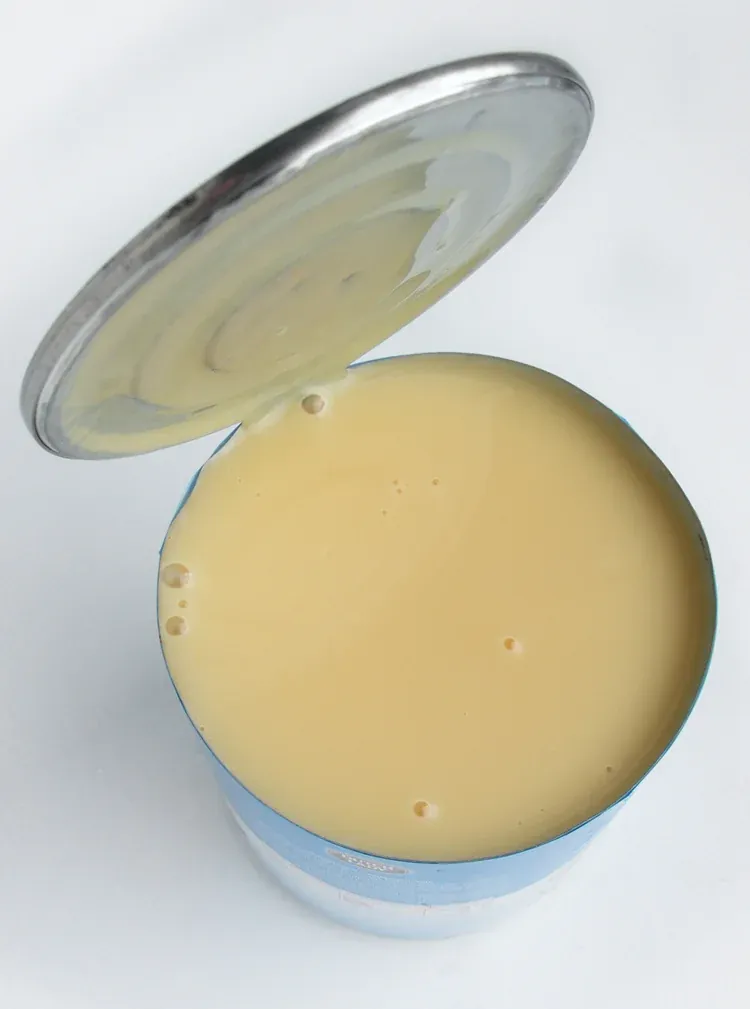
The simplest method requires only a can of sweetened condensed milk and a pot of water:
- Remove the label from a sealed can of sweetened condensed milk
- Place the can on its side in a deep pot, cover with cold water by at least 5cm
- Bring to a gentle boil and maintain at a low simmer for 2–3 hours, topping up water to keep the can submerged throughout (never allow the pot to boil dry — the can can rupture if exposed to direct dry heat)
- Allow to cool completely before opening — the contents will be under slight pressure
The result: a golden to dark brown dulce de leche depending on cooking time (2 hours = lighter, more flowing; 3 hours = darker, firmer). The transformation is remarkable — the sweet, flat condensed milk becomes complex, caramel-deep, and genuinely extraordinary.
Related: Condensed Milk: The Dairy Product That Changed the World | Ice Cream: From Royal Dessert to Global Obsession