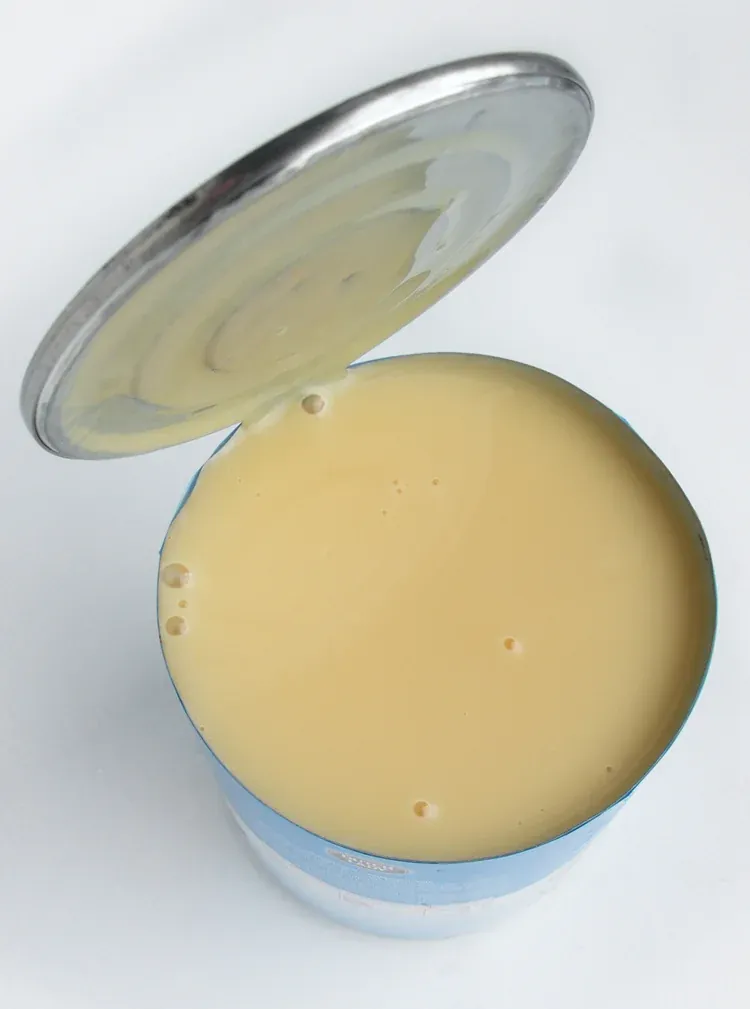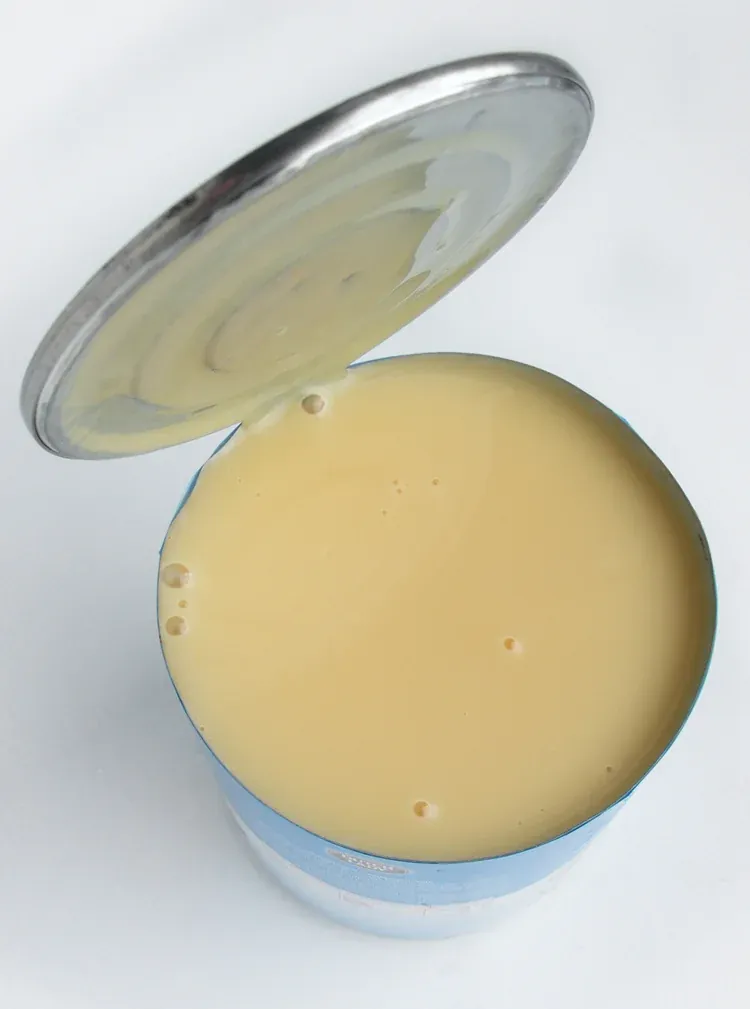
Condensed milk is one of the most versatile dairy ingredients in baking and dessert making, used in recipes across Southeast Asia, Latin America, the Middle East, and the UK. The basic product is simple: whole milk concentrated to roughly 40% of its original volume by evaporation, with approximately 40 to 45% added sugar by weight in the sweetened version. The result is a thick, pale golden syrup with an intense sweet dairy flavour and a shelf-stable product that keeps for years unopened. Sweetened condensed milk and evaporated milk look similar but are completely different products: condensed milk is heavily sweetened; evaporated milk is unsweetened and is used as a liquid dairy ingredient rather than a sweetener.
Sweetened Condensed Milk vs Evaporated Milk
The distinction matters because the two products are not interchangeable in recipes:
| Property | Sweetened Condensed Milk | Evaporated Milk |
|---|---|---|
| Sugar content | 40 to 45% (very sweet) | None added (not sweet) |
| Fat content | Approximately 8 to 9% (full-fat) | Approximately 8% (full-fat) |
| Consistency | Thick, syrupy | Pourable, like thick cream |
| Colour | Pale golden to cream | Off-white to pale cream |
| Calories per 100ml | Approximately 321 kcal | Approximately 134 kcal |
| Main uses | Fudge, cheesecakes, tray bakes, dulce de leche, Vietnamese coffee, key lime pie | Creamy sauces, soups, baking as milk substitute, carnitas, macaroni cheese |
Evaporated milk can be substituted for whole milk in most recipes (dilute 1:1 with water to approximate whole milk) when fresh milk is unavailable. Sweetened condensed milk cannot substitute for milk without completely transforming the sugar balance of a recipe.
Key Uses
Dulce de Leche (Caramelised Condensed Milk)
Dulce de leche is condensed milk that has been heated until the Maillard reaction and caramelisation transform it into a deeply flavoured, toffee-coloured spread. It is one of the most popular confections in Latin America and is used as a spread, a filling for alfajores (Argentine shortbread biscuits), a topping for ice cream, and a filling for layer cakes. There are two reliable methods to make it at home:
- Tin method (easiest, 3 hours): Place an unopened tin of sweetened condensed milk (label removed) in a saucepan. Cover completely with water. Bring to a simmer and maintain a steady simmer for 2.5 to 3 hours, checking the water level every 30 minutes and topping up to keep the tin submerged. Never let the water drop below the top of the tin or the tin may burst. Allow to cool completely before opening. The result is a dark caramel spread inside the tin.
- Oven method (more controlled): Pour condensed milk into a baking dish, cover tightly with foil, and place the dish inside a larger roasting tin filled with boiling water (a bain-marie). Bake at 220°C for 1.5 to 2 hours until the condensed milk has turned golden brown and thickened. Check after 90 minutes. Cool before using.
Vietnamese Iced Coffee (Cà Phê Sữa Đá)
Vietnamese iced coffee uses sweetened condensed milk as both sweetener and the creamy component, combined with strong drip coffee made with a phin filter (a small Vietnamese drip coffee maker, available from Asian grocery shops for approximately £5 to £10). The standard ratio is 2 tablespoons of condensed milk in the bottom of a glass, followed by approximately 60ml of very strong dark-roast coffee (Trung Nguyên, Café Du Monde with chicory, or any very dark robusta-dominant blend), stirred together, then poured over ice. The result is a drink that is simultaneously very sweet, intensely coffee-flavoured, and creamy without containing any cream.
Fudge
Condensed milk fudge requires only three ingredients and is one of the most reliable fudge methods for home cooks. The basic recipe: 397g tin of sweetened condensed milk, 450g of granulated sugar, 115g of unsalted butter. Combine in a heavy-based saucepan, heat gently to dissolve the sugar, then increase heat and stir continuously until the mixture reaches 115°C (soft ball stage on a sugar thermometer). Remove from heat, beat vigorously for 10 minutes until the mixture loses its sheen, pour into a lined tin, and allow to set at room temperature for 3 to 4 hours.
No-Bake Cheesecake
Condensed milk provides both sweetness and structural support in no-bake cheesecakes through its interaction with an acid component (usually lemon juice or lime juice). The acid denatures the proteins in the condensed milk and cream cheese, causing the mixture to thicken and set without requiring gelatin or baking. Standard ratio: 397g condensed milk, 500g full-fat cream cheese, 80ml of fresh lemon juice, blended together and poured over a biscuit base. Set in the refrigerator for minimum 4 hours.
Other Common Applications
- Key lime pie: The classic US dessert uses condensed milk as the primary filling component (condensed milk, key lime juice, egg yolks), thickened by the acid-protein interaction
- Tray bakes and millionaire's shortbread: The caramel layer in millionaire's shortbread is condensed milk (or dulce de leche) cooked with butter and golden syrup
- Thai iced tea: Strong black tea with orange food colouring (or butterfly pea flower), topped with sweetened condensed milk poured over ice
- Banoffee pie: Dulce de leche (from a cooked tin) as the toffee layer, with banana and whipped cream
Storage
Unopened tins of sweetened condensed milk have a shelf life of 2 years or more (the high sugar content inhibits microbial growth). Once opened, transfer to a sealed container and refrigerate; use within 5 to 7 days. The colour of stored condensed milk darkens slightly in the refrigerator over time due to slow Maillard reactions; this is normal and does not indicate spoilage.
Related: How to Make Homemade Fudge: Techniques and Troubleshooting | Evaporated Milk: What It Is and When to Use It