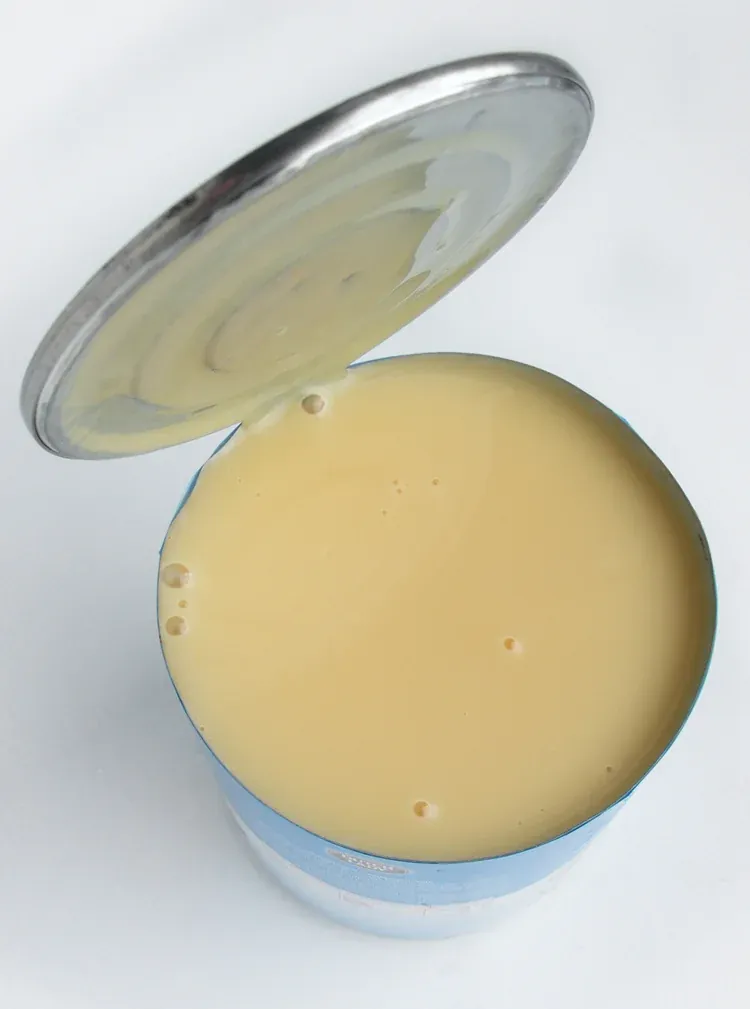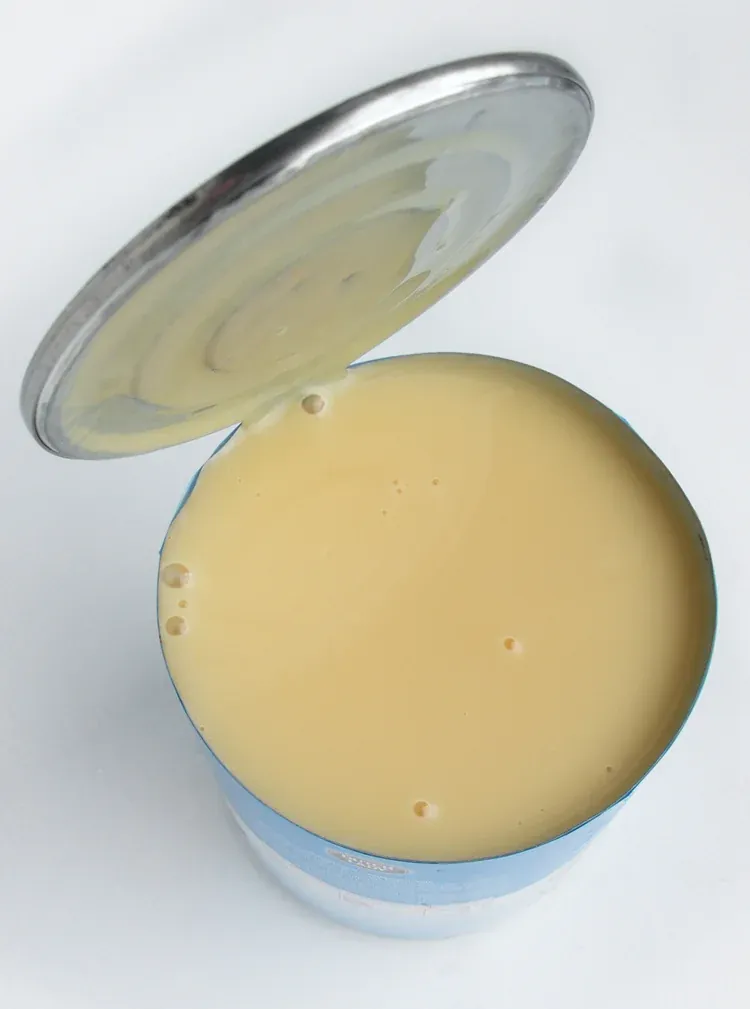
Before refrigeration was universal, milk was one of the most dangerous foods in the world. In the cities of 19th-century America and Europe, "swill milk" — produced by dairy cows kept in filthy urban stables and fed on alcohol distillery waste — was responsible for thousands of infant deaths annually. Milk spoiled within hours in summer heat. The supply chain from cow to consumer was a perpetual public health crisis. It was into this context that an American inventor named Gail Borden Jr. introduced, in 1856, a product that solved the spoilage problem with elegant simplicity: remove most of the water, add enough sugar to prevent bacterial growth, seal in a can. The result — sweetened condensed milk — went on to become one of the most globally distributed and culinarily versatile dairy products in history, central to cuisines from Vietnam to Brazil to Scotland, and still sold in essentially the same form as when Borden patented it 170 years ago.
The Science: Why Condensed Milk Doesn't Spoil
Fresh milk spoils rapidly because it provides an ideal medium for bacterial growth: moisture, protein, fat, sugar, and a neutral pH. Condensed milk solves the spoilage problem through two mechanisms:
- Water activity reduction: Bacteria require available water to grow. In sweetened condensed milk, the extremely high sugar concentration (40–45% sucrose) binds water molecules through osmotic interaction, making them unavailable for bacterial metabolism. This is the same principle that preserves jam, honey, and dried fruit — sufficiently high sugar creates an environment too hostile for most pathogens.
- Concentration: Removing approximately 60% of the water increases the concentration of naturally occurring acids, proteins, and other compounds that further suppress bacterial growth.
The result: unopened sweetened condensed milk has a shelf life of 2–5 years at room temperature — an extraordinary achievement for a dairy product. Once opened, it must be refrigerated and used within 2 weeks, as the protective seal is broken and normal bacterial exposure resumes.
Gail Borden: America's Dairy Visionary
Gail Borden Jr. (1801–1874) was a Texan inventor and entrepreneur whose early career included surveying, journalism, and an unsuccessful attempt to create a "meat biscuit" (concentrated dried meat in a biscuit base) for use as military rations. The meat biscuit failed commercially but the experience convinced Borden that concentrated, shelf-stable food was the future of both military and civilian supply.
The immediate inspiration for condensed milk was a transatlantic voyage during which Borden witnessed infants dying because the cattle on board were producing spoiled milk in the ship's hold. He began experimenting with condensing milk under vacuum — the vacuum allows water to be removed at below-boiling temperatures, avoiding the burnt flavour that ruins milk cooked at atmospheric pressure. After several years of development, he received his patent in 1856 and opened a condensing plant in Connecticut.
The American Civil War (1861–1865) made Borden's fortune. The Union Army required shelf-stable food for hundreds of thousands of soldiers in the field; condensed milk, easily carried and reconstituted, became a standard military ration. By the war's end, Borden's Eagle Brand condensed milk was one of America's most recognised food brands, and the infrastructure for mass production was established. The Eagle Brand tin — with its logo of a perched eagle — became one of 19th-century America's most iconic commercial images.
The Production Process
The industrial process for sweetened condensed milk is a refined version of Borden's original method:
- Fresh whole or skimmed milk is pasteurised (72°C for 15 seconds) to eliminate pathogens
- Sugar (sucrose) is dissolved into the milk at this stage — approximately 170g per litre of milk
- The sweetened milk is then evaporated under vacuum at 45–60°C (below the boiling point of water at standard pressure, preventing Maillard browning and caramelisation that would alter the flavour and colour)
- Evaporation continues until approximately 60% of the water has been removed — reducing the original milk volume by more than half
- The concentrated product is cooled under controlled conditions and "seeded" with fine lactose crystals to control crystallisation — preventing the formation of large, gritty lactose crystals in the final product
- The viscous product is aseptically filled into tinned steel cans
The final product: approximately 8% fat (from whole milk), 8% protein, 55% carbohydrates (mostly sucrose plus remaining lactose), and about 27% water. The caloric density is approximately 3× that of fresh whole milk.
Condensed Milk Around the World: A Global Tour of Uses
Vietnam: Cà Phê Sữa Đá
Vietnam's most beloved coffee preparation — strong, dark drip coffee from a single-serve metal filter (phin) dripped slowly over a layer of sweetened condensed milk, then poured over ice — was born partly from necessity: fresh milk was unavailable or unrefrigerated during the French colonial period, and condensed milk imported in French tins substituted. The result is now so identified with Vietnamese coffee culture that cà phê sữa đá (iced milk coffee) has become a global café menu item. The combination of intensely strong coffee and the sweet, thick condensed milk is one of the world's great flavour partnerships — the bitterness cut by the sweetness, the warmth of coffee meeting the chill of ice.
Brazil: Brigadeiro and Everything Else
Brazil may have the world's most versatile condensed milk cuisine. The brigadeiro — condensed milk + cocoa + butter cooked to fudge consistency, rolled into balls, coated in chocolate sprinkles — is Brazil's most beloved sweet, present at virtually every celebration. Beyond the brigadeiro: condensed milk forms the base of pudim de leite (Brazilian-style caramel flan), mousse de maracujá (passion fruit mousse), bolo de leite (milk cake), and scores of other Brazilian confections. Brazilian condensed milk consumption per capita is among the highest in the world.
Southeast Asia: The Foundation of Sweetness
Across Thailand, Malaysia, Singapore, and the Philippines, sweetened condensed milk is a kitchen staple deployed in tea (Thai iced tea's characteristic sweetness), toast toppings (Singapore's kaya toast tradition pairs coconut jam with condensed milk), desserts, and as a universal sweetener-with-creaminess for hot and cold beverages. Malaysian teh tarik (pulled tea) and Thai cha yen (iced tea) both rely on condensed milk for their characteristic richness.
United Kingdom: Fudge, Tablet, and Caramel Shortbread
British and Scottish baking has a particular relationship with condensed milk. Scottish tablet (harder and grainier than fudge, with a distinctive crystalline texture) and fudge both use condensed milk as the base — providing the dairy richness and controlled sugar content that produce the right texture. Millionaire's shortbread (shortbread + homemade caramel made from condensed milk + chocolate) has become one of Britain's most replicated café bakes.
Russia and Eastern Europe: Sгущёнка
Soviet-era Russia developed an intense cultural relationship with сгущёнка (sgushchyonka) — sweetened condensed milk — that persists today. The can of sweetened condensed milk was a reliable, affordable Soviet-era luxury: eaten straight from the tin with a spoon, spread on bread, boiled in the tin to make варёная сгущёнка (boiled condensed milk, similar to dulce de leche), or used in baking. The product has retained nostalgic cultural significance in Russia and the former Soviet states decades after the Soviet collapse.
Related: Dulce de Leche: Latin America's Most Beloved Dairy Creation | Powdered Milk: The Ancient Technology That Feeds the World