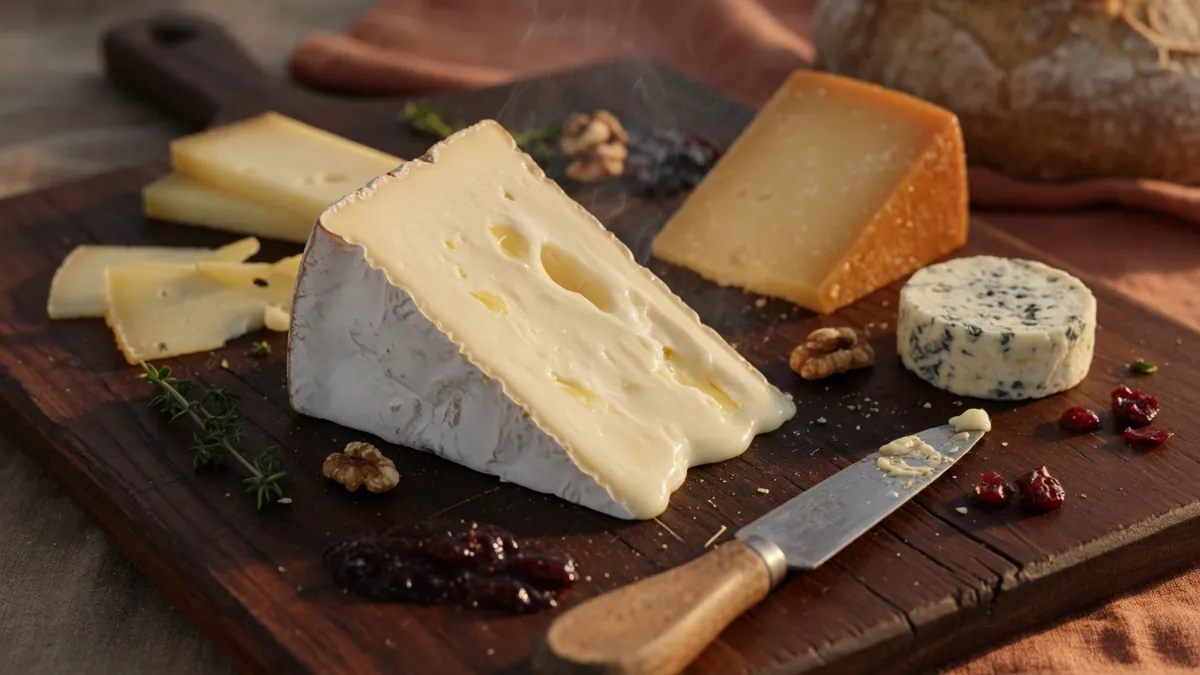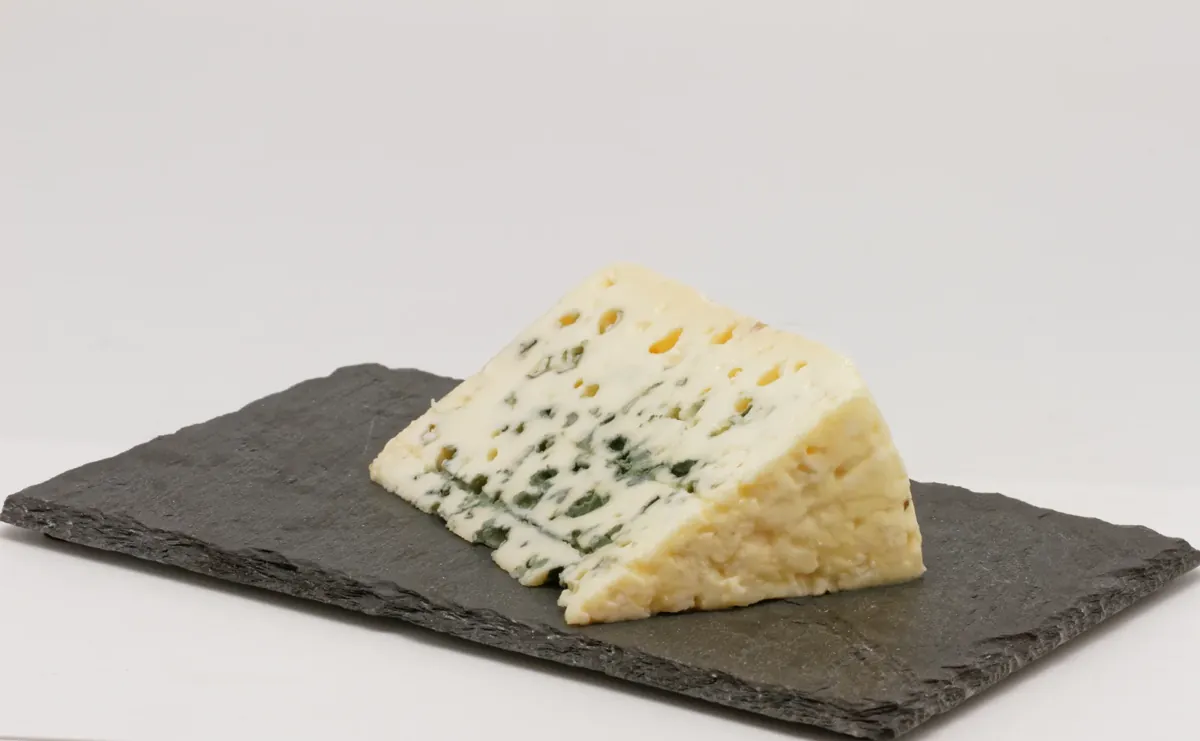
There is a category of cheese that clears rooms, raises eyebrows on public transport, and draws instant strong opinions from anyone who encounters it. These are the washed-rind cheeses: varieties whose rinds are periodically bathed in brine, wine, beer, spirits, or Marc brandy during ageing, creating conditions that encourage the growth of Brevibacterium linens and related bacteria on the rind surface. It is this bacterial community, not any mould, that is responsible for the intensely pungent aroma that characterises the world's strongest cheeses. The paradox that makes these cheeses beloved rather than merely notorious is that the interior, beneath the sticky, often luridly coloured rind, is almost always far milder and more approachable than the smell suggests: creamy, buttery, rich, and complex without being aggressive. Learning to distinguish the rind from the paste is the first lesson in appreciating pungent cheese.
The Science of the Smell: Brevibacterium linens and Smear Ripening
Washed-rind cheeses owe their character to a specific group of bacteria that thrive in moist, salty, slightly alkaline environments on the rind surface. Brevibacterium linens is the best-known species; it produces orange-red pigments through the biosynthesis of carotenoids and generates a suite of volatile sulphur compounds including methanethiol, dimethyl sulphide, and dimethyl disulphide through its catabolism of methionine. These sulphur compounds are the primary source of the foot-locker and gym-shoe aroma that characterises the rind of cheeses like Époisses and Limburger. Brevibacterium linens is also present on human skin and is partly responsible for the odour of sweaty feet, which explains why these cheeses are often compared to socks in popular descriptions.
The washing process does several things simultaneously: it keeps the rind moist (preventing drying and cracking that would allow undesirable moulds to establish), it introduces or maintains the Brevibacterium and associated bacterial community on the surface, and it raises the pH of the rind (which otherwise becomes acidic from lactic acid production during curd acidification), creating the alkaline conditions that Brevibacterium requires. The liquid used for washing varies by cheese type and is often a defining element of the cheese's flavour profile: Marc de Bourgogne brandy for Époisses, Vacherin pine-bark wrap instead of washing for Mont d'Or, perry pear cider for Stinking Bishop, and plain salt brine for Limburger.
Importantly, the washing affects only the rind. The interior paste of a washed-rind cheese continues to ripen through the activity of residual lactic acid bacteria and proteolytic enzymes that break down proteins into shorter peptides and amino acids, softening the texture and developing creamier, more complex flavours. By the time a well-aged Époisses or Vacherin Mont d'Or reaches optimal ripeness, the interior has a semi-liquid, almost pourable consistency under the rind that is completely different in character from the exterior smell.
Époisses de Bourgogne
Époisses (pronounced approximately "ay-PWASS") is produced in and around the small town of Époisses in the Côte-d'Or department of Burgundy, France. It holds Appellation d'Origine Protégée (AOP, the French equivalent of DOP) status granted in 1991. The cheese has been produced in the region since at least the 16th century; Cistercian monks at the Abbaye de Cîteaux are credited with developing the washing technique, and Époisses was reportedly a favourite of Napoleon Bonaparte, who is said to have consumed it washed down with Chambertin wine.
Époisses is made from unpasteurised whole cow's milk (a pasteurised version for export exists but is considered inferior by traditionalists). The curd is formed slowly over 16 to 24 hours by a combination of lactic acid bacteria and a small quantity of rennet, producing a lactic-style curd rather than a rennet-coagulated one. This slow coagulation method produces a more delicate curd with higher moisture retention. The young cheese is then washed repeatedly over six to eight weeks with Marc de Bourgogne (grape marc brandy), a by-product of Burgundy wine production, diluted with brine. Early washings use a higher brine-to-marc ratio; later washings increase the marc proportion, gradually building the orange-red rind and its characteristic aroma.
A small (250-gram) Époisses wheel retails in French fromageries at approximately 8 to 12 euros; a larger 500-gram wheel costs 15 to 20 euros. The cheese is sold in its distinctive round wooden box, which serves as both packaging and a gentle restraint on the fully ripened cheese's tendency to spread. At peak ripeness, you can remove the top and spoon the interior; it has the consistency of very thick crème fraîche. Producers include Robert Berthaut, who revived the cheese after it nearly disappeared during World War II when milk was redirected to butter production, and Marie Quatrehomme, the only woman ever to have won the title of Meilleur Ouvrier de France in fromagerie, whose Paris shop is considered the finest cheese retailer in the city.
Pairing: Burgundy's own white wines, particularly Chassagne-Montrachet or a Meursault, cut the richness with their mineral acidity without fighting the cheese's intensity. Alternatively, a glass of Marc de Bourgogne (the same brandy used in the washing) is the most traditional pairing in the region. On a practical note, Époisses is legally prohibited from being transported on French public transport due to its aroma; a restriction documented by the RATP (Paris public transport authority) in their passenger conduct rules.
Vacherin Mont d'Or
Vacherin Mont d'Or is a seasonal cheese produced in both Switzerland (as Vacherin Mont-d'Or AOP) and France (as Mont d'Or or Vacherin du Haut-Doubs AOP), available only from September through March, reflecting the traditional practice of making softer cheeses from the winter milk of cows brought down from Alpine summer pastures. The French and Swiss versions are distinct products with separate AOP designations; the Swiss version is made from raw milk and is generally considered the more complex of the two, while the French version, also predominantly made from raw milk (a small pasteurised export version exists), is produced in the Doubs department of Franche-Comté.
The defining feature of Vacherin Mont d'Or is not a washed rind per se but the strip of spruce bark wrapped around the outside of the wheel before and during ageing. This spruce band (sangle d'épicéa) serves multiple purposes: it supports the extremely soft, almost liquid interior that would otherwise collapse; it imparts delicate resinous, woody, and pine-sap flavours to the cheese from terpene compounds in the wood; and it creates a specific microenvironment on the rind surface. The spruce wrapping is specified in both AOP disciplinari as mandatory.
The cheese is produced in small-format wheels of 480 grams to 3 kilograms, sold in the spruce box and typically served by removing the top rind and spooning or scooping the interior. A popular preparation, "Mont d'Or chaud" or "boîte chaude," involves placing the boxed cheese in the oven at 200 degrees Celsius for 20 to 25 minutes until the interior is fully molten, then serving it as a fondue-like dipping sauce for boiled potatoes, bread, and cured meats. A 500-gram box retails in France at approximately 10 to 15 euros and in Switzerland at 12 to 18 Swiss francs.
Pairing: A Savagnin or Chardonnay from the Jura (the region adjacent to Franche-Comté) is the traditional match, with the wine's nutty oxidative character complementing the earthy-resinous cheese. Alsatian Pinot Gris or a lightly oaked Swiss Chasselas work equally well. The chaud preparation is served with Savoie or Jura white wine in mountain restaurants throughout the winter season.
Stinking Bishop
Stinking Bishop is an English washed-rind cheese produced by Charles Martell and Sons at Laurel Farm in Dymock, Gloucestershire. It was created in 1972 by Charles Martell, who developed it partly to support his revival of the Stinking Bishop pear variety, an heirloom cultivar whose perry pear juice (fermented into "stinking bishop perry") is used to wash the rind and gives the cheese its name. The pear was itself named after a 19th-century farmer named Bishop who was known for his bad temper rather than hygiene.
The cheese became internationally known after a 2005 scene in the animated film "Wallace and Gromit: The Curse of the Were-Rabbit" in which Stinking Bishop is used to revive Wallace. Demand increased by approximately 500 percent following the film's release, according to Charles Martell's accounts to the British press, forcing production expansion at a farm that had been making the cheese in small quantities. The cheese is now produced from the milk of Gloucester cattle (a heritage breed associated with traditional English cheesemaking) pasteurised at the farm, then formed into 1.7-kilogram wheels, brined, and periodically washed with stinking bishop perry throughout a four-to-eight week ripening period.
The resulting cheese has a pinkish-orange rind with a soft, yielding interior and a flavour profile that is milder than the aroma suggests: earthy, mushroom-like, lactic, and slightly fruity from the perry. A 200-gram portion retails in UK specialty retailers (Neal's Yard Dairy, Paxton and Whitfield) at approximately 8 to 12 pounds. It is exported to US specialty retailers and is available through Murray's Cheese in New York at approximately 28 to 35 dollars per pound.
Pairing: Perry pear cider (the natural choice, given the connection to production), English farmhouse ales, or lighter Burgundy reds such as a Mâcon or Hautes-Côtes-de-Beaune. The cheese's approachable flavour intensity makes it a good gateway into washed-rind cheeses for those who find Époisses too assertive.
Limburger
Limburger originated in the Herve region of what is now Belgium (the province of Liège) in the 18th century and was industrialised in Germany in the 19th century, where it became so firmly associated with German cuisine that it is now considered primarily a German cheese, though Belgian Herve cheese (an AOP product) is a direct ancestor. Limburger is named after the city of Limburg, which served as the market hub for the region's cheese trade.
In Germany, Limburger is produced primarily in Bavaria, with Weinkäse and Stangenkäse as related products in the same washed-rind family. The texture varies with age: at four to six weeks, it is firm and relatively mild; at eight to twelve weeks, it has softened substantially and developed its full pungent character, with the orange-brown rind and the intensely savoury interior that made it both notorious and beloved. A 200-gram package of German Limburger from producer Champignon or Hüttentaler retails in German supermarkets at approximately 2 to 3 euros, making it significantly more affordable than French or British equivalents.
In the United States, Limburger has a specific cultural history: it was produced in Monroe, Wisconsin by German immigrant cheesemakers beginning in the 1860s, and Monroe remains the only American town with a significant active Limburger production tradition. The Chalet Cheese Cooperative in Monroe is the last large-scale Limburger producer in the United States, producing approximately 800 pounds per day. The traditional Monroe preparation involves Limburger on rye bread with raw onion and mustard, a combination that has been served at local establishments including Baumgartner's Cheese Store and Tavern (established 1931) continuously for nearly a century.
A 2014 study in PLOS ONE found that Brevibacterium linens produces the same volatile sulphur compounds that attract Anopheles gambiae mosquitoes to human hosts, explaining why Limburger cheese in laboratory experiments attracted the malaria mosquito at rates comparable to foot odour. The study was produced by researchers at the Wageningen University in the Netherlands. While this is scientifically interesting, it has no practical implications for cheese consumption.
Pairing: German lager, Bavarian Weissbier, or Belgian Trappist ales. The traditional Midwestern American pairing of Limburger with dark rye bread, raw onion, and strong mustard is not merely local preference; the sharpness of the onion and mustard actually suppresses some of the more aggressive volatile sulphur compounds on the palate, making the cheese's underlying savoury richness more accessible.
Tips for Serving Pungent Cheeses
The critical rule for all washed-rind cheeses is to serve them at room temperature: remove from the refrigerator at least 45 to 60 minutes before serving, still in their original packaging or box. Cold temperatures suppress the volatilisation of aroma compounds and firm the paste to a texture that does not represent the cheese at its best. At room temperature, a well-ripened Époisses or Vacherin becomes semi-liquid, aromatic, and properly expressive of its character.
Storage requires wrapping in the original packaging or in wax paper rather than plastic wrap; plastic traps moisture and accelerates unpleasant rind degradation. Washed-rind cheeses do not improve with extended home storage; buy them at or near peak ripeness and consume within a week. When assembling a cheese board that includes a pungent washed-rind cheese alongside milder varieties, physically separate the cheeses to prevent aroma transfer; or serve the pungent cheese last and deliberately, after milder cheeses.
For guests who are new to this category, Stinking Bishop or a young Taleggio (the Italian washed-rind standard, significantly milder than Époisses) is a better introduction than going directly to a fully ripe Époisses. Building familiarity with the style at lower intensity levels makes the stronger examples more approachable and enjoyable on subsequent encounters.
Related: Gorgonzola DOP: Italy's Great Blue Cheese, Dolce vs Piccante | Cheese and Wine Pairing: A Practical Guide by Cheese Style