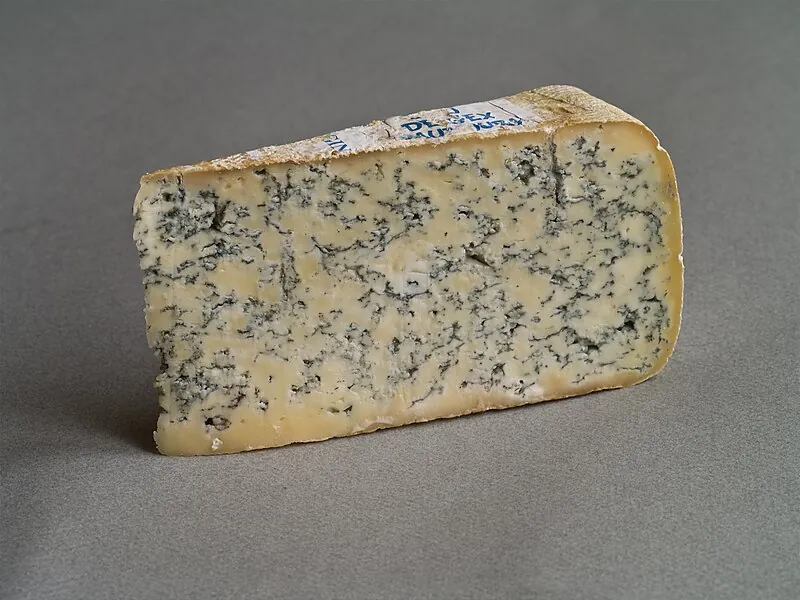
Gorgonzola is Italy's most celebrated blue cheese and one of the oldest documented blue cheeses in the world. Produced exclusively in the regions of Lombardy and Piedmont under strict Denominazione di Origine Protetta (DOP) rules, it comes in two legally distinct styles, Dolce and Piccante, that differ so significantly in texture, intensity, and culinary application that experienced cheese buyers treat them almost as separate products. Understanding those differences, the DOP production framework that governs both styles, and the wide range of pairing possibilities unlocks one of the most versatile and food-friendly cheeses that Italy produces.
Origins and History
The town of Gorgonzola, located in the Lombardy province of Milan, gives the cheese its name, though historians debate exactly when production began there. The earliest credible written reference to the cheese dates to 879 CE, making it one of the few foods with documentary evidence of a continuous production tradition spanning more than a thousand years. The 12th-century account of a cheesemaker named Piermarco Ceppi from Gorgonzola has been cited by multiple Italian food historians, including Alberto Schieppati in his 1978 study of Lombard dairy traditions, as evidence of an established local craft by the medieval period.
The blueing of the cheese was originally accidental: curds left to rest overnight in cool caves near Gorgonzola and the surrounding Po Valley would develop Penicillium mould naturally, producing the characteristic blue-green veining that gave the cheese its visual identity. As demand for the cheese grew through the Renaissance and particularly during the industrial dairy expansion of the 19th century, producers standardised the blueing process by inoculating curds deliberately with Penicillium glaucum cultures. By the late 19th century, Gorgonzola was being exported across Europe, with significant quantities reaching England, France, and Germany.
The DOP designation, recognised under European Union law and its Italian predecessor system, formally defines the geographic boundaries, milk type, production process, and ageing requirements that separate authentic Gorgonzola from imitation blue cheeses. The Consorzio per la Tutela del Formaggio Gorgonzola, established in 1970, oversees compliance and marks every wheel approved for sale with a distinctive "g" branded into the foil wrapping.
DOP Production Rules
Under the DOP disciplinare (production code), Gorgonzola must be made from whole, pasteurised cow's milk sourced from farms within a precisely defined geographic zone. That zone covers the entire regions of Lombardy and Piedmont, plus specific municipalities in adjacent areas. The milk must come from cows of breeds suited to the zone, predominantly Italian Friesian (Holstein) and Bruna Alpina cattle.
The cheesemaking process for both Dolce and Piccante begins with warming the milk to approximately 28 to 32 degrees Celsius, adding starter cultures of Streptococcus thermophilus and Lactococcus lactis along with calf rennet and the Penicillium glaucum mould spores. The curd is broken, drained, and transferred into cylindrical moulds lined with cloth. A key DOP requirement is the needling of wheels during ageing: long metal needles are inserted into the wheel to create air channels that allow oxygen to reach the interior of the cheese, enabling the mould to grow throughout the paste rather than just on the surface. Without this process, you do not get Gorgonzola; you get a failed rind-mould cheese.
Each wheel must be produced in a certified dairy facility (caseificio) registered with the Consorzio. As of 2024, the Consorzio listed approximately 30 certified producers, including major industrial operations such as Galbani (owned by Lactalis) and Mauri Formaggi, alongside smaller artisan dairies in the Alpine foothills. Total annual production of DOP-certified Gorgonzola runs approximately 4.8 million wheels per year, placing it among the highest-volume DOP cheeses in Italy.
Gorgonzola Dolce: The Young Style
Gorgonzola Dolce (also called "sweet Gorgonzola" or sometimes "creamy Gorgonzola") is aged for a minimum of 45 days, though most commercial examples are sold at 60 to 90 days. At this age, the paste is soft, almost spreadable, with a white to pale ivory background and well-distributed blue-green veining. The flavour is mild, buttery, slightly tangy, and lactic, with a muted blue character that appeals to people who find Roquefort or Stilton too intense.
Moisture content in Gorgonzola Dolce is high, typically 45 to 48 percent, which accounts for its silky texture. The fat content is a minimum of 48 percent on a dry-matter basis. The rind of Dolce is thin, sticky, and pink-grey; it is edible but usually removed before serving because it develops a sharp, ammonia-adjacent flavour as the cheese ages in retail settings.
In culinary applications, Gorgonzola Dolce melts beautifully. It is the standard choice for gorgonzola-based sauces (particularly pasta sauces like gorgonzola e noci, gorgonzola and walnut, or penne al gorgonzola), risotto enrichment, pizza toppings, and as a filling for stuffed pasta. Major Italian producers sell Dolce in convenient 150-gram foil-wrapped portions for home cooking; the Galbani brand retails in Italian supermarkets at approximately 3.50 to 4.00 euros per 150-gram portion and is widely distributed across the EU and the United States through importers such as DeLallo and Murray's Cheese.
Gorgonzola Piccante: The Aged Style
Gorgonzola Piccante undergoes ageing of at least six months, with premium examples aged nine to twelve months. The extended ageing produces a dramatically different cheese: drier, firmer, and crumblier, with a more pronounced blue-green veining pattern, a yellowish-ivory paste, and a thick, dense, natural rind that is grey-brown and edged with blue mould. The flavour is sharp, pungent, and complex, with salty intensity, a long finish, and the characteristic metallic edge of mature blue cheese.
The moisture content of Piccante falls to approximately 32 to 38 percent, and the salt content is noticeably higher than in Dolce because the extended ageing concentrates the brine that was applied during the early weeks of production. This is the style most commonly consumed outside Italy in the 19th and early 20th centuries and the one most non-Italian blue cheese traditions sought to emulate. In contemporary Italian gastronomy, Piccante is considered the connoisseur's choice for cheese boards, traditional pairing with honey and dried figs, and accompaniment to full-bodied red wines.
Piccante does not melt as smoothly as Dolce and is generally not used in cooked sauces, though it can be crumbled into salads or polenta. A typical 200-gram wedge of aged Piccante from a specialty importer such as Eataly or Whole Foods retails in the United States at approximately 10 to 14 dollars, compared with 6 to 8 dollars for an equivalent weight of Dolce.
Geographic Character: Lombardy vs Piedmont Producers
The DOP zone spans both Lombardy and Piedmont, and while the production rules are uniform, geography and producer tradition introduce subtle differences in style. Lombardy producers, concentrated in the provinces of Bergamo, Brescia, Como, Cremona, Milan, Monza, Pavia, and Varese, tend to use milk from Po Valley flat-land farms where Italian Friesian (Holstein) cattle graze on intensively managed pastures. This milk is high in yield and produces a cheese with a clean, lactic base.
Piedmont producers, operating in the provinces of Novara, Vercelli, Cuneo, Biella, Verbano-Cusio-Ossola, and Alessandria, often incorporate milk from Alpine-adjacent farms where Bruna Alpina and other mixed breeds contribute milk with higher protein content and a more complex fat profile. Some cheese affineurs and mongers argue that Piedmontese Gorgonzola, particularly from producers in the Novara area, has a slightly earthier, more mineral character reflecting this milk profile difference, though controlled comparative studies are scarce.
The town of Gorgonzola itself, in the Milan metropolitan area, no longer contains any active Gorgonzola producers. Its role is now purely historical and symbolic; all actual production has shifted to certified facilities in the provinces listed above.
Pairing Guide
Gorgonzola's pairing possibilities divide along the Dolce-Piccante axis.
Pairing Gorgonzola Dolce
- Wine: Off-dry whites work exceptionally well. Moscato d'Asti (Piedmont's celebrated sweet sparkling wine) is the classic regional pairing; the wine's residual sugar balances the cheese's gentle saltiness while its delicate effervescence cuts the creaminess. Pinot Grigio from Alto Adige, with its slightly bitter almond finish, is another strong choice. Among reds, Barbera d'Asti at a light chill provides enough acidity without overpowering the mild flavour.
- Fruit: Pears (especially Bosc and Comice), fresh figs, and ripe peaches pair beautifully. The floral sweetness of the fruit contrasts the tangy dairy note without overwhelming it.
- Nuts: Toasted walnuts are the traditional companion for gorgonzola in Italian cooking; the tannins and oils in the walnut complement the cheese's creaminess and mellow the blue bite.
- Honey: Acacia honey, mild and floral, is preferred over stronger varieties for Dolce. A drizzle over a smear of Dolce on a crostino is among the simplest and most satisfying appetisers in the northern Italian tradition.
Pairing Gorgonzola Piccante
- Wine: The intensity of Piccante requires wines with comparable weight and character. Amarone della Valpolicella, with its dried-fruit richness and grippy tannins, stands up to the cheese's pungency. Barolo and Barbaresco, Piedmont's greatest reds, are the prestige pairing. Sauternes and other botrytised sweet wines offer the classic sweet-savoury contrast: the wine's sugar and apricot character playing against the cheese's salty sharpness. Port (particularly 10-year Tawny) is the British-influenced alternative that cheese enthusiasts in the UK have favoured for over a century.
- Fruit and preserves: Dried fruits (dates, figs, apricots) work better than fresh for Piccante. Fig jam, quince paste (cotognata), and chestnut honey are traditional accompaniments on antipasto boards.
- Bread and crackers: Sturdy, unsalted crackers or thin grissini are preferred; soft bread competes with the cheese's texture and can muffle the flavour. Toasted sourdough rubbed with a little olive oil is another solid base.
- Meat: Piccante crumbled over a bistecca or grilled pork loin is a northern Italian tradition, particularly in Bergamo and Brescia. The fat in the meat softens the cheese's sharpness while the salt and umami amplify each other.
Nutritional Profile
Gorgonzola is a nutrient-dense food. A 30-gram serving of Dolce provides approximately 90 to 100 kilocalories, 5 to 6 grams of protein, 7 to 8 grams of fat (of which approximately 5 grams are saturated), and 280 to 340 milligrams of sodium. Piccante, being more concentrated, provides slightly more protein (7 to 8 grams per 30 grams) and slightly less fat per gram due to lower moisture content, along with higher sodium (350 to 450 milligrams per 30 grams). Both styles are meaningful sources of calcium (approximately 150 to 180 milligrams per 30 grams), providing roughly 15 to 18 percent of the recommended daily intake in a single serving.
The Penicillium glaucum mould produces secondary metabolites during ageing that have been studied for potential antimicrobial properties. A 2013 paper in the International Journal of Food Microbiology identified several bioactive peptides in Gorgonzola DOP cheese produced by proteolytic activity during ageing, with some showing inhibitory activity against food-spoilage bacteria in vitro. Whether these peptides have health-relevant effects in humans at normal serving sizes remains unestablished.
Buying and Storing Gorgonzola
When buying Gorgonzola at a specialty counter, look for the Consorzio's distinctive tinfoil wrap marked with repeated "g" letters (on whole wheels sold by the wedge, the tinfoil wrapping should be visible at the cut edge of larger retail pieces). Supermarket pre-packaged Gorgonzola under the Galbani, Mauri, or BelGioioso (for US imports) labels is reliably authentic and DOP-certified.
Both Dolce and Piccante should be stored in the refrigerator, ideally at 4 to 8 degrees Celsius, wrapped in aluminium foil rather than plastic wrap, which traps moisture and accelerates ammonia development. Dolce keeps for two to three weeks after purchase; Piccante, being drier and more acidic, can be kept for four to six weeks and actually improves slightly in the first week after purchase as it continues to age slowly. Both styles benefit from being removed from the refrigerator 30 to 45 minutes before serving to allow the fat to soften and the aromatic compounds to volatilise fully.
Related: Grana Padano vs Parmigiano-Reggiano: Italy's Two Great DOP Hard Cheeses | Exotic and Pungent Cheeses: Époisses, Vacherin Mont d'Or, Stinking Bishop, and Limburger