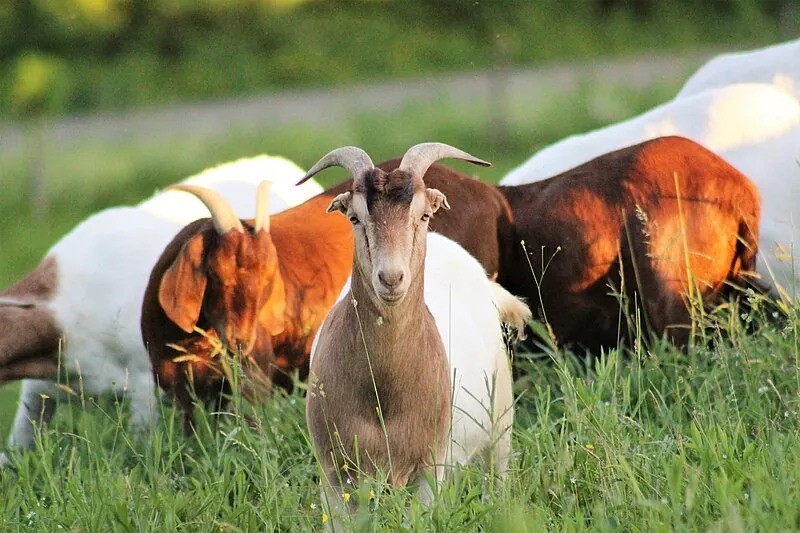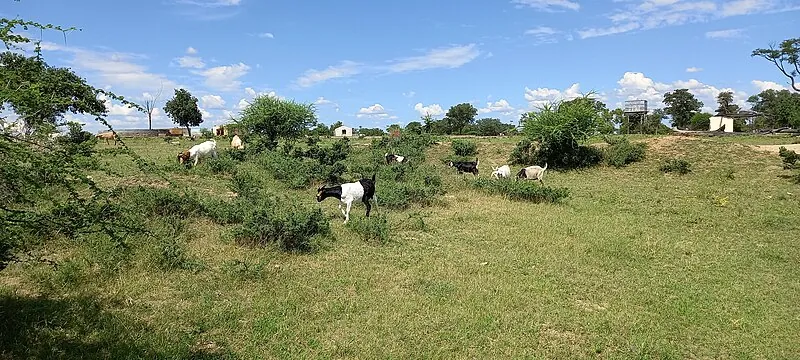
There is a common assumption in wealthy Western markets that cow milk is "normal milk" and goat milk is an exotic or niche alternative. This assumption is statistically wrong. More human beings consume goat milk than cow milk by total population coverage — the global goat dairy herd (approximately 900 million goats) feeds communities across sub-Saharan Africa, the Middle East, South Asia, the Mediterranean, and Latin America where cows are impractical, where the land cannot support the intensive feeding requirements of Holsteins, and where the goat — adaptable, hardy, able to thrive on marginal pasture and browse — has been the dairy animal of human civilisation for approximately 10,000 years. In Western markets, goat dairy is growing rapidly: the digestibility advantages of goat milk, its distinct flavour profile, and the global elevation of goat cheese (chèvre, manchego, feta, aged Spanish goat cheeses) from specialty to mainstream have created a sophisticated market where goat dairy is increasingly valued for what it is rather than what it is not.
The Science: What Makes Goat Milk Different
Fat Globule Size and Digestibility
The most significant structural difference between goat milk and cow milk is fat globule size. Goat milk fat globules are naturally smaller (average diameter 2 microns vs. 3.5–5 microns in unhomogenised cow milk) and more uniformly distributed — the milk does not separate into cream and skim layers the way cow milk does. This smaller globule size increases the surface area of fat exposed to digestive enzymes, producing faster and more complete fat digestion. For many people who experience digestive discomfort with cow milk (not the same as lactose intolerance — this is a fat digestion issue), goat milk is significantly better tolerated, particularly for young children, the elderly, and those with compromised digestive function.
Protein Structure: A2 and Casein
Goat milk contains primarily alpha-S2 casein rather than the alpha-S1 casein dominant in most commercial cow milk. Alpha-S1 casein forms very firm, tight curds when exposed to stomach acid; alpha-S2 forms softer, smaller curds. This is why goat milk cheese often has a softer, creamier texture than the equivalent cow milk cheese, and why goat milk forms a softer curd in the stomach — contributing to the digestibility advantage. Goat milk is also naturally higher in A2 beta-casein, the protein variant associated (though the evidence remains contested) with better digestive tolerance than the A1 beta-casein found in most high-yield Holstein cow milk.
Lactose: The Same, But Different
Goat milk contains slightly less lactose than cow milk (4.1% vs. 4.7% average) — a modest but real difference. Some individuals with mild lactose intolerance find goat milk more tolerable. However, goat milk is not lactose-free and should not be considered an alternative for those with diagnosed lactose intolerance. The improved tolerance reported by many people is more likely attributable to the fat globule and protein structure differences than to the lactose content difference.
Mineral and Vitamin Profile
Goat milk contains more calcium than cow milk (134mg per 100ml vs. approximately 120mg), more potassium, and significantly more vitamin A (already in active form, unlike the beta-carotene in cow milk that must be converted). It is naturally lower in folate and vitamin B12 than cow milk — a dietary consideration for those using goat milk as a primary dairy source, particularly for infants (goat milk is not nutritionally complete for infants and should not replace formula or breast milk without medical supervision). Goat milk has slightly less cholesterol than cow milk per equivalent fat content.
The Flavour Question: Why Goat Milk Tastes Different
Fresh goat milk from well-managed herds has a clean, slightly sweet flavour that many people describe as more delicate than cow milk — not the strong "goaty" flavour that non-drinkers imagine. The "goaty" flavour develops when milk is mishandled (particularly when male goats are kept near the milking herd — the pheromones of bucks are absorbed by the milk rapidly), when the milk is old or poorly refrigerated, or in certain breeds known for stronger flavour. A fresh, cold glass of milk from a well-managed Alpine or Saanen dairy herd has a light, sweet, slightly earthy quality that is genuinely pleasant.
The compounds responsible for goat milk's distinctive flavour are short and medium-chain fatty acids — particularly caproic, caprylic, and capric acid (all named from the Latin capra, goat) — present in higher concentrations than in cow milk. These fatty acids are also responsible for some of goat cheese's characteristic flavour, and their concentration increases as cheese ages and ripens.
The World's Great Goat Cheeses
Chèvre (France)
The Loire Valley in France — particularly the departments of Indre-et-Loire, Loir-et-Cher, and Cher — is the home of French goat cheese, where a combination of chalky soil (producing goats that eat calcium-rich plant life), the Saanen and Alpine breeds, and centuries of artisan tradition have produced some of the world's finest fresh and aged goat cheeses. The range is enormous:
- Crottin de Chavignol (AOC): Small cylindrical drums, aged 3 weeks to 3 months — from soft and milky when young to hard, pungent, and powerful when fully aged. The aged version, grilled on a salad, is one of French cooking's simplest and most satisfying preparations.
- Selles-sur-Cher (AOC): Flat, ash-coated discs with a white rind — the ash (originally wood ash for preservation, now cosmetic) creates a distinctive grey-black exterior that contrasts with the white paste. Flavour: lemon, fresh herbs, mild goat.
- Valençay (AOC): A truncated pyramid — legend attributes the shape to Napoleon, who reportedly cut the top off a standard pyramid-shaped cheese after his Egyptian campaign, not wishing to be reminded of his defeat.
Manchego (Spain)
Manchego — from the La Mancha plateau of Castile (Don Quixote's landscape), made from the milk of Manchega sheep (this is technically a sheep's milk cheese, not goat — an important distinction) — is Spain's most internationally recognised cheese and among the world's most imitated. True Manchego PDO is made exclusively from Manchega sheep milk, pressed in distinctive woven esparto grass moulds that leave a criss-cross pattern on the rind, and aged 3 months to 2 years. The confusion with goat cheese is understandable in markets where all Spanish artisan cheese is loosely categorised together; the reality is that Spain also produces exceptional goat cheeses — Murcia al Vino (goat cheese washed in Monastrell wine, producing a purple rind), and the aged goat cheeses of Extremadura — that deserve their own recognition.
Feta (Greece)
Feta — PDO protected since 2002, meaning that only cheese made in specific Greek regions (Macedonia, Thrace, Epirus, Thessaly, Central Greece, the Peloponnese, and Lesbos) from sheep's milk or a blend of up to 30% goat milk can legally carry the Feta name — is the world's most consumed designation-protected cheese. The goat milk contribution to traditional feta adds aromatic complexity and a slightly lighter texture; the salt brine in which feta is stored and aged is the defining preservation and flavour element. Feta is simultaneously one of the world's most widely imitated cheeses (the "feta" made from cow milk in Denmark, Australia, and the US is technically illegal to call feta in the EU but continues to be sold globally) and one of the most genuinely site-specific — the herbs the goats eat in Epirus, the particular Mediterranean light, the brine made with Greek sea salt — all contribute to a product that the imitations approach but do not equal.
Goat Milk in Other Forms
- Cajeta: The Mexican equivalent of dulce de leche, made with goat milk rather than cow milk — the higher short-chain fatty acid content of goat milk produces a more complex, slightly more pungent caramel than cow milk cajeta, with a flavour that is more interesting if less immediately sweet.
- Goat butter: Significantly rarer than cow milk butter (goat milk's naturally homogenised fat is harder to separate into cream for churning), goat butter is whiter than cow butter (goats convert all dietary beta-carotene to vitamin A, leaving no yellow pigment in the fat), with a more pronounced flavour. Excellent on bread and exceptional for pastry applications where its flavour can be appreciated.
- Goat milk kefir: Fermented goat milk with kefir grains produces a drink with the same probiotic content as cow milk kefir but the digestibility advantages of goat milk — a genuinely useful alternative for those who want fermented dairy but find cow milk kefir uncomfortable.
Related: Industrial Milk: From the Farm to the Carton | Milk and Chocolate: The Perfect Partnership