The milk carton in your refrigerator is the endpoint of a supply chain that begins in a cow, passes through milking robots or automated parlours, travels refrigerated across hundreds of kilometres in tanker trucks, enters processing plants where it is heated, spun, standardised, packaged, and sealed — all without human hands touching it. Approximately 900 million tonnes of milk are produced globally each year, the overwhelming majority processed industrially. Understanding how industrial dairy works — the science, the economics, the controversies, the genuine achievements and genuine costs — is understanding one of the foundational pillars of the global food system. Almost nothing you eat hasn't been touched by industrial dairy: the butter in bread, the cheese on pizza, the whey protein in biscuits, the milk solids in chocolate. Dairy is everywhere, and the industrial system that delivers it at scale is one of the most complex in food production.
The Industrial Dairy Farm: Scale and System
Modern dairy farming operates at a scale that would be unrecognisable to a farmer of a century ago. In the United States, the average dairy farm now has approximately 1,300 cows (up from 80 in 1970); the largest operations — California's megadairies — have 10,000–50,000 animals. In the EU, the average herd size is smaller (roughly 60–100 cows) due to the persistence of smaller-scale family farming, but the trajectory is the same: consolidation into larger, more capital-intensive operations.
Modern Dairy Cow Breeds
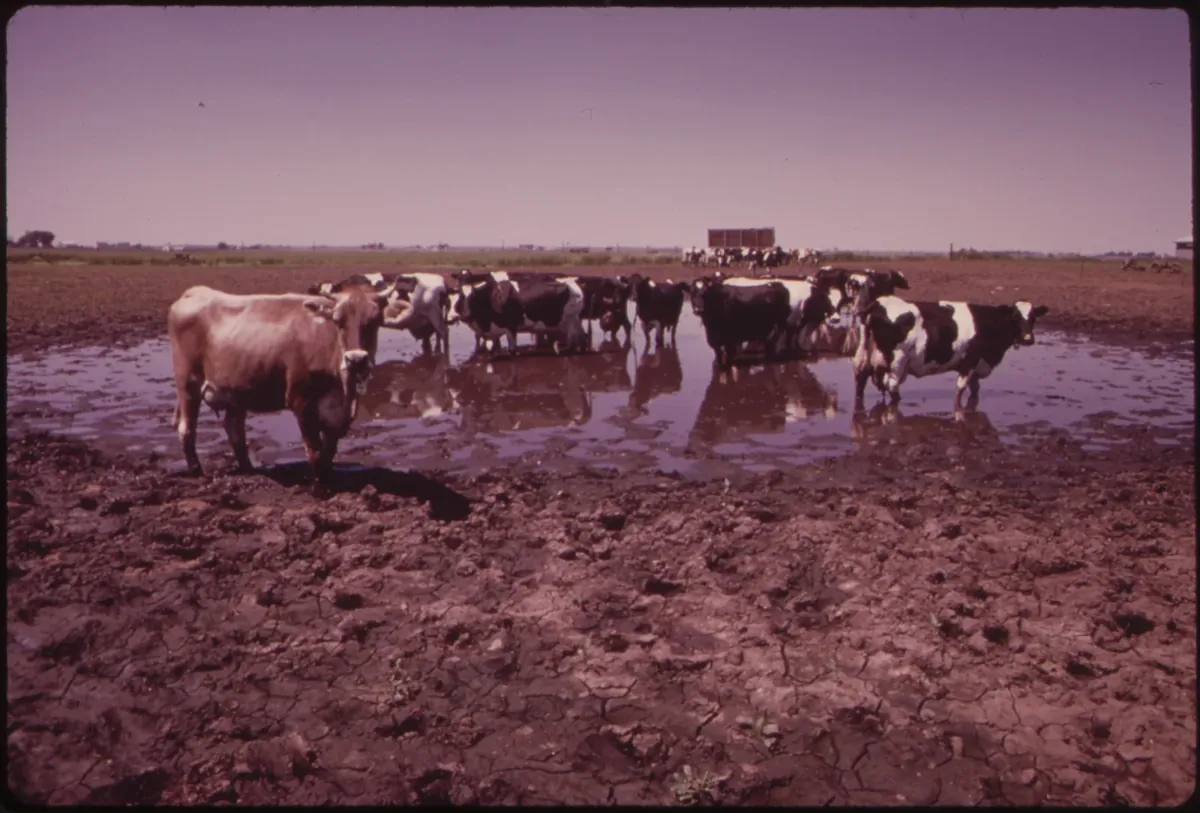
The Holstein-Friesian — the large black-and-white cow of dairy iconography — has been selectively bred over the past century to produce quantities of milk that would have seemed impossible to earlier generations. A modern Holstein in intensive management produces approximately 10,000–12,000 litres of milk per year; the world record holder (Selz-Pralle Aftershock 3918, Wisconsin, 2016) produced 35,250kg of milk in a single year. These yields have been achieved through selective breeding, feed formulation (high-energy diets of grain, corn silage, and soy), and management protocols — at the cost of the animals' longevity (most commercial dairy cows are culled at 3–4 lactations, compared to a natural lifespan of 20 years) and their connection to pasture feeding (many high-yielding Holstein operations are fully or partially housed year-round).
Milking Systems
In large operations, milking is performed twice or three times daily using automated milking parlours where cows are handled in batches of 24–100 simultaneously, with machine attachment and detachment handled by operators. The next generation of dairy automation — voluntary milking systems (robotic milking) — allows cows to choose when to be milked (within a managed system), walking to the robotic milking station as their udder pressure warrants. These systems, first commercialised by Lely in the Netherlands in 1992, are now used on approximately 30,000+ farms globally. The cow wears a transponder; the robot identifies her, cleans and attaches the milking cups, monitors milk output, and releases her when milking is complete — all without human intervention. Cows on robotic systems typically milk 2.5–3 times per day (self-directed) and show measurable welfare improvements compared to fixed twice-daily systems.
From Farm to Plant: Cold Chain and Transport
Raw milk is one of the most perishable food products — at room temperature, bacterial populations double roughly every 20 minutes, and unpasteurised milk can reach unsafe bacterial counts within hours. The entire collection and transport system is therefore built around the cold chain:
- Milk is cooled to below 4°C at the farm within 2 hours of milking, using refrigerated on-farm bulk tanks
- Refrigerated tanker trucks collect from farms (typically every 1–2 days) and deliver to processing plants
- Each collection is sampled for antibiotic residues, somatic cell count (indicator of infection/mastitis), total bacterial count, fat content, and protein content — failing any test results in the entire tanker being rejected
- At the processing plant, incoming milk is weighed, sampled for laboratory analysis, and held in refrigerated silos until processing
Processing: The Science of Industrial Milk
Standardisation
Raw milk's fat content varies between cows, seasons, breeds, and diets — typically ranging from 3.5% to 5.5% fat. Before processing, the milk is standardised: centrifuged to separate cream (fat) from skim milk, then recombined at the target fat percentage. Whole milk (3.5% in the EU, 3.25% in the US), semi-skimmed/2%, and skimmed milk are all produced from the same raw milk by adjusting this recombination. The separated cream goes to butter, cream products, and cheese production; the skim milk remainder enters various streams including powder production.
Pasteurisation: HTST vs. UHT
Pasteurisation — the process of heating milk to kill pathogenic bacteria — was developed by Louis Pasteur in the 1860s and became legally mandated for commercial milk in most countries through the early 20th century. Two main processes are in current use:
- HTST (High-Temperature Short-Time): The standard in the US, UK, and much of the EU for fresh milk — milk is heated to 72°C for 15 seconds, then immediately cooled to below 4°C. HTST milk retains more of its original fresh flavour because the brief heat treatment doesn't cause significant cooked/caramelised flavour development. Refrigerated shelf life: 2–3 weeks.
- UHT (Ultra-High Temperature): Milk is heated to 135–140°C for 2–5 seconds, then packaged aseptically in Tetra Pak or similar multilayer cartons. The ultra-high heat kills all bacteria including heat-resistant spores, producing a product stable at room temperature for 6–12 months. UHT milk has a slightly "cooked" or caramelised flavour detectable to those accustomed to fresh milk — the result of Maillard reactions occurring during the brief ultra-high heat treatment. UHT dominates in Southern and Eastern Europe, Latin America, and much of Asia — markets where refrigeration infrastructure at retail level was historically less reliable and where ambient-stable milk made economic sense.
Homogenisation
Homogenisation is the process of forcing milk through tiny apertures at high pressure (100–300 bar), reducing the fat globules from their natural size (1–10 microns) to a uniform size of less than 1 micron. This prevents the cream from rising to the top of the bottle — the natural separation that occurs in unhomogenised ("whole" or "cream-top") milk. Homogenised milk has a uniform white appearance and consistent texture throughout the carton. It also has slightly different flavour characteristics — some dairy scientists argue that homogenisation changes the fatty acid availability and alters mouthfeel; this is the basis of the recent consumer interest in non-homogenised milk from small dairies.
The Economics: Why Industrial Dairy Is Both Essential and Fragile
The global dairy industry operates on margins that make it genuinely fragile despite its enormous scale. In many Western markets, milk is used by supermarkets as a loss leader — sold at or below cost to drive consumer traffic — which has the long-term effect of suppressing farm gate prices and squeezing producers who cannot achieve scale. The result has been decades of farm consolidation, with small family dairy operations exiting the industry in large numbers across Europe, the US, and Australia.
The global milk price is set on commodity exchanges and determined by supply and demand for milk powder and butterfat — both of which are globally traded. A drought in New Zealand, an export restriction in the EU, or a sudden surge in Chinese infant formula demand can move the global milk price by 20–30% within months, with immediate consequences for farmer profitability worldwide. The 2014–2016 milk price collapse — triggered in part by Russia's embargo on EU food imports following the Ukraine crisis, combined with Chinese demand slowdown — drove thousands of dairy farmers in the UK, Ireland, and the US to exit the industry.
The Raw Milk Movement: A Counterpoint
Against the industrial tide, a small but persistent movement advocates for raw (unpasteurised) milk — arguing that pasteurisation destroys beneficial enzymes, alters proteins, eliminates naturally occurring beneficial bacteria, and removes the flavour complexity that makes fresh milk from well-managed herds genuinely delicious. The science on raw milk is genuinely contested: food safety agencies in most countries maintain that the risks of E. coli O157, Listeria, Salmonella, and Campylobacter contamination in unpasteurised milk are real and serious; raw milk advocates point to the low actual incidence of illness from properly managed raw milk sources and the precautionary conflation of high-risk and low-risk production systems.
Raw milk is legal for direct farm sale in most US states (with varying restrictions), legal and regulated in the UK (from registered farm producers), and legal with few restrictions in France, Germany, and Switzerland. In most of Latin America and Asia, legal distinctions are less formally enforced in practice. The market remains tiny — well under 1% of total milk consumption in any country — but the premium paid for verified quality raw milk from pasture-raised herds has become part of the broader premium food movement.
Environmental Footprint: The Industry's Core Challenge
Industrial dairy's environmental impact is significant and contested. Dairy cattle are responsible for approximately 4% of global greenhouse gas emissions (including methane from enteric fermentation, nitrous oxide from manure, and CO₂ from feed production and transport). The water footprint of a litre of milk is approximately 1,000 litres of water when the full supply chain (crop production for feed, processing, cleaning) is included. Land use for dairy — the pasture and crop land required to feed the global dairy herd — constitutes approximately 34% of agricultural land globally.
The industry's responses include selective breeding for feed efficiency, methane-reducing feed additives (including 3-nitrooxypropanol / 3-NOP, which reduces enteric methane by 20–30%), biogas capture from manure lagoons, and the shift in some markets toward more pasture-based systems that sequester carbon in grassland soils. Whether these measures can offset the industry's total impact at current and projected global dairy consumption levels is a genuinely open question — and the central challenge for the next generation of dairy scientists and farmers.
Related: Powdered Milk: The Global Trade in White Gold | Condensed Milk: The Ingredient That Changed Global Baking