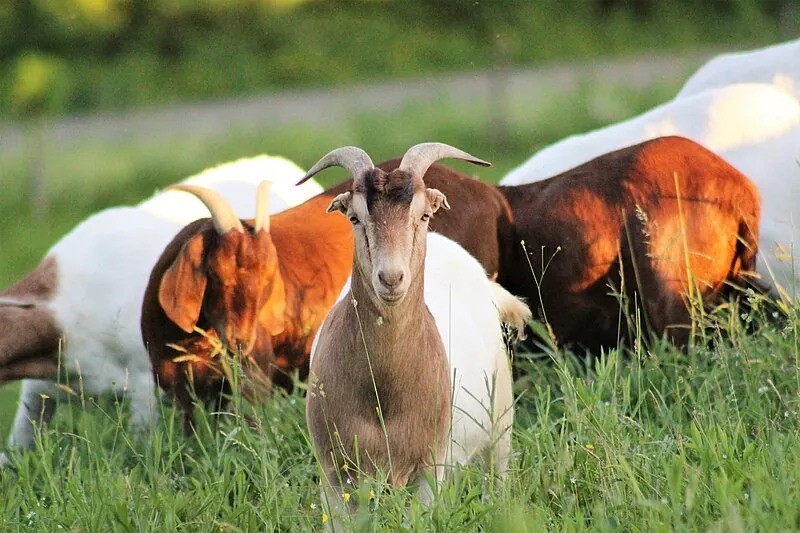
When people move away from cow's milk, they often hear that goat milk or sheep milk is easier to digest, more nutritious, or simply better. Both claims contain partial truth, but they obscure important differences between the two types of milk. Sheep milk and goat milk are not interchangeable alternatives to cow's milk; they are nutritionally distinct products with different culinary applications, different production economics, and different digestibility characteristics that matter differently depending on why you are making the switch. This guide compares them across the dimensions that actually matter.
Production and Availability
Globally, cow's milk dominates with approximately 83 percent of total milk production. Goat milk accounts for roughly 2.3 percent and sheep milk for approximately 1.4 percent, according to FAO data from 2022. These modest shares have large geographic concentrations. Goat milk production is highest in South Asia (India, Bangladesh, Pakistan), Sub-Saharan Africa, and the Mediterranean basin. Sheep milk production is concentrated in Southern Europe (Greece, Italy, France, Spain, Romania), Turkey, and the Middle East.
The production economics differ substantially. A dairy cow produces on average 7,000 to 10,000 litres of milk per year; a high-producing Holstein in intensive systems can exceed 12,000 litres. A dairy goat produces approximately 600 to 900 litres per year. A dairy sheep produces only 150 to 400 litres per year, depending heavily on breed. East Friesian sheep, the highest-producing dairy breed, can reach 400 to 600 litres per lactation of about 200 to 240 days. The consequence is that sheep milk is always more expensive per litre than goat milk, which is itself more expensive per litre than cow's milk.
Nutritional Comparison
The nutritional differences between sheep, goat, and cow's milk are substantial enough to be clinically and culinarily meaningful. The figures below are per 100 mL of whole milk, based on USDA FoodData Central data and published literature.
Calories and Macronutrients
- Cow's milk (whole): 61 kcal; 3.2g protein; 3.3g fat; 4.7g carbohydrate (lactose)
- Goat's milk (whole): 69 kcal; 3.6g protein; 4.1g fat; 4.5g carbohydrate (lactose)
- Sheep's milk (whole): 108 kcal; 5.9g protein; 7.0g fat; 5.4g carbohydrate (lactose)
Sheep milk is dramatically richer than either cow or goat milk: almost double the calories and protein, more than double the fat per 100 mL. This is not a failing but a feature; it makes sheep milk exceptionally well-suited for cheese-making, where fat and protein content determine both yield and richness. A kilogram of sheep milk produces approximately 200 to 250 grams of cheese, compared with 100 to 130 grams from a kilogram of cow's milk.
Fat Composition
Both goat and sheep milk differ from cow's milk in their fat structure in ways relevant to digestion. Cow's milk fat globules cluster tightly and are predominantly large. Goat and sheep milk fat globules are naturally smaller and more uniform, and they lack the agglutinin protein that causes fat globule clustering in cow's milk. This means the fat in goat and sheep milk forms a more dispersed, more easily digestible emulsion without homogenisation.
Medium-chain fatty acids (MCFAs) including caproic (C6:0), caprylic (C8:0), and capric (C10:0) acids are significantly higher in goat milk than in cow's milk. These fatty acids are absorbed more readily than long-chain fatty acids, bypassing lymphatic transport and going directly to the liver for rapid energy metabolism. Sheep milk is intermediate: higher in MCFAs than cow's milk but lower than goat's milk. The distinctive "goaty" flavour of goat milk and cheese comes in part from these same MCFAs, particularly caprylic and capric acids.
Sheep milk has a higher conjugated linoleic acid (CLA) content than both cow and goat milk, particularly in animals raised on pasture. CLA has been associated in some research with anti-inflammatory and metabolic benefits, though clinical evidence in humans remains preliminary.
Protein Structure
The casein proteins in goat and sheep milk form smaller, softer curds than those in cow's milk. This is attributed partly to lower levels of alpha-S1 casein (the main structural casein in cow's milk) relative to beta-casein and kappa-casein. Smaller, softer curds are associated with faster gastric emptying and more rapid protein digestion. A 2014 study by Alférez and colleagues published in the Journal of Dairy Science found that goat milk protein was absorbed significantly more rapidly than cow's milk protein in an animal model, correlating with higher iron and mineral bioavailability.
Sheep milk has a high total casein content (approximately 4.6 g/100 mL versus 2.7 g/100 mL in cow's milk), which contributes to its exceptional cheese-making properties. The high kappa-casein fraction in sheep milk makes it rennet-responsive: curds set quickly and firmly, yielding high cheese output with excellent structure.
Calcium and Minerals
Both sheep and goat milk are richer in calcium than cow's milk on a per-100-mL basis. Sheep milk provides approximately 193 mg calcium per 100 mL versus 113 mg in cow's milk and 134 mg in goat's milk. Phosphorus, magnesium, zinc, and potassium are all proportionally higher in sheep milk. Goat milk has higher potassium and magnesium than cow's milk. Both sheep and goat milk have lower folate levels than cow's milk, which can be nutritionally significant for people relying on them as a primary milk source.
Vitamins
Sheep milk is particularly rich in riboflavin (vitamin B2) and vitamin B12. Goat milk is notably lower in folate than cow's milk, and people who replace cow's milk with goat's milk as a primary beverage should ensure adequate folate from other sources. Both types are comparable to cow's milk in fat-soluble vitamins A, D, E, and K, though vitamin D content depends heavily on the animal's sun exposure and any supplementation in the feed.
Lactose and Digestibility
Both sheep and goat milk contain lactose at levels similar to cow's milk; neither is a suitable substitute for people with diagnosed lactose intolerance. Sheep milk has slightly higher lactose content than cow's milk (5.4 vs. 4.7 g/100 mL). Goat milk has slightly lower lactose than cow's milk (4.5 g/100 mL).
Many people who report better tolerating goat or sheep milk than cow's milk are experiencing the benefit of different protein structures and fat globule characteristics rather than lower lactose. The smaller, more dispersed fat globules and softer casein curds in these milks may reduce gastrointestinal transit time and bloating even at equivalent lactose loads. However, for people with significant lactase deficiency, neither sheep nor goat milk reliably eliminates symptoms.
True cow's milk protein allergy (to alpha-S1 casein or beta-lactoglobulin) is a different matter. Most people with cow's milk protein allergy will also react to sheep and goat milk, as these proteins are cross-reactive. Some individuals with mild alpha-S1 casein sensitivity may tolerate goat or sheep milk better because of their lower alpha-S1 casein content, but this should be tested under medical supervision rather than assumed.
Flavour Differences
The most immediately perceptible difference for most consumers is flavour. Goat milk has a distinctly "goaty" flavour, sometimes described as tangy, slightly gamey, or barnyard-like. This character, while appealing to some palates, is off-putting to others. It comes primarily from the higher concentration of medium-chain fatty acids (caprylic and capric acid) and their interaction with air exposure and microbial activity during storage. Well-handled, very fresh goat milk from clean, healthy animals is notably milder than the "goat" flavour in improperly stored milk or poorly made goat cheese.
Sheep milk has a richer, sweeter, more buttery flavour than goat milk. Its higher fat and sugar content give it a full-bodied, almost creamy taste without the gamey note of goat milk. Many people who dislike goat milk find sheep milk much more approachable. Sheep milk consumed as a beverage, where available, is often described as luxuriously thick and sweet.
Cheese: Where Sheep and Goat Milk Shine
The most important applications of both milk types globally are in cheese-making rather than as drinking milk. Each has characteristic cheese traditions tied to its flavour profile and physical properties.
Classic Sheep Milk Cheeses
- Roquefort (France): The most famous sheep milk blue cheese, made in the caves of Combalou near Roquefort-sur-Soulzon from the milk of Lacaune sheep. Cave-aged with Penicillium roqueforti, developing a pungent, salty, buttery flavour with blue-green veining. PDO protected since 1925.
- Manchego (Spain): Made from the milk of Manchega sheep in the La Mancha plateau region. Aged from 60 days (Manchego Fresco/Curado) to two years or more (Manchego Viejo). Buttery, slightly tangy, with a characteristic herringbone rind pattern. One of Spain's most exported cheeses.
- Pecorino Romano (Italy): A hard, granular sheep milk cheese from Lazio and Sardinia. Very salty, intensely flavoured, used primarily as a grating cheese in Roman pasta dishes including cacio e pepe, amatriciana, and carbonara.
- Ossau-Iraty (France): A semi-hard Basque sheep cheese with a smooth, ivory interior and notes of nuts, sweet cream, and mild fruit. Aged three to six months. One of the most accessible and widely appreciated sheep cheeses for general audiences.
- Feta (Greece): Made from sheep milk (minimum 70 percent) and goat milk, brined, and produced in defined Greek regions. Creamy-crumbly texture, clean salty-tangy flavour, protected as PDO since 2002.
Classic Goat Milk Cheeses
- Chèvre (France): A broad category of fresh or aged French goat cheeses. Styles range from fresh log (Bûche de chèvre), bright and lemony, to aged rounds with wrinkled ash-coated rinds (Valençay, Selles-sur-Cher) or bloomy rinds (Saint-Maure de Touraine). The Loire Valley is the centre of French chèvre production.
- Crottin de Chavignol (France): A small, dense goat cheese from the Berry region, aged from fresh and very mild to firm, dry, and intensely flavoured. The name, despite its unglamorous translation (it refers to horse dung, from the shape), indicates one of France's most distinguished artisan cheeses.
- Montchevre (USA): The leading goat cheese brand in the United States, producing fresh chèvre logs, crumbled goat cheese, and aged varieties at scale from midwestern herds.
- Cabrales (Spain): A strongly flavoured mixed-milk blue cheese from Asturias, primarily goat milk with some cow and sheep milk. Aged in mountain caves, intensely pungent, PDO protected.
- Halloumi (Cyprus): Traditionally a mixed sheep and goat milk cheese, though many modern versions include cow's milk. Its defining characteristic is a high melting point that allows it to be grilled or pan-fried without melting.
Which Should You Choose?
For drinking milk: sheep milk is richer, sweeter, and more nutritionally dense but also higher in calories and harder to find. It suits people who want maximum nutrition from small quantities. Goat milk is more widely available, lower in calories, and acceptable to many people who find it pleasantly tangy. For strict lactose intolerance, neither is a reliable solution; opt for lactase-treated cow's milk or plant-based alternatives.
For cheese: sheep milk cheeses tend to be richer, more complex, and more expensive. Goat milk cheeses offer more variety across freshness levels and are generally more available. Neither category is universally superior; they serve different flavour roles in different meals and pairings.
Related: Goat Milk Cheese: A Complete Guide | Feta Cheese: Everything You Need to Know | Cheese and Wine Pairing Guide