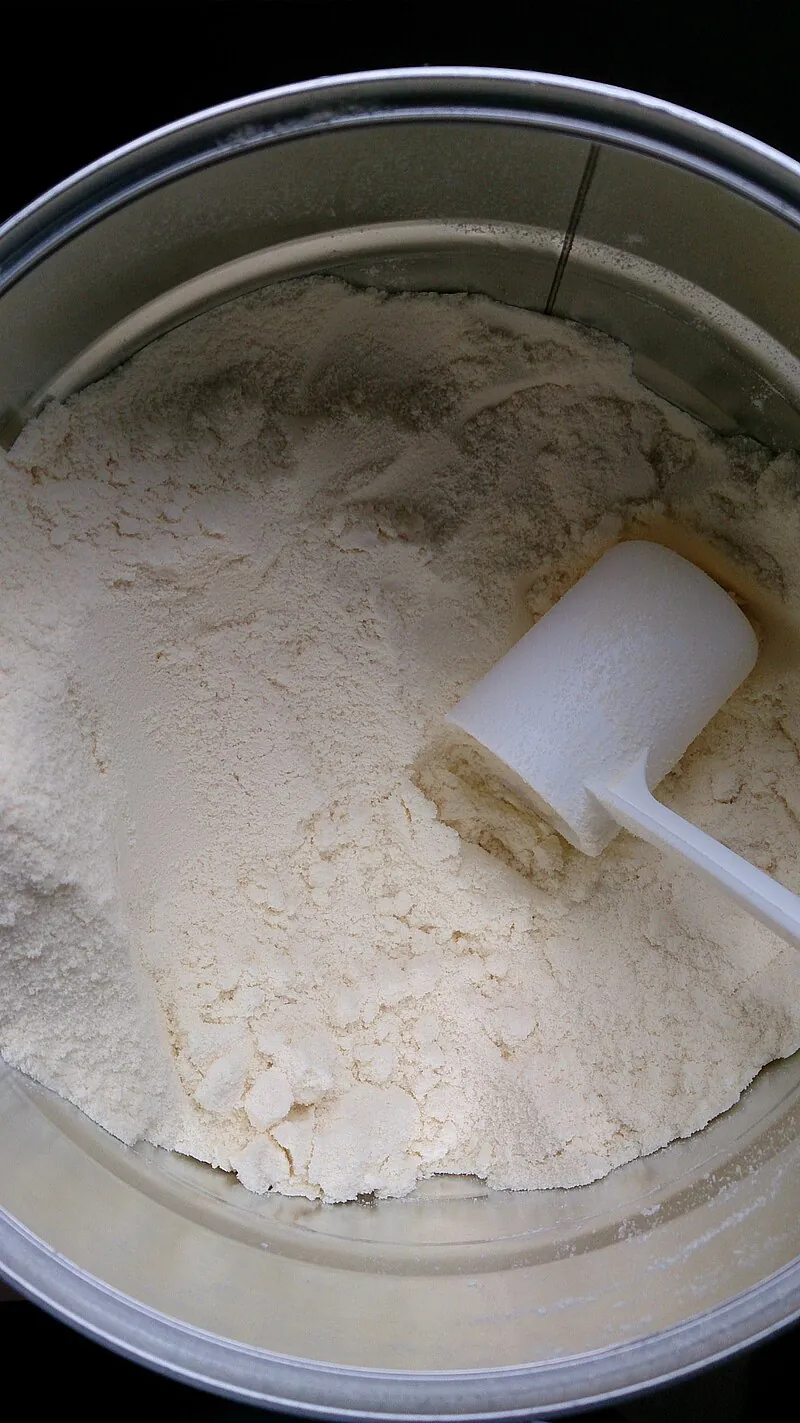
In the enormous chilled warehouses of Auckland, Rotterdam, and Chicago, tens of thousands of 25kg bags of white powder are stacked to the ceiling, waiting for container ships that will carry them to infant formula factories in Beijing, to military commissaries in the Middle East, to instant noodle manufacturers in Vietnam, to chocolatiers in Switzerland, to bread bakers in West Africa. The product is milk powder — one of the world's most globalised food commodities, the result of a century of industrial technology development that turned one of the most perishable foods in existence into something that can cross the Pacific without refrigeration, sit in a warehouse for two years, and reconstitute into nutrition in regions that have never seen a dairy cow. Milk powder is not a glamorous food. It does not appear on restaurant menus or on food television. But it is embedded in the global food system so completely — in infant formula, in chocolate, in baked goods, in instant coffee whiteners, in military rations, in emergency food aid — that its absence would leave a hole in global food supply that would be very hard to fill.
The Science: How Spray Drying Works
The challenge of turning liquid milk (87% water) into a stable powder is fundamentally one of water removal: get the water content below 3–4%, and bacterial growth stops, enzymatic reactions cease, and the product becomes shelf-stable for 12–24 months at ambient temperature. The technical solution — spray drying — was developed in its modern form in the 1920s and is the foundational technology of the global milk powder industry.
The process:
- Pre-concentration: Liquid milk is first concentrated in a multiple-effect evaporator (essentially a series of vacuum evaporation chambers) to remove roughly 60–70% of the water, producing a concentrated milk with 45–55% solids. This pre-concentration is done at low temperature (40–70°C under vacuum) to minimise heat damage to the milk proteins.
- Spray drying: The concentrated milk is pumped to an atomiser — either a high-speed rotating disc or a high-pressure nozzle — at the top of a large cylindrical drying chamber (typically 10–25m tall, 5–12m diameter). The atomiser breaks the concentrated milk into a fine mist of droplets (50–200 microns diameter). These droplets fall through a chamber in which hot air (150–220°C at inlet, dropping to 60–80°C at the chamber outlet) flows in a controlled pattern. Each droplet dries almost instantaneously — in 0.1–0.5 seconds — as the moisture flashes off into the airstream. The dried powder falls to the chamber floor and is collected.
- Fluidised bed drying: The collected powder (still at 4–8% moisture) passes through a vibrated fluidised bed where additional warm air completes drying to the target 3–4% moisture. Lecithin may be added here to improve the powder's instantising properties (its ability to wet and dissolve quickly when reconstituted).
The engineering challenge: maintaining precisely controlled air temperature, flow rate, and droplet size to produce a powder of consistent particle size, moisture content, and solubility. A single large spray dryer processes 3,000–10,000 litres of liquid milk per hour, with multiple dryers running simultaneously in large powder plants.
Types of Milk Powder
- Whole Milk Powder (WMP): Made from full-fat milk, retaining all the fat content (26–40% fat by weight in the powder). Reconstitutes to approximately the flavour and richness of fresh whole milk. The primary product traded globally for end-use reconstitution and infant formula.
- Skimmed Milk Powder (SMP) / Non-Fat Dry Milk (NFDM): Made from skim milk after fat removal. Much lower fat content (maximum 1.5%). Higher protein proportion. Used extensively in food manufacturing — baked goods, confectionery, sauces, cheese manufacture — as a functional protein and solids source rather than a dairy flavour contributor.
- Whey Powder: The by-product of cheese-making — the liquid whey remaining after casein coagulation — is spray-dried to produce whey powder. Contains approximately 10–15% protein (mainly whey proteins: lactalbumin and lactoglobulin), 70–75% lactose, and small amounts of fat. Whey protein concentrate (WPC) and whey protein isolate (WPI) — produced by further ultrafiltration to concentrate the protein fraction — are the primary ingredients in sports nutrition products globally.
- Infant Formula Base: A specially formulated powder product designed to mimic the nutritional composition of human breast milk for infant feeding. Contains WMP or SMP as the protein base, with added vegetable oils (to adjust fatty acid profile), lactose, vitamins, minerals, and increasingly complex additions like prebiotics (galacto-oligosaccharides), probiotics, and docosahexaenoic acid (DHA). The most regulated food product in most countries, with extensive clinical testing requirements before approval.
The Global Trade: Who Produces, Who Buys
The global milk powder trade is dominated by a small number of surplus-producing nations and a large number of deficit countries dependent on imports.
New Zealand: The World's Dairy Exporter
New Zealand is the most trade-exposed dairy economy in the world — the country exports approximately 95% of its dairy production, compared to the EU's 15% and the US's 15%. This extraordinary export orientation is the result of geography (a small domestic population of 5 million, a large productive pasture area, a mild oceanic climate allowing year-round grass growth), economic history (the dismantling of agricultural subsidies in the 1980s forced radical efficiency improvements), and industrial structure (Fonterra, a farmer-owned cooperative, controls approximately 80% of New Zealand milk collection and is one of the world's five largest dairy companies).
Fonterra's global dairy auction platform — the GlobalDairyTrade (GDT), operated online since 2008 — has become the world's primary price-setting mechanism for WMP, SMP, butter, and anhydrous milkfat. The GDT price is watched by dairy traders, farmers, and food manufacturers on every continent; a 5% move in the GDT WMP price in a given auction can shift the profitability of New Zealand dairy farming and the cost of infant formula in Chinese supermarkets within weeks.
China: The World's Largest Importer
China's rapid urbanisation, rising middle-class incomes, and growing consumer confidence in nutrition have made it the world's largest importer of dairy products — particularly WMP and infant formula base. China has approximately 14 million dairy cows and produces significant quantities of milk domestically, but production cannot keep pace with a consumer market that has grown from near-zero per-capita dairy consumption in 1980 to approximately 40kg per person per year in 2023 (still well below the EU's 300kg+ per person). New Zealand supplies approximately 28–35% of China's imported dairy; the EU (particularly Ireland and the Netherlands) supplies a further 20–25%.
The 2008 Chinese Melamine Scandal: A Catastrophe That Reshaped the Industry
In 2008, one of the most serious food safety events in modern history exposed the systemic pressures within China's domestic dairy industry. Sanlu Group — one of China's largest dairy companies — and at least 21 other dairy companies were found to have deliberately adulterated raw milk and infant formula with melamine, an industrial nitrogen-rich compound, to inflate the apparent protein content of watered-down milk when tested by the standard Kjeldahl protein assay (which measures nitrogen as a proxy for protein).
The consequences were devastating: at least 6 infants died and approximately 300,000 children were made ill, many developing kidney stones. The Sanlu Group's chairwoman was sentenced to life imprisonment; two individuals involved in producing the adulterated milk were executed. The Chinese government implemented sweeping reforms to dairy inspection standards, infant formula regulation, and laboratory testing methods.
The international consequence was equally significant: Chinese consumer trust in domestically-produced infant formula collapsed almost completely. Demand for imported infant formula — from New Zealand (Fonterra, which had a stake in Sanlu, faced its own serious questions), Australia, Germany, the Netherlands, and Ireland — surged dramatically. The "grey market" in infant formula (individuals in Australia and the UK buying formula from supermarket shelves and shipping it to Chinese relatives) became a national news story in multiple countries, prompting purchase limits. A decade later, Chinese parents' preference for imported or foreign-brand infant formula remains strong and has become a defining commercial reality for global dairy exporters.
Military and Emergency Uses: Milk Powder as Strategic Food
Powdered milk's shelf stability made it a natural component of military logistics from the early 20th century. The US military has used SMP and WMP in rations since World War I, and the development of the K-ration and C-ration in World War II standardised dairy powder as a nutritional component in field feeding. Today, military meal systems globally use milk powder as an ingredient in a wide range of prepared foods within individual meal packages.
The World Food Programme and other humanitarian agencies use milk powder extensively in emergency feeding: a concentrated source of protein and calcium, stable in hot climates without refrigeration, suitable for children in malnutrition recovery programs (particularly in the high-protein therapeutic milk formulas F-75 and F-100 used in severe acute malnutrition treatment). Approximately 200,000–300,000 tonnes of milk powder are used in humanitarian operations per year, a significant fraction of global trade.
The Reconstituted Milk Economy
In many developing countries — particularly in West Africa, Southeast Asia, and parts of the Middle East — reconstituted milk (milk powder rehydrated with water) forms the primary affordable dairy product available to consumers without access to fresh milk supply chains. The reconstitution is done at the household level, at street food stalls (the hot sweetened milk drinks of West African cities are typically made from WMP), and by small food manufacturers who cannot access or afford fresh milk.
The economics are stark: in a country where cold chain infrastructure makes fresh pasteurised milk impractical and expensive to distribute, WMP imported at commodity prices and sold in small sachets brings dairy nutrition to populations that would otherwise have none. The public health mathematics — protein and calcium delivered at accessible cost — are compelling, even if the flavour comparison with fresh milk does not favour the reconstituted product. This is the quiet global function of milk powder: not as a substitute for the ideal, but as a practical infrastructure of nutrition at scale.
Related: Industrial Milk: From the Farm to the Carton | Condensed Milk: The Ingredient That Changed Global Baking