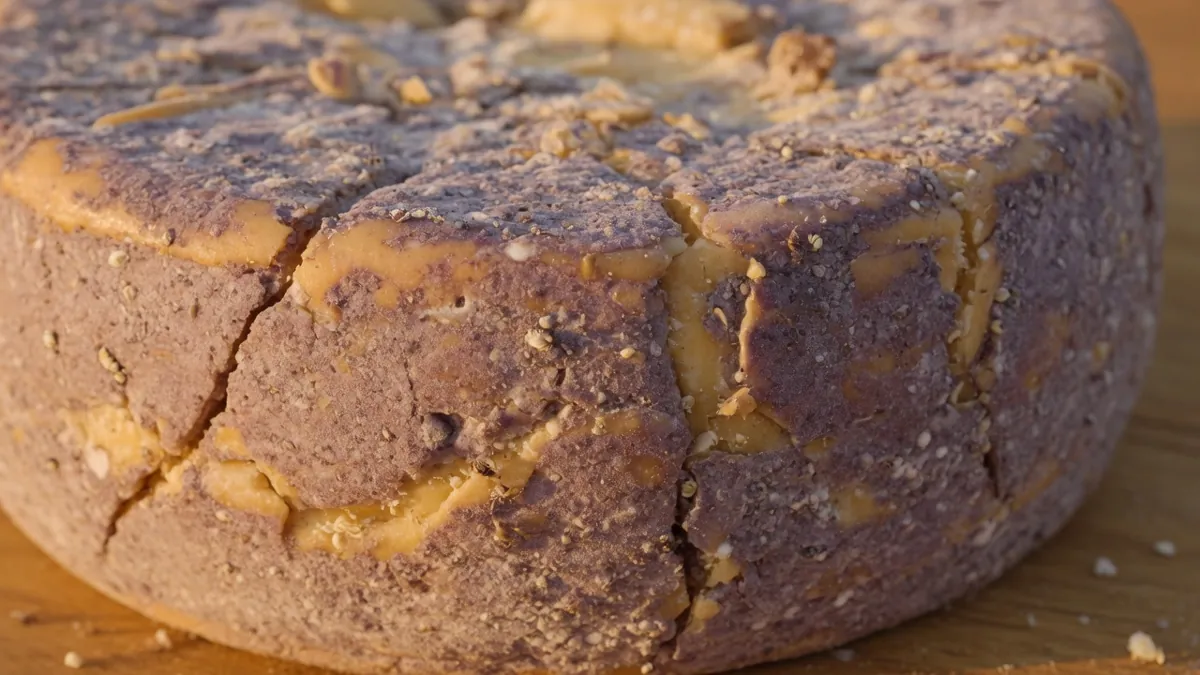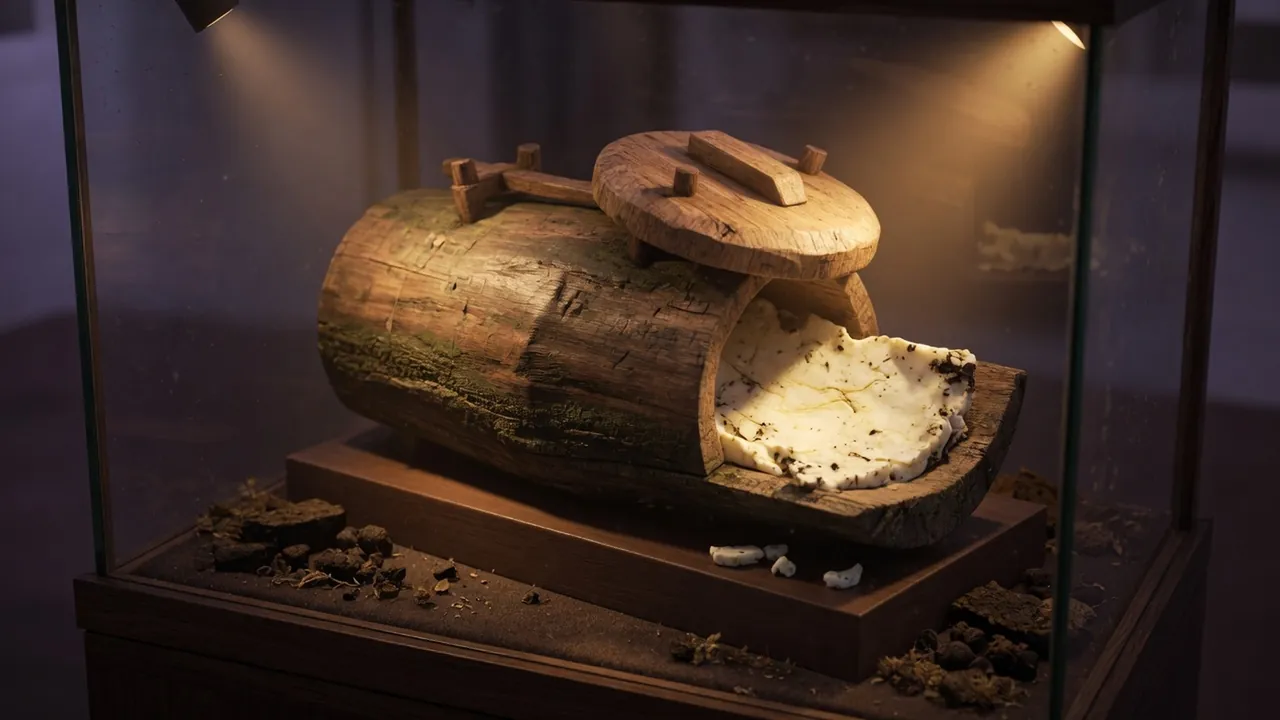
Channel illustration from the Milkiry episode (AI-generated still), not a photograph of a real find.
Every so often, someone cutting peat in Ireland or Scotland turns up a large white or yellow waxy mass, often packed into a wooden container or wrapped in bark or animal membranes. It is called bog butter. For more than a century two questions hung over it: is it actually butter, and how old does it get?
What bog butter is
Bog butters are found in the peat bogs of Ireland and Scotland. They are considered the largest deposits of fat found anywhere in nature, and they are thought to have been buried on purpose by past farming communities rather than lost by accident.
The 2019 study
In 2019 a team led by archaeologist Jessica Smyth of University College Dublin published a study in Scientific Reports that took on both questions at once. The team analysed 32 Irish bog butters, sampled from the collections of the National Museum of Ireland.
Butter or tallow?
Earlier chemistry had already shown that bog butters are animal fat. What it could not settle was which kind. Time in the bog alters the fat, and dairy fat and tallow (rendered body fat) can end up looking alike. The difference matters: one points to animals being milked, the other to animals being slaughtered.
The team measured stable carbon isotopes in individual fatty acids, and that gave them the answer. The paper reports the first conclusive evidence that Irish bog butter is dairy fat. The authors note that this “is not as self-evident as one would suppose.”
The picture is not the same everywhere. In an earlier analysis of nine Scottish bog butters, three turned out to be tallow. “Bog butter” is a label that can hide different stories depending on where you dig.
Seventy radiocarbon dates
To find out how old the butters are, the team used radiocarbon dating. Living things take in carbon-14, and after death it decays at a known rate. The study added 50 new radiocarbon dates to 20 published earlier, for 70 in total.
The oldest sample, from Knockdrin, dates to 1745–1635 BC. The youngest, from Crovehy, dates to AD 1510–1800. In the paper’s words, the tradition spans “at least 3500 years, from the Early Bronze Age (c. 1700 BC)” onward.
One thing the dates do not say: they mark when the butter was made or put into the ground. They do not mean any single lump sat in a bog unchanged for 3,500 years.
The Killeenan More bowl
The dates also overturned an older assumption. A decorated wooden bowl from Killeenan More, Co. Galway, had been presumed medieval because of its decoration. Dated in this study, it turned out to be Middle Iron Age, much older than anyone had assumed.
What we know, and what we don’t
We know that Irish bog butter is dairy fat, that the oldest dated sample reaches back to around 1700 BC, and that the practice shows up across thousands of years, from the Early Bronze Age to the early modern period.
What the dates cannot tell us is why each butter went into the bog. The reasons are still debated, and the authors think a single reason across such a long span is unlikely. So this page leaves the question open rather than filling it with a tidy story.
One more thing should stay clear. A lump of ancient bog butter is an archaeological find, not something to eat.
A fatty archive
Most dairy disappears within days. Bog butter is the rare exception: dairy that stayed in the landscape long enough for science to read it. Think of it as an archive written not in ink, but in milk.
Sources / References
- Smyth, J., Berstan, R., Casanova, E., McCormick, F., Mulhall, I., Sikora, M., Synnott, C. & Evershed, R. P. “Four millennia of dairy surplus and deposition revealed through compound-specific stable isotope analysis and radiocarbon dating of Irish bog butters.” Scientific Reports 9, 4559 (2019). doi:10.1038/s41598-019-40975-y
Method note: facts come only from the paper above. The ages are calibrated radiocarbon date ranges for when the butter was made or deposited. No burial motive is given as fact, because the paper says the reasons are still debated. This is food history, not nutrition or food-safety advice.