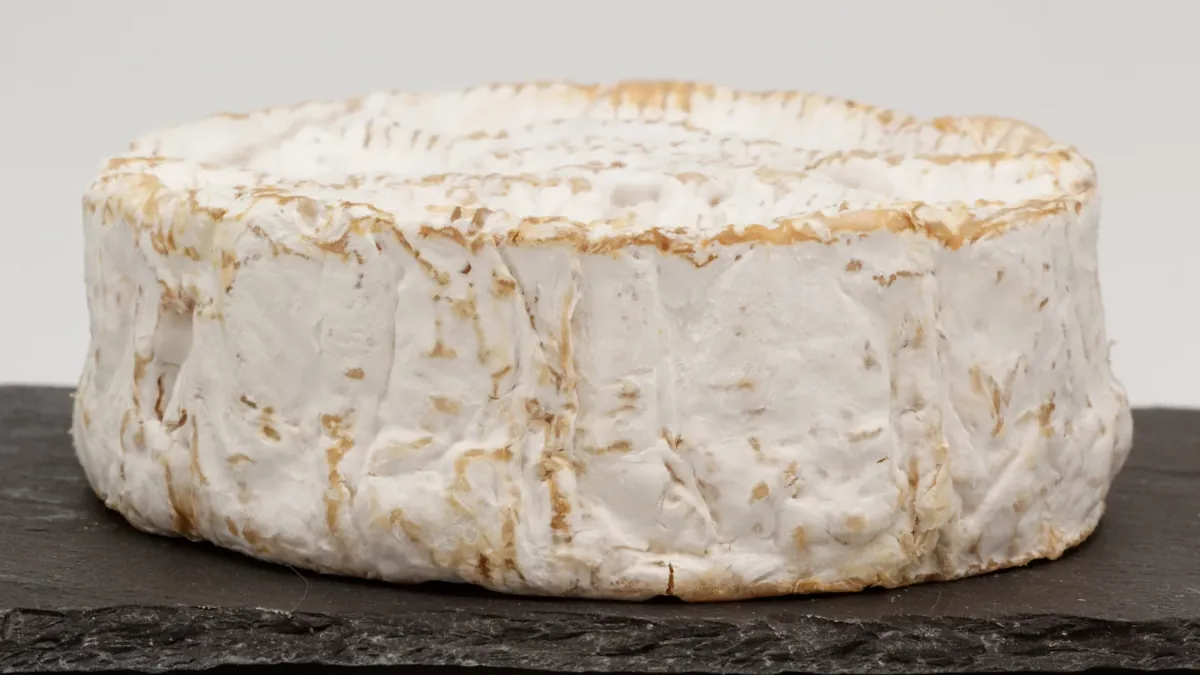
The word "brie" on a cheese label tells you very little. It describes a style of soft, white-rinded cheese made from cow's milk that is produced across France and imitated worldwide, sold in supermarkets from Birmingham to Bangkok under a name that carries no legal protection in its generic form. The "brie" in the supermarket dairy aisle may have been made in Normandy, Brittany, Denmark, or Wisconsin; it may have been pasteurised, factory-produced, and designed entirely for uniformity and shelf life rather than flavour. Genuine brie, the kind worth understanding, consists of exactly two cheeses with Appellation d'Origine Contrôlée (AOC) protection: Brie de Meaux and Brie de Melun. These two cheeses share a name and a general category but differ in format, production method, ageing approach, flavour intensity, and historical prestige in ways that make treating them as variants of the same cheese a significant oversimplification.
History: The Brie Tradition of the Île-de-France
The Brie region of France, centred on the Seine-et-Marne department east of Paris in the Île-de-France, has been producing soft white-rinded cheeses since at least the 8th century. Charlemagne is said to have tasted Brie de Meaux during a visit to the Bishop of Meaux in 774 CE and to have ordered regular deliveries to Aachen thereafter, an account repeated in multiple French cheese histories though its documentary basis is uncertain. The 13th-century poet Rutebeuf included Brie in a verse listing the great cheeses of France, and by the Renaissance the cheese was firmly established as one of the most prestigious regional products of the Île-de-France, supplied to the royal court at Versailles and the aristocratic households of Paris.
The Congress of Vienna in 1814 and 1815, at which European powers negotiated the post-Napoleonic order, became the occasion for a famous cheese competition. According to a well-documented account by Talleyrand (the French foreign minister), the assembled diplomats conducted an informal competition among cheeses brought by representatives of different nations. Brie de Meaux won the competition, earning the description "roi des fromages" (king of cheeses) from the Viennese press, a phrase still printed on packaging by some Brie de Meaux producers two centuries later.
Brie de Melun is the older of the two AOC cheeses by documentary record. Named for the town of Melun on the Seine, approximately 45 kilometres southeast of Paris, it was referenced in texts predating the systematisation of Brie de Meaux as a distinct product. The cheese historian Patrick Rance, in his 1989 book "The French Cheese Book," traces Melun's cheese tradition to a monastic origin, with Benedictine monks at the abbey of Melun documented as producing soft fresh cheeses from the 10th century onward.
AOC Production Rules: What Separates the Two Cheeses
Both Brie de Meaux and Brie de Melun received AOC status in 1980, under the same legislative order that formalised the protection of numerous French cheeses whose names had been freely applied to imitations. The two disciplinari (production codes) differ on several critical points.
Geographic Zone
Brie de Meaux is produced across a broader zone spanning Seine-et-Marne, Seine-et-Oise, Meuse, Haute-Marne, Aube, Marne, and Yonne departments. This relatively large production area reflects Meaux's historical role as a market town where cheeses from across the Brie region were traded and standardised under a single name. Brie de Melun has a smaller, more tightly defined zone centred on the southern Seine-et-Marne around Melun, Nangis, and Provins.
Milk and Coagulation
This is the most technically significant difference between the two cheeses. Brie de Meaux is a rennet-coagulated cheese: calf rennet or microbial rennet is added to the milk at a relatively high dose, and the curd sets within approximately 30 to 90 minutes of rennet addition. This rapid, rennet-driven coagulation produces a curd that is firm enough to ladle or scoop into the moulds without breaking.
Brie de Melun, by contrast, is a lactic-acid coagulated cheese: only a very small amount of rennet is used (approximately one-tenth the quantity used for Meaux), and the coagulation is achieved primarily through lactic acid produced by the starter bacteria over approximately 16 to 18 hours at cool temperatures. This slow coagulation produces a more delicate, gel-like curd that requires very gentle handling and is transferred to moulds using the traditional long-handled perforated ladle (louche) specific to this style of cheesemaking. The extended lactic coagulation produces a more acidic curd and, ultimately, a more pungent and complex final cheese.
Format and Weight
Brie de Meaux is a large cheese: a full wheel measures 36 to 37 centimetres in diameter and weighs approximately 2.5 to 3 kilograms when fresh. It is almost always sold by the portion (wedge cut from the wheel) at retail. Brie de Melun is significantly smaller: approximately 27 centimetres in diameter and weighing approximately 1.5 kilograms. The smaller format means that the ratio of rind surface area to interior paste is higher in Melun than in Meaux, which contributes to the former's more pronounced rind character and more intense overall flavour.
Ageing
Brie de Meaux AOC specifies a minimum ageing period of four weeks for the rind to develop fully. In practice, most Meaux cheeses are sold at four to six weeks; a fully ripe Meaux that has been well-matured to eight weeks develops a significantly more complex flavour than the younger cheese commonly sold.
Brie de Melun AOC requires a minimum ageing of four weeks but typically reaches optimum flavour at six to ten weeks, a longer maturation reflecting the denser, more acidic curd produced by its lactic coagulation method. A well-aged Melun at eight to ten weeks has a noticeably runnier, more oozing interior (called "coulant" in French cheese terminology) and a much stronger, more barnyard-inflected aroma than a young Meaux. Some affineurs age Melun to twelve weeks or beyond, producing a cheese that is extremely strong by any standard and that occupies a different flavour register entirely from the mild supermarket brie that most consumers associate with the name.
The Rind: Penicillium camemberti and What It Does
Both Brie de Meaux and Brie de Melun develop their characteristic white bloomy rind through the action of Penicillium camemberti (also called Penicillium candidum), a mould that grows on the surface of the cheese during the ageing period and produces a suite of proteolytic and lipolytic enzymes that ripen the cheese from the outside in. These enzymes break down proteins (proteolysis) and fats (lipolysis) in the paste adjacent to the rind, softening the texture from a chalky, firmer centre outward and releasing aromatic compounds including ammonia, volatile fatty acids, and sulphur compounds that contribute to the characteristic "mushroom and cream" aroma of young brie and the more assertive, ammonia-forward character of older brie.
The key assessment of ripeness in a bloomy-rind cheese is the state of the interior paste. A young brie at two to three weeks will have a dense, slightly chalky centre beneath a thin outer ring of creaminess; this is the state in which supermarket brie is usually sold, often slightly under-ripe for commercial reasons (it travels better and has a longer shelf life). A properly ripe brie at optimum maturity has no chalky centre at all; the entire paste from rind to centre should be uniformly soft, yielding, and beginning to flow at room temperature. Over-ripe brie has a fully liquid interior under the rind and an ammonia-forward aroma that has become the dominant note.
A visual assessment tool: look at the underside of a brie wedge. The paste should bulge slightly beyond the rind at the cutting face; a flat or inward face indicates an under-ripe cheese. The surface rind of authentic Brie de Meaux should show reddish-brown streaks on the white background (from Brevibacterium and natural surface yeast activity during ageing) rather than a uniformly snow-white surface, which is more characteristic of factory-produced generic brie where the surface mould has been applied more uniformly and the ageing controlled more tightly.
Flavour Comparison: Meaux vs Melun
At equivalent ripeness, Brie de Meaux and Brie de Melun deliver distinctly different flavour experiences.
A ripe Brie de Meaux has a flavour that is rich, buttery, and creamy, with prominent mushroom and truffle notes from the Penicillium rind, gentle lactic tang, and a long, warm, savoury finish. The rennet coagulation produces a sweeter curd than Melun's lactic coagulation, which contributes to Meaux's generally milder and more broadly appealing character. It is the brie that matches the "king of cheeses" reputation: impressive, balanced, and capable of pleasing almost everyone.
Brie de Melun at full ripeness is a more demanding cheese. The lactic coagulation produces higher acidity in the curd, which survives through ageing as a sharp, tangy baseline beneath the other flavours. The smaller format and higher rind-to-paste ratio mean the rind's influence on the interior is more pronounced, contributing more ammonia, more barnyard character, and more of the oxidised fat notes that come from intensive lipolysis during extended ageing. A well-aged Melun is for people who love the full expression of bloomy-rind cheese flavour without apology: it is closer in intensity to a well-aged Camembert de Normandie or a mild Époisses than to the brie found in supermarkets.
Baked Brie: When to Use Each
Baked brie has become one of the most popular party and appetiser preparations in the English-speaking world, typically involving a whole wheel or half wheel of brie baked in the oven until molten, sometimes wrapped in pastry, sometimes topped with jam, honey, or caramelised onions. For this preparation, the choice of brie matters considerably.
Brie de Meaux in a small wedge or portion baked at 180 degrees Celsius for 10 to 15 minutes produces a beautifully molten interior while the rind holds its structure as a container. The mild, buttery flavour of Meaux is an excellent canvas for toppings: fig jam, cranberry relish, caramelised apple and walnut, or simple honey and thyme all work without competing with an assertive cheese flavour. A full small Brie de Meaux wheel (sold as a portion in some specialty shops) or a 250-gram wedge portion is the practical format.
Brie de Melun is generally less suitable for baking because its stronger, more acidic flavour can become overwhelming when heated, and the more intensive flavour needs nothing to accompany it. If using Melun in a baked preparation, keep the toppings simple (plain honey, no sweet fruit) and use a shorter baking time to warm without fully liquefying, which can cause the stronger flavour elements to volatilise excessively.
For the classic en croûte preparation (brie wrapped in puff pastry and baked), Brie de Meaux is unambiguously the better choice: its milder flavour and buttery sweetness complement the pastry's butteriness and the sweetness of any accompanying jam without the flavour clash that a Melun's intensity might produce.
Where to Buy Authentic Brie de Meaux and Brie de Melun
In France, both cheeses are widely available in fromageries and hypermarché cheese counters. Look for the AOC designation on the label. Major Brie de Meaux producers include Société Fromagère de la Brie (the largest producer, supplying supermarkets throughout France and for export), Ferme de la Tremblaye, and the cooperative fromagerie of Meaux. Melun producers are smaller in scale; affineur Marie Quatrehomme in Paris and a handful of fermiers (farmhouse producers) in Seine-et-Marne produce the most respected examples.
In the United Kingdom, both cheeses are available at Neal's Yard Dairy in London, Paxton and Whitfield, and specialist online cheesemongers including La Fromagerie. Import duties and logistics mean that authentic raw-milk Brie de Meaux (which cannot be legally sold in the United States under FDA rules requiring 60-day ageing for soft raw-milk cheeses, a period that takes brie well beyond its optimum ripeness) is not always available in optimal condition outside Europe. In the US, pasteurised Brie de Meaux is available at Whole Foods, specialty cheese shops, and Murray's Cheese in New York.
The price difference between AOC brie and generic supermarket brie is significant. A 250-gram wedge of Brie de Meaux from a French supermarket costs approximately 4 to 6 euros; the same size from a Paris fromagerie may cost 7 to 10 euros. Generic supermarket brie at equivalent weight retails at 1.50 to 2.50 euros in France. Outside France, the price premium for imported AOC brie is larger: expect 12 to 18 dollars per 200-gram wedge at specialty retailers in the United States. The flavour difference justifies the cost for occasions when the cheese itself is the focus, whether on a board or as a simply served finishing course.
Serving Brie Properly
Both bries must be served at room temperature to express their flavour. Remove from the refrigerator at least 45 to 60 minutes before serving. A cold brie has firm, rubbery paste and muted flavour; a room-temperature brie at full ripeness has the runny, oozing interior and full aromatic expression that defines the eating experience. Store both cheeses wrapped in their original packaging or in wax paper (not plastic) in the refrigerator and consume within 5 to 7 days of purchase for Meaux and within a similar window for Melun, adjusting for the ripeness state when purchased.
For cheese board presentation, a wedge of brie should be cut from the pointed tip toward the rind, not sliced across parallel to the rind (a common error that gives late guests only rind and removes the tip from earlier guests). With a round portioned brie on a board, cut like a cake: each guest receives rind and interior together. Pair with plain crackers or baguette that will not compete with the cheese flavour, alongside fresh or dried fruit, honey, and walnuts for Meaux; keep Melun's accompaniments simpler and let the cheese's own intensity carry the board.
Related: Exotic and Pungent Cheeses: Époisses, Vacherin Mont d'Or, Stinking Bishop, and Limburger | Cheese and Wine Pairing: A Practical Guide by Cheese Style