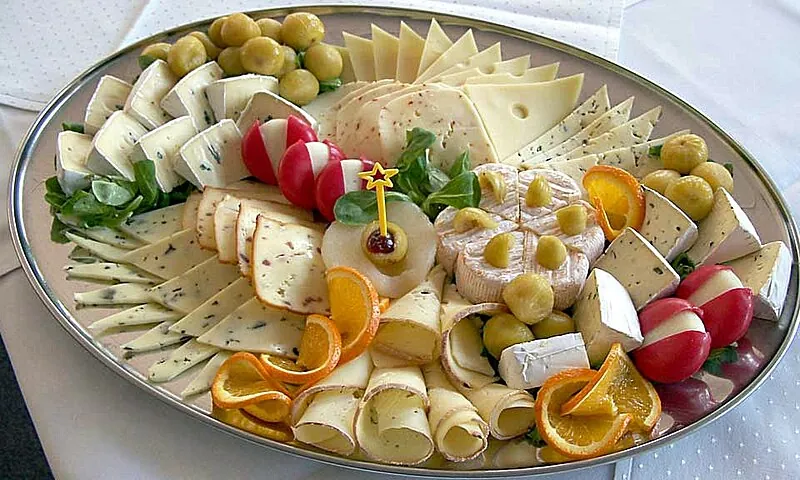
There are over 1,800 named cheese varieties in the world, produced in 47 countries, from the milk of cows, sheep, goats, buffalo, yaks, camels, and horses. The apparent complexity is reduced by understanding that all cheese is made through the same fundamental process (coagulate milk proteins with acid or rennet, drain the whey, and manage the resulting curd through varying amounts of pressing, salting, and aging) and that the differences between cheese types come from a relatively small number of variables: the milk source, the coagulation method, the amount of moisture removed, the microbial cultures used, and the aging environment. Understanding these variables explains why Brie and Parmesan taste nothing like each other despite both being made from cow's milk, and why Manchego and Roquefort taste nothing like each other despite both being made from sheep's milk.
How Cheese Is Made: The Universal Process
Every cheese begins with milk that is coagulated: the proteins (primarily casein) are induced to form a gel (the curd) by lowering the pH through acid addition or bacterial fermentation, by adding rennet (an enzyme traditionally from calf stomach, now often microbial), or by a combination of both. The whey (the remaining liquid) is separated from the curd by cutting, stirring, heating, or pressing. The curd is then either used fresh (fresh cheeses) or pressed, shaped, salted, and aged for varying periods to develop flavour and reduce moisture.
Fresh Cheeses
Fresh cheeses contain the highest moisture content (45% to 80% water) and are consumed immediately or within days of production without aging. They are mild, creamy, and highly perishable.
- Ricotta: Made by re-heating the whey drained from other cheeses (the name means "re-cooked"), which coagulates the residual whey proteins (albumin and globulin). The result is a light, slightly grainy fresh cheese with a delicate milky flavour. Italian whole-milk ricotta is higher-fat and creamier than the reduced-fat versions sold in UK supermarkets. Uses: lasagne, filled pasta, cheesecake, cannoli, toast with honey.
- Mascarpone: An Italian cream cheese made by adding tartaric acid to cream (rather than whole milk), producing an extremely rich (40% fat), smooth, spreadable cheese with a neutral flavour. Essential for tiramisu; also used in pasta sauces, risotto, and as a rich substitute for whipped cream or crème fraîche.
- Cottage Cheese: Acid-set fresh cheese made from skim or low-fat milk, producing small curd (mixed with a small amount of cream) or large curd varieties. Low fat, high protein (12g per 100g), mild flavour. Widely used in high-protein diets.
- Cream Cheese: A fresh cheese made from full-fat milk and cream, stabilised with carob bean gum or guar gum in commercial production (Philadelphia-style). Used in cheesecakes, frosting, bagels. The name "cream cheese" has no regulatory definition for fat content in UK law; products labelled as such vary considerably in composition.
- Mozzarella: A stretched-curd (pasta filata) fresh cheese. The curd is heated in hot water and kneaded until it stretches and becomes elastic, then shaped into balls. Fresh buffalo mozzarella (Mozzarella di Bufala Campana, PDO) from Campania, Italy, is softer and more flavourful than cow's milk mozzarella. Used on pizza, caprese salad, and as a table cheese.
Bloomy Rind (Soft-Ripened) Cheeses
Bloomy rind cheeses are sprayed or dusted with Penicillium candidum mould, which grows a white exterior rind (the "bloom") over the surface as the cheese ages. The mould produces proteolytic enzymes that break down the proteins from the outside in, creating the characteristic soft, creamy paste underneath a firm rind. Aging time: 2 to 6 weeks.
- Brie: From the Brie region of Seine-et-Marne, France. Brie de Meaux (PDO) and Brie de Melun (PDO) are the authentic versions; most commercial Brie is a stabilised industrial product quite different in character. A properly ripe Brie (soft when pressed, oozing at room temperature) has a buttery, mushroomy, slightly ammoniac flavour.
- Camembert de Normandie: Made from raw Normande cow's milk in wooden boxes in Normandy; the PDO-protected authentic version is only available in France. Commercial Camembert is pasteurised and produced industrially; the flavour profile is similar to Brie but earthier.
Washed Rind Cheeses
The exterior rind is washed during aging with brine, beer, wine, spirits, or a combination, promoting the growth of Brevibacterium linens (B. linens), a red-orange surface bacteria responsible for the characteristic pungent, meaty, "funky" aroma. The interior paste is typically milder than the exterior suggests.
- Époisses de Bourgogne (washed with Marc de Bourgogne brandy): The most pungent washed-rind cheese available commercially; famously banned from the Paris Metro due to its aroma. Intensely meaty and savoury inside despite the alarming exterior.
- Taleggio: An Italian washed-rind from Lombardy, washed with sea water brine. More accessible than Époisses; buttery, fruity, mild washed-rind flavour. Melts exceptionally well, making it excellent for pizza bianca or pasta.
Semi-Hard and Hard Cheeses
Reduced moisture content (25% to 45% water in semi-hard; under 25% in hard) achieved through pressing and aging. Aging time: 2 months (semi-hard) to several years (hard). As moisture reduces, flavours concentrate and complex crystals (tyrosine, calcium lactate) form in the paste.
- Cheddar: The world's most widely consumed cheese style. True West Country Farmhouse Cheddar PDO is made from full-fat pasteurised cow's milk in Somerset, Dorset, Devon, and Cornwall; aged for a minimum of 9 months. The "cheddaring" process (cutting curd into blocks, stacking and turning) distinguishes it from other hard cheeses. Mature cheddar (12+ months) develops a sharp, complex, slightly crystalline texture. Extra Mature (18 to 24 months) has tyrosine crystals and intense flavour.
- Gruyère: Swiss-made, aged 5 to 12 months, with characteristic small holes produced by Propionibacterium freudenreichii during aging. Sweet, nutty, slightly fruity. The standard for fondue (with Emmental) and croque monsieur.
- Parmigiano-Reggiano (Parmesan): Italian PDO cheese aged a minimum of 12 months, typically 24 to 36 months for retail. Made in Parma, Reggio Emilia, Modena, Bologna, and Mantua from raw cow's milk. At 36 months, the paste is extremely hard, granular, and intensely savoury with significant umami (glutamate crystals). The straw-coloured tyrosine crystals visible in a broken piece are a quality indicator, not a flaw. Authentic Parmigiano-Reggiano has the name stencilled in dots around the rind.
- Manchego: Spanish sheep's milk cheese from La Mancha, aged 3 months (semi-curado) to 12+ months (añejo). Distinctive basket-weave pattern embossed on the rind. Buttery, slightly sharp, with a characteristic sheep milk richness.
Blue-Veined Cheeses
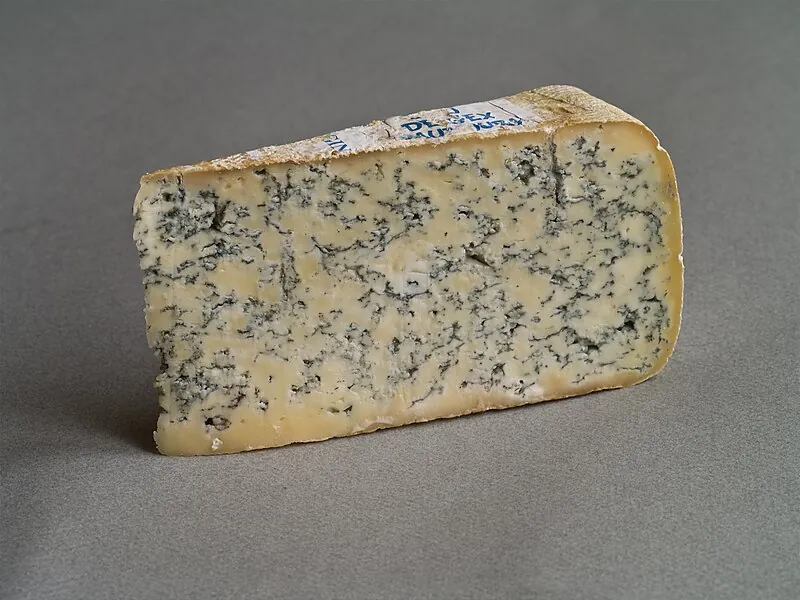
Inoculated with Penicillium roqueforti mould spores and pierced with metal needles during aging to create air channels through which the mould grows. The blue-green veining throughout the paste produces a sharp, piquant, intensely flavoured cheese.
- Roquefort: Made from Lacaune sheep's milk, aged in the natural caves of Combalou near Roquefort-sur-Soulzon in southern France. PDO protected. Sharp, salty, with a distinctive sheep milk richness under the mould flavour.
- Stilton: The English blue, made only in Derbyshire, Nottinghamshire, and Leicestershire from pasteurised cow's milk. Milder and creamier than Roquefort; the traditional Christmas cheese in the UK.
- Gorgonzola: Italian PDO, Lombardy. Gorgonzola dolce (young, creamy, mild) and Gorgonzola piccante (aged, crumbly, pungent) are two distinct products despite sharing the name.
Related: How to Make Cheese at Home: A Beginner's Guide | Dairy and Gut Health: What Fermented Dairy Does to Your Microbiome