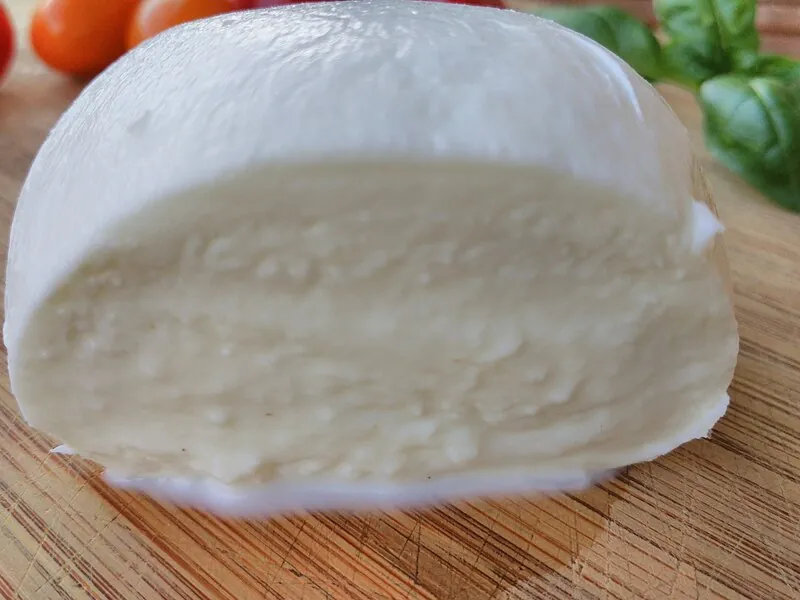
When you bite into a genuine mozzarella di bufala Campana — not the industrially produced cow's milk imitation found in most supermarkets, but the real thing from the plains of Campania, made that morning from the milk of water buffalo — something significant happens. The cheese yields with a slight resistance, releasing a burst of fresh, faintly sour, intensely milky liquid with a richness that cow's milk mozzarella simply cannot approach. The difference is not subtle. It is the difference between a photograph and the actual place. And the reason comes down entirely to the extraordinary properties of water buffalo milk.
Water Buffalo Milk: The Numbers
Water buffalo (Bubalus bubalis) produce milk that makes cow's milk look thin by comparison:
- Fat: 7–8% (vs. 3.5% for cow's milk)
- Protein: 4.5–5% (vs. 3.2% for cow's milk)
- Calcium: Significantly higher than cow's milk
- Total solids: ~17–18% (vs. ~12–13% for cow's milk)
This exceptional richness means that buffalo milk produces nearly twice the yield of cheese per litre compared to cow's milk. It also means the resulting cheese has a creaminess, weight, and flavour depth that is structurally impossible to replicate with cow's milk — no matter how fresh or high-quality that cow's milk is.
The History of Buffalo Dairy in Italy
Water buffalo were introduced to southern Italy, most likely from Asia via the Middle East, during the early medieval period — possibly brought by Arab traders or Norman rulers of Sicily in the 11th–12th centuries. The marshy, humid lowlands of Campania (particularly the areas around Caserta, Salerno, and the Sele River plain) proved ideal habitat, and buffalo herds became established in the region over centuries.
The earliest documented reference to mozzarella made from buffalo milk dates to the 12th century, when monks at the monastery of San Lorenzo in Capua reportedly served it to pilgrims. By the 16th century, bufala mozzarella was being sold at markets throughout the Kingdom of Naples. Today, approximately 200,000 water buffalo are raised in southern Italy, primarily in Campania, Lazio, Puglia, and Molise — making Italy one of the world's most significant buffalo dairy nations outside South Asia.
Mozzarella di Bufala Campana DOP
Since 1996, mozzarella di bufala Campana has held DOP (Denominazione di Origine Protetta) status — meaning it can only be produced within a defined geographic area of Campania and adjacent provinces, using milk from registered buffalo herds, following strictly defined production methods.
The production process is a form of skilled artisan dairy work:
- Fresh buffalo milk is collected and acidified (either through natural acidification or the addition of whey from the previous day's production)
- Rennet is added; the curd is cut and heated
- The curd is then spun and stretched (the pasta filata technique — the same process used for provolone and scamorza) in hot water until it develops its characteristic elastic, smooth texture
- The stretched mass is pulled and pinched (mozzata — from which the name derives) into individual balls
- The fresh balls are placed in a lightly salted brine where they firm slightly and develop their final flavour
Authentic DOP mozzarella di bufala should be eaten the day it is made, or at most within 2–3 days. Beyond that, the delicate fresh character begins to deteriorate — which is why the supermarket version vacuum-sealed in plastic is never quite the same experience as cheese purchased directly from a producer.
How to Eat Mozzarella di Bufala
The Italian approach is minimal — and rightly so. A cheese this good needs very little assistance:
- Caprese: Sliced buffalo mozzarella, ripe summer tomatoes, fresh basil, good olive oil, flaky salt. Nothing else. The quality of each ingredient is visible.
- Plain with bread: Torn with good sourdough or a rustic Campanian loaf, nothing added — letting the milky liquid inside the cheese do the work
- With Prosciutto di Parma: The salt and fat of aged ham with the fresh creaminess of bufala is one of Italy's great flavour combinations
- On Neapolitan pizza: Added after baking (not during) to preserve its fresh character — the heat of the just-cooked pizza gently warms it without melting it into homogeneity
What it should not be: cooked for a long time, baked into a gratin, or mixed with strong flavours that overwhelm its delicate character. Treat it as you would a ripe fruit — with respect for its ephemeral perfection.
Buffalo Dairy Beyond Mozzarella
While mozzarella is the flagship, buffalo milk produces a range of notable dairy products:
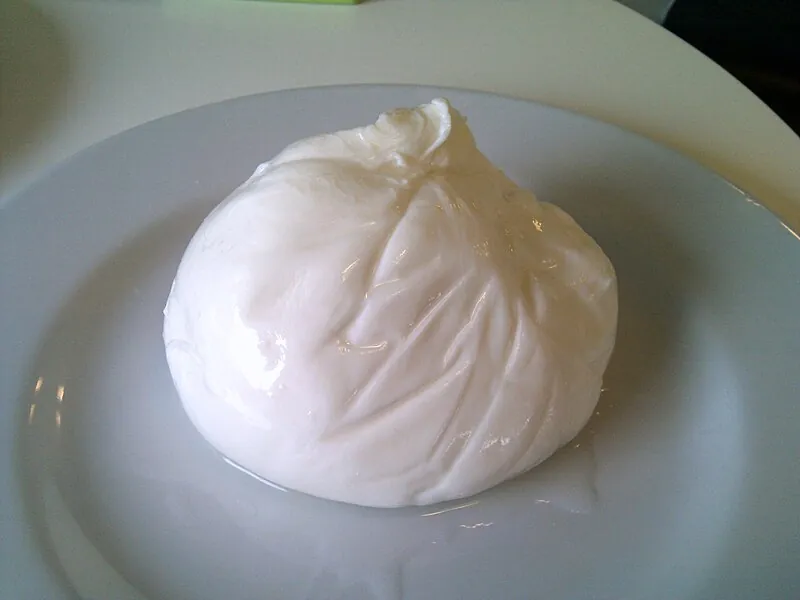
- Burrata di bufala: The spectacular fresh cheese of a mozzarella shell filled with stracciatella (shredded mozzarella in cream) — richer and more decadent than the cow's milk version
- Ricotta di bufala: Made from the whey of buffalo cheese-making — sweeter, denser, and richer than cow's milk ricotta, with a flavour complexity that transforms the humble ricotta experience
- Scamorza affumicata di bufala: Smoked buffalo milk cheese, firmer and drier than mozzarella, with a complex smoky-milky character excellent for cooking
- Buffalo milk yoghurt: Increasingly available, enormously rich, with a thickness and flavour depth that makes Greek yoghurt seem light
- Caciocavallo di bufala: A semi-hard, aged pasta filata cheese of increasing artisan production in Campania
Buffalo Dairy Globally
Italy's buffalo dairy tradition is exceptional within Europe, but globally, water buffalo are the dominant dairy animal in South Asia. India and Pakistan together account for approximately 57% of world buffalo milk production — where it is the standard milk for much household consumption, the basis for ghee, paneer, and yoghurt, and a cultural staple rather than a luxury ingredient. China, Egypt, and Nepal also have significant buffalo dairy sectors. Italy's contribution is comparatively small in volume but extraordinary in quality and cultural significance.
Related: Sheep's Milk: The World's Richest Dairy | The Art of Fresh Cheese: Ricotta, Burrata, and Fromage Blanc