Search for "Butterkäse" in English-language food media and you will find almost nothing useful: a few passing mentions in cheese board guides, the occasional listing in a German grocery description, rarely any substantive account of what the cheese is, how it is made, where it comes from, or why it tastes the way it does. This gap in English food writing is surprising given that Butterkäse is one of the most widely consumed cheeses in German-speaking Europe, a staple of German supermarket dairy aisles from Bavaria to Schleswig-Holstein, and a cheese whose flavour profile makes it genuinely excellent for a wide range of culinary applications that English-language cooks would benefit from knowing. This post aims to be the definitive English reference on Butterkäse: its history, production, regional variants, flavour profile, and how to use it.
What Is Butterkäse?
Butterkäse (pronounced approximately "BUTER-kay-zeh") translates directly as "butter cheese" in German, and the name reflects two things simultaneously: the cheese's buttery yellow colour and its distinctively rich, slightly sweet, buttery flavour. It is a semi-soft to semi-hard cheese made from whole pasteurised cow's milk, with a fat content that is high by the standards of everyday cheeses: typically 45 to 55 percent fat in dry matter (F.i.T., Fett in der Trockenmasse, the standard German and European measurement of cheese fat content), though some versions reach as high as 60 percent F.i.T. under the designation "Rahmkäse" (cream cheese, used differently from American usage).
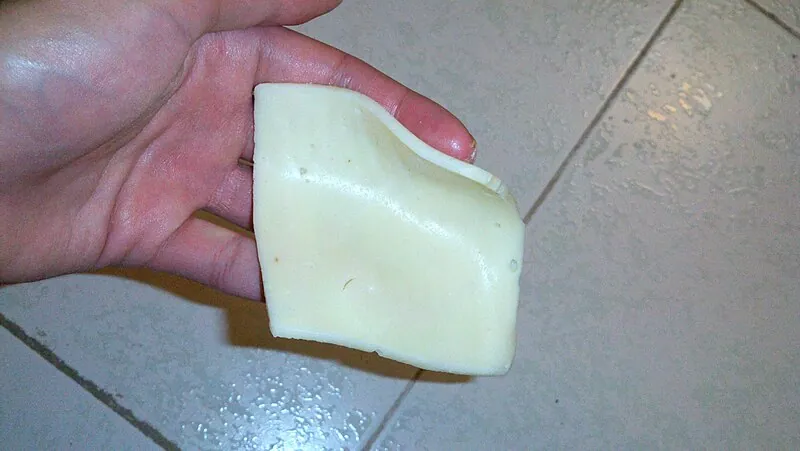
The texture of Butterkäse ranges from smooth and yielding (in the youngest examples, aged 3 to 6 weeks) to slightly firmer and more sliceable (at 8 to 12 weeks). The rind, when present on artisan or farmhouse versions, is thin and yellowish; mass-produced Butterkäse is typically sold rindless, as a block or wheel wrapped in plastic film. The paste is pale to deep yellow, smooth, and largely without holes, though very small mechanical openings (Bruchlöcher) from the curd-handling process may be present. It has no blue veining, no significant external mould character, and no washed-rind bacterial contribution to its aroma: Butterkäse is a clean, mild, dairy-forward cheese.
The flavour at its best is fresh, lactic, milky, slightly sweet, and distinctly buttery, with a long, rich finish that reflects the high fat content. There is no sharpness, no bitterness, no pungency, and very little of the complex aged character of cheeses like Appenzeller or Bergkäse (which are produced in the same geographic areas but aged far longer and with more intensive cultures). This mildness is not a deficiency but a design: Butterkäse is intentionally produced to be a cheese that is accessible, food-friendly, and pleasurable without requiring education or acquired taste. In this respect, it occupies in German cheese culture a role broadly analogous to Havarti in Danish culture or Fontina in Italian: a quality everyday cheese that is genuinely enjoyable rather than challenging.
History and Origins
Butterkäse is first documented in German-language dairy records of the 19th century, when industrialisation of the Bavarian and Austrian dairy sector produced a need for standardised, high-volume cheeses suitable for urban markets. The Allgäu region of southern Bavaria, which had been producing Alpine cheeses including Emmentaler and Bergkäse since medieval times, expanded its production in the late 19th century to include shorter-aged, milder cheeses suitable for the growing industrial working class of Munich and other Bavarian cities who wanted affordable, nutritious dairy that did not require the long ageing times (and associated cost) of traditional Alpine cheeses.
The term "Butterkäse" appears in Bavarian and Austrian dairy handbooks from the 1870s and 1880s as a descriptor for cheeses produced with a high cream content or from milk to which cream was added, producing a richer, more buttery result than standard milk cheeses. By the early 20th century, the name had become standardised for a specific style of semi-soft cheese with defined fat content parameters, and it appears in the first comprehensive German cheese taxonomy produced by the Deutsche Landwirtschaftliche Gesellschaft (German Agricultural Society) in 1909.
Austrian Butterkäse, produced primarily in Vorarlberg, Tyrol, and Styria, developed in parallel with Bavarian production and retains slightly different stylistic characteristics; Austrian versions tend to have a slightly more pronounced flavour and a firmer texture than the milder Bavarian mainstream, reflecting the influence of Alpine milk from higher-altitude pastures and the tradition of longer ageing in some Austrian farmhouse production.
Production: How Butterkäse Is Made
Butterkäse production follows the general pattern of semi-soft washed or pressed-curd cheeses. The specific steps that distinguish it from other mild cheeses in the same family (Gouda, Tilsiter, Havarti) are the milk richness (whole milk, often with added cream for the highest-fat versions), the relatively brief ageing period, and the gentle handling of the curd to preserve the delicate flavour compounds that give the cheese its characteristic fresh-dairy character.
Pasteurised whole cow's milk (from German and Austrian dairy farms, predominantly Holstein-Friesian and Braunvieh breeds in Bavaria and Austria) is warmed to approximately 30 to 32 degrees Celsius, inoculated with a mesophilic starter culture of Lactococcus lactis and Leuconostoc mesenteroides, and renneted with calf rennet or microbial rennet. The curd is cut into pieces of approximately 1 to 1.5 centimetres (a relatively large cut that retains more moisture in the final cheese than a finer cut would), washed with hot water to remove lactose and reduce acidity (a step called "washing the curd" that is characteristic of many European semi-soft cheeses and responsible for their milder, sweeter flavour), and pressed into moulds at moderate pressure.
The pressed wheels are brined in a salt solution (typically 18 to 20 percent sodium chloride) for 12 to 24 hours, then moved to ripening rooms at approximately 10 to 14 degrees Celsius and 90 to 95 percent relative humidity. Unlike washed-rind cheeses, the surface of Butterkäse during ripening is not actively treated with bacterial washes; any surface bacterial growth is controlled by wiping and, in many industrial production contexts, by brief surface treatment to maintain the clean rind appearance that German consumers prefer in everyday cheese products.
The minimum ageing period for mass-produced Butterkäse is approximately 3 to 4 weeks. Most retail Butterkäse sold in German supermarkets has been aged for 4 to 8 weeks; artisan farmhouse Butterkäse from small producers may be aged 10 to 14 weeks, developing a more complex flavour while retaining the fundamental buttery, mild character.
Regional Styles Within the Butterkäse Family
While Butterkäse is not a protected designation of origin (unlike Allgäuer Bergkäse or Allgäuer Emmentaler, which hold EU PDO status), there are meaningful regional variations within the broader category.
Allgäuer Butterkäse (Bavarian)
Produced in the Allgäu region of Bavaria, this is the classic Southern German version: pale yellow, smooth, mildly lactic, with a clean, fresh-dairy finish. Leading producers include Käserei Champignon (the Füssen-based producer known internationally for its Champignon brand mushroom-bloom soft cheeses) and Molkerei Berchtesgadener Land, one of the Allgäu region's largest and best-regarded dairy cooperatives. Berchtesgadener Land Butterkäse is sold in German supermarkets including REWE, Edeka, and Kaufland at approximately 2.50 to 3.50 euros per 200-gram portion and is made exclusively from milk of member farms that meet the cooperative's Bioland or organic equivalent standards.
Österreichischer Butterkäse (Austrian)
Austrian producers in Vorarlberg and Tyrol make a slightly firmer, more flavourful Butterkäse that reflects the milk of Alpine-grazed cattle. The Vorarlberger Käse marketing cooperative promotes several mild cheeses in this style for export to German, Swiss, and Dutch markets. Austrian Butterkäse tends to have a slightly yellower colour and a marginally more pronounced lactic tang than its Bavarian equivalent, reflecting both the milk profile and the somewhat longer ageing traditions of Austrian farmhouse production.
Norddeutscher Butterkäse (North German)
North German dairy cooperatives including Arla's German operation (Arla Foods Deutschland) and Hochland produce Butterkäse for the northern German market from Holstein milk. These northern versions tend to be paler in colour (Holstein milk has lower beta-carotene content than pasture-heavy Alpine milk) and slightly milder in flavour, with a very clean, lactic character that some northern German consumers prefer for its greater neutrality. This version is the most commonly exported and is most likely to be found in German delicatessens in the United States, United Kingdom, and Australia.
Flavour Profile and Texture in Detail
Tasting Butterkäse attentively reveals more complexity than its mild reputation suggests. The initial impression is of fresh milk and butter, clean and sweet, without the sharpness of aged cheddar or the pungency of washed-rind varieties. As the cheese warms on the palate, secondary notes of cream, mild hazelnut, and a gentle lactic tang emerge. The fat content is immediately perceptible in the mouthfeel: the cheese is rich and coats the palate in a way that leaner cheeses do not, and the flavour lingers pleasantly rather than cutting off quickly. There is a faint sweetness from the curd-washing step, which removed much of the lactose before fermentation could acidify it fully, leaving a cleaner and sweeter background than cheeses produced without curd-washing.
The texture at four to six weeks of ageing is similar to very young Gouda: smooth, sliceable, slightly springy, and melting easily when pressed between fingers. At ten to twelve weeks, it becomes firmer and less elastic but retains the fundamental smoothness. There are no crystals, no grain, and no crumble in properly made Butterkäse at any age; if you encounter a gritty or crumbly version, it has either been over-dried or improperly stored.
Culinary Uses: Where Butterkäse Excels
Butterkäse's flavour profile and physical properties make it particularly suited to applications where a mild, rich, exceptionally smooth-melting cheese is desired.
Melting and hot applications: Butterkäse melts with exceptional smoothness and very little greasiness, making it one of the best everyday cheeses for toasted sandwiches, hot dogs (the German Käsekrainer sausage, stuffed with Emmental but often accompanied by Butterkäse on the side), gratins, and the German cheese-bread snack "überbackene Stulle" (an open-faced toast with sliced cheese melted under the grill). Its low acidity and high fat content prevent the separation that can occur with sharper, lower-fat cheeses when heated. For cheeseburgers and panini, Butterkäse produces a smoother, creamier melt than Swiss or Provolone and a less salty, less aggressive flavour than American processed cheese.
Cold platters and Brotzeit: In Bavaria and Austria, Butterkäse is a standard component of the Brotzeit (literally "bread time," the Bavarian tradition of a mid-morning or afternoon snack of bread, cheese, and cold cuts). Served sliced with Bavarian rye bread, radishes, and Weisswurst (white veal sausage), it is an entirely characteristic Bavarian eating experience. The cheese's mild flavour complements rather than competes with the other components of the board.
Children's food: In German households, Butterkäse is often the preferred cheese for children because of its mild, approachable flavour and its lack of the strong aromas or intensities that many children find off-putting in sharper cheeses. It is sold in pre-sliced form specifically marketed for children's sandwiches (Schulbrot) by major German dairy brands.
Fondues and cheese sauces: Butterkäse can serve as a base for mild cheese sauces or fondue blends where a creamy, non-assertive background dairy flavour is wanted. It is sometimes combined with Appenzeller or Bergkäse in mixed fondues where the Butterkäse contributes smoothness and body while the more flavourful cheeses carry the aromatic profile.
Availability Outside Germany and Austria
In the United States, Butterkäse is produced domestically by a handful of Wisconsin cheesemakers, most notably Widmer's Cheese Cellars in Theresa, Wisconsin, a family-owned creamery established in 1922 that has made Butterkäse continuously since the early 20th century when German and Austrian immigrant cheesemakers brought the style with them. Widmer's Butterkäse retails at specialty cheese shops and online through Murray's Cheese for approximately 8 to 12 dollars per pound.
In the United Kingdom, German Butterkäse is occasionally stocked by German food importers and specialty delicatessens, particularly in cities with German communities (London, Manchester, Edinburgh). The German discount supermarket chains Aldi and Lidl, both of which operate large UK networks, occasionally stock German-style semi-soft cheese under their own labels in styles consistent with Butterkäse, though not always labelled as such.
For home cooks outside Germany seeking a substitute in recipes that call for Butterkäse, the closest readily available alternatives are: young Gouda (aged 4 to 6 weeks), mild Havarti (Danish semi-soft, very similar in flavour and melt behaviour), and Münster (the American version of the French Munster cheese, milder than the original and similar in fat content). None is identical, but all share the fundamental mild, creamy, excellent-melting character of Butterkäse at commercially accessible price points.
Why Butterkäse Deserves More Attention
The near-total absence of Butterkäse from English-language food writing reflects a broader gap in international cheese coverage: German and Austrian cheese traditions are poorly represented in the English-language specialty cheese world, which has historically focused on French, Italian, British, and to a lesser extent Spanish cheeses as the prestige categories. This leaves a rich tradition of Central European cheesemaking largely invisible to non-German audiences.
Butterkäse is the entry point into that tradition: approachable, delicious, and genuinely useful in the kitchen. Its mild richness and exceptional melting behaviour make it one of the most functional everyday cheeses for cooks who want quality without complexity. Its high fat content delivers genuine sensory pleasure, and its clean, fresh-dairy flavour pairs with almost any accompaniment from apples and rye bread to pretzels, ham, and the full range of German cured meats. Learning to cook with Butterkäse is, in miniature, an introduction to the food culture of southern Germany and Austria: generous with dairy, attentive to craft, and less interested in spectacle than in deep, unpretentious pleasure.
Related: Danish Dairy: Lurpak, Havarti, and the Cooperative Tradition That Built a Food Culture | Grana Padano vs Parmigiano-Reggiano: Italy's Two Great DOP Hard Cheeses Compared