Quark is the most consumed fresh dairy product in Germany that most English speakers have never heard of. The word itself comes from an old Slavic term for "curd" and has nothing to do with the subatomic particle named by physicist Murray Gell-Mann, who took the word from James Joyce's Finnegans Wake. German households consume approximately 4.2 kilograms of quark per person per year, making it a staple of breakfast tables, baking projects, and fitness-focused meal plans across the country. Quark occupies a nutritional and culinary space that no single product in the English-speaking world has traditionally filled: it is thicker and higher in protein than Greek yogurt, milder and smoother than cream cheese, lower in fat than ricotta, and more versatile than cottage cheese. As European discount supermarket chains have expanded into the UK and North America, quark has quietly appeared on shelves where it had never been sold before, and the audience discovering it is growing.
What Quark Is and How It Differs from Similar Products
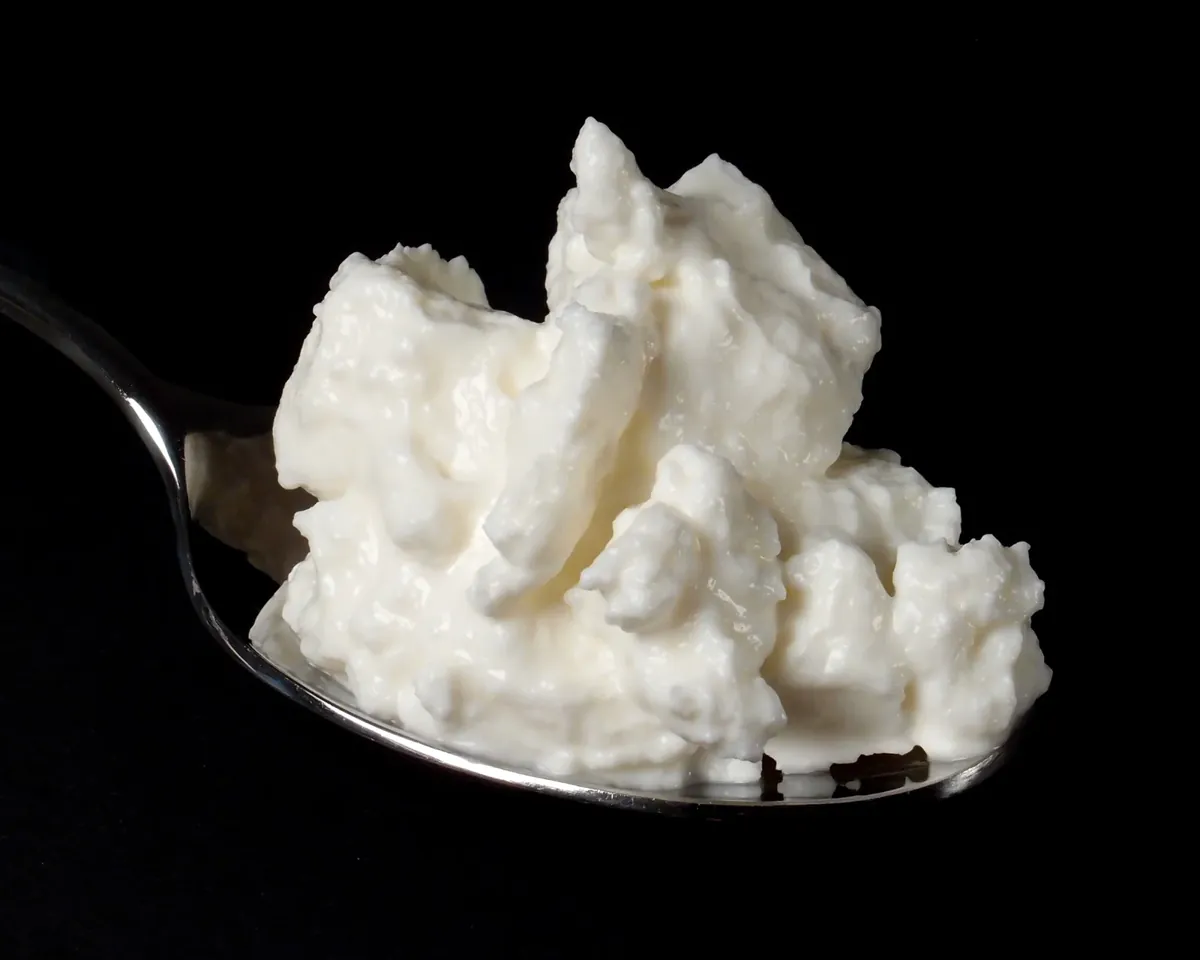
Quark is a fresh, acid-set dairy product made by warming soured milk until it curdles, then straining the whey. Unlike yogurt, which is fermented at controlled temperatures with specific starter cultures and then sold as-is, quark undergoes a secondary straining step that removes a significant portion of the liquid whey, concentrating the protein. Unlike cream cheese, no stabilisers or gums are added, and the fat content of low-fat quark is extremely low (0.2 percent) compared to cream cheese's 33 percent. The result is a product that sits between yogurt and cream cheese in texture and between skyr and fromage blanc in flavour.
Its Eastern European and Northern European counterparts illustrate how widely this product type has been adopted in dairy cultures across the continent. Tvorog (Russia and Ukraine) is almost identical to quark, typically with a slightly grainier texture. Fromage blanc (France) is quark's closest Western European equivalent, though it is usually smoother and sometimes made with a higher fat content. Skyr (Iceland) is similar but is technically classified as a fresh cheese due to the addition of a small amount of rennet during production; quark uses only bacterial acidification, no rennet. Despite these regional variations, all these products represent the same basic concept: an everyday, high-protein, low-fat fresh dairy staple that German, Polish, Russian, French, and Icelandic home cooks use in the same way that British and American cooks use butter and cream cheese.
Nutritional Profile: The Numbers That Are Driving Its Popularity
Low-fat quark's nutritional profile is genuinely exceptional among dairy products. Per 100g:
- Protein: 11–13g (low-fat quark is typically 12g; higher than Greek yogurt at 8–9g and skyr at 10–11g)
- Fat: 0.2% (low-fat) to 11.4% (Sahnequark, or cream quark)
- Carbohydrates: 3–4g (from residual lactose)
- Calories: 60–70 kcal per 100g for low-fat quark
- Calcium: approximately 95mg per 100g
Against its direct competitors in the protein-dense dairy category, low-fat quark wins on protein density. A 200g serving of low-fat quark provides 24g of protein, 4g of carbohydrates, and approximately 120 kcal. A 200g serving of 2% fat Greek yogurt provides 18g of protein and 170 kcal. A 200g serving of low-fat cottage cheese provides 20g of protein but with a much lumpier texture that many people find unpleasant. Quark's smooth, creamy consistency makes it more palatable as a standalone food and more versatile in cooking.
Traditional German Uses
Quark mit Leinöl (Quark with Linseed Oil)
This is one of the oldest and most distinctive traditional German preparations: plain low-fat quark mixed with raw linseed (flaxseed) oil, often served with boiled potatoes. The combination, associated with Central European folk nutrition for centuries, became well known in the 20th century through the work of German biochemist Johanna Budwig, who promoted the combination of quark's sulphur-containing proteins and linseed oil's omega-3 fatty acids as therapeutically beneficial. The scientific basis for Budwig's specific claims is contested, but the flavour combination is genuinely good: the nutty, slightly bitter oil lifts the plain quark into something complex and satisfying.
Käsekuchen (German Cheesecake)
German cheesecake is made with quark, not cream cheese, and the difference produces a fundamentally different product from American-style cheesecake. Quark's lower fat content and higher protein produce a lighter, airier texture that rises slightly during baking and then settles. The flavour is distinctly more tangy and less rich than a cream cheese cheesecake. The classic Käsekuchen uses a short-crust or yeast pastry base (not a biscuit crumb), and the quark filling is flavoured with vanilla, lemon zest, and sometimes raisins. A slice has approximately 250 kcal, compared to 350–400 kcal for a comparable slice of New York-style cheesecake.
Quarkkeulchen
Quarkkeulchen are traditional fried quark dumplings from Saxony, made by combining quark with egg, flour, sugar, and cooked mashed potato, shaped into small patties, and pan-fried in butter or oil until golden. They are a classic Saxon breakfast or dessert, served with apple sauce, cinnamon sugar, or sour cream. The combination of quark's protein and the potato starch produces a soft, slightly chewy interior with a crisp exterior.
Kräuterquark
Kräuterquark (herb quark) is the ubiquitous German dip and spread made by mixing low-fat quark with finely chopped fresh herbs (chives, parsley, dill), garlic, salt, and a little olive oil. It is served alongside bread as a Butterbrot topping, with boiled new potatoes, or as a dip for raw vegetables. The preparation takes five minutes and produces something considerably more flavourful than a cream cheese herb dip due to quark's acidity.
How to Make Quark at Home
The 24-hour home method requires only two ingredients and produces approximately 400g of quark from 1 litre of full-fat milk and 500ml of full-fat buttermilk.
- Combine the milk and buttermilk in a saucepan and heat gently to 38°C (body temperature). Remove from heat.
- Pour into a covered container and leave at room temperature (18–22°C) for 18 to 24 hours, until the mixture has set into a thick, wobbly curd with clear whey separation visible at the edges.
- Line a colander with four layers of cheesecloth (or a clean cotton tea towel) and pour in the curd.
- Allow to drain for two to four hours at room temperature, or refrigerate overnight for a firmer, drier quark.
The resulting quark keeps for up to five days refrigerated. The drained whey is nutritious and can be used in bread baking or smoothies. Using full-fat milk produces a richer, creamier quark; using semi-skimmed produces the low-fat version closer to German supermarket Magerquark (literally "lean quark").
Where to Buy Quark in the UK and North America
Quark has become reliably available in the UK outside specialist shops in the past decade, largely because Lidl and Aldi are German-owned discount chains that stock German dairy staples as a matter of course. Lidl's own-brand quark (both low-fat and full-fat versions) is typically priced at £0.89 to £1.19 per 250g pot and is available year-round across most UK stores. ALDI stocks it intermittently. Waitrose and Sainsbury's stock quark under their own labels, usually at slightly higher prices.
In North America, quark remains harder to find at mainstream supermarkets, though Whole Foods and specialty European delis carry it. The Vermont Creamery, a well-regarded American artisan dairy, produces a quark (listed as "fresh chèvre-style fromage blanc" in some markets) that is available through specialty retailers. Online ordering from European import food shops is an option for those without a nearby source.
The fitness and protein-focused food market is driving increased mainstream availability. As nutritional labelling has made protein content more visible to consumers, quark's extraordinary protein density relative to its calorie count is becoming a selling point that transcends its German cultural origin.
Related: Skyr: Iceland's Ancient Dairy Product | Mascarpone: Italy's Richest Cream Cheese