Cheese is the most complex and diverse category in food — a single raw material (milk) transformed by microbiology, time, and accumulated human ingenuity into over 1,800 named varieties, ranging in texture from the liquid-centre freshness of a perfectly ripe Brie to the crystalline hardness of a 48-month Parmigiano-Reggiano, in flavour from the clean lactic brightness of fresh chèvre to the almost hallucinogenic intensity of Époisses, in format from the 100g cylinder of a Crottin de Chavignol to the 80kg wheel of an Emmental. Understanding the world's greatest cheeses is partly a matter of tasting — which cannot be delegated — and partly a matter of understanding the principles by which milk becomes cheese: the role of specific bacterial and fungal cultures, the effect of ageing environments, the way milk composition from different breeds in different landscapes produces fundamentally different raw materials. This guide covers the essential cheeses by country, with honest assessments of what makes each extraordinary and how to access it at its best.
Italy: The Oldest and Most Consequential
Parmigiano-Reggiano: The Undisputed King
Italy has the most influential cheese-making tradition in the world — not because its cheeses are necessarily "better" than French cheeses in any objective sense, but because Italian cheeses, particularly Parmigiano-Reggiano and mozzarella, have been adopted globally as ingredients in dishes (pizza, pasta, salads) that have become the world's most widely eaten food formats.
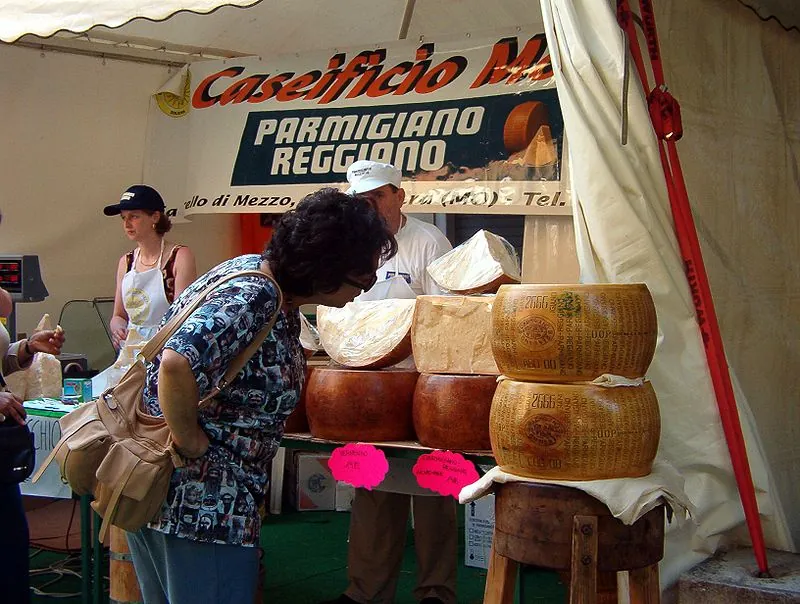
Parmigiano-Reggiano (PDO) — produced exclusively in Emilia-Romagna from the milk of Friesian cows fed on fresh grass and hay (no silage), in wheels of 35–40kg, aged minimum 12 months (most commonly 24 or 36 months, with 40-month and 48-month specialties available) — is the most complex cooked hard cheese in the world. The ageing process produces tyrosine crystals (the white granular specks visible in cut cheese), an intensely savoury umami depth from glutamate concentration, and a fragility that crumbles into shards rather than slicing — because the protein matrix has been so completely restructured by proteolysis during ageing that it no longer holds together as a coherent slice. At 36 months, Parmigiano-Reggiano smells of butter, meat broth, and aged hay; at 48 months, the flavour is so concentrated that a single shard holds the character of a full wheel.
The Italian consortium that controls PDO production employs inspectors who test every wheel with a small hammer — tapping the cheese and listening to the acoustic signature. A wheel that doesn't produce the right resonance (indicating internal fissures or gas pockets from incorrect fermentation) is rejected and sold as an inferior "gran" cheese without the Parmigiano-Reggiano name.
Grana Padano, Pecorino Romano, Taleggio, Gorgonzola
Grana Padano (PDO, produced across the Po Valley) is Parmigiano-Reggiano's close relative — similar production process but with slightly different milk regulations and shorter minimum ageing (9 months). Milder, less complex than Parmigiano, but more affordable and a legitimate grating cheese in its own right. Pecorino Romano (PDO, produced in Lazio and Sardinia from sheep's milk) is sharper, saltier, and more intense than Parmigiano — the correct cheese for carbonara and cacio e pepe, where its sharpness cuts through the egg and fat. Taleggio (PDO, Lombardy) is a washed-rind cheese of extraordinary intensity — pungent on the nose, creamy and mild on the palate, one of the great contrasts in cheese experience. Gorgonzola (PDO, Piedmont and Lombardy) is Italy's great blue — available as Dolce (young, creamy, mild blue) or Piccante (aged, crumbly, intensely blue). Piccante Gorgonzola is one of the world's finest blue cheeses.
France: The Greatest Diversity
France produces more distinct cheeses than any other country — President de Gaulle's famous complaint "How can you govern a country that has 246 varieties of cheese?" undersells the true count (currently over 400 named varieties, with some sources counting over 1,000 regional variations). The French classification system organises cheeses by type:
Comté: The Greatest Hard Cheese
Comté (PDO, Franche-Comté) is arguably the greatest hard cheese in the world — a cooked-pressed cheese aged 8 to 24+ months in cave-like affineurs in the Jura mountains. Each wheel of Comté is enormous (40–45kg) and made from the milk of Montbéliarde and Simmental cows raised on the specific flora of the Jura highland pastures. The cheese's flavour is as complex as Parmigiano but in a completely different direction: hazelnut, butter, fresh bread, and at longer ageing, a crystalline sweetness and slight crunch that is uniquely satisfying. Marcel Petite (Fort Saint Antoine, one of the world's great cheese caves, with 100,000 wheels ageing simultaneously) is the reference affineur; their selection wheels represent the finest Comté available.
Brie and Camembert: The Soft Rind Icons
Brie de Meaux (PDO, Seine-et-Marne) is the original Brie — a 3kg wheel of bloomy-rind cheese that, when perfectly ripe (soft throughout, the interior flowing but not liquid, the rind slightly reddish), is one of the most complete eating experiences in cheese. The problem: genuine Brie de Meaux, made from unpasteurised milk, is not legally importable into the United States due to FDA raw milk cheese regulations (cheeses must be aged minimum 60 days to be imported, and Brie is too young). Americans eating "Brie" in the US are eating pasteurised approximations of varying quality.
Camembert de Normandie (PDO, Normandy) — made from Normande cow milk, raw, in the characteristic white wooden box — is similar in style to Brie but smaller (250g) and with a slightly more mushroomy, deeper character. The industrial Camembert sold globally in the same wooden boxes is made from pasteurised milk and bears limited relationship to the genuine article.
Roquefort: The King of Blues
Roquefort (PDO, Aveyron) — made from raw sheep's milk in the caves of Combalou near the village of Roquefort-sur-Soulzon, aged with Penicillium roqueforti introduced through the famous "cave bread" (rye bread left to grow the mould) — is arguably the world's greatest blue cheese. The caves of Combalou maintain a specific temperature, humidity, and air circulation (the fleurines — natural air fissures) that have been the controlled environment for Roquefort ageing for at least 900 years (the cheese is documented in records from 1070). The result: a creamy, crumbly cheese of piercing blue pungency, sheep's milk richness, and a finish that lingers for minutes. Eaten with Sauternes (the classic pairing — the sweet wine's acidity and sweetness balance the salt and intensity of the cheese) is one of the great experiences in food.
UK: Cheddar, Stilton, and the Artisan Revival
Cheddar — originally produced in the Somerset village of Cheddar, where the caves provided natural temperature and humidity for ageing — is the world's most widely sold cheese style by volume, though most "cheddar" produced globally has no connection to the original. Genuine West Country Farmhouse Cheddar (PDO, produced in Somerset, Devon, Dorset, and Cornwall from local milk, made by hand) has a depth and complexity — earthy, savoury, with the characteristic "cheddaring" lactic tang — that industrial cheddar cannot approach. Montgomery's Cheddar (Manor Farm, North Cadbury, Somerset) and Keen's Cheddar are the reference producers.
Stilton (PDO, produced only in Derbyshire, Nottinghamshire, and Leicestershire) is England's great blue — a column-shaped cheese with a natural brown rind and a creamy, crumbly interior shot through with blue-green Penicillium channels. At its best (Colston Bassett Stilton, aged to proper maturity), Stilton is intensely complex — savoury, slightly sweet, deeply blue without the sharpness of Roquefort. The classic Christmas service: a wheel of Stilton, a bottle of Vintage Port (the pairing of Stilton and Port is one of the most harmonious in food), walnuts and quince paste.
Switzerland, Spain, and the Netherlands
Gruyère (PDO, Switzerland) — the workhorse of mountain cheese, essential for fondue and French onion soup, excellent on its own at 12–18 months ageing. The alpage (alpine summer pasture) versions — made only in summer from the milk of cows grazing the high meadows — have an extraordinary floral complexity from the mountain herbs in the diet. Appenzeller (Switzerland) is washed with a herbal brine whose exact composition has been kept secret by the dairy cooperatives since 1380 — one of the world's oldest commercial food secrets.
Manchego (PDO, Spain) from Manchega sheep — buttery, slightly tangy, piquant at 12+ months ageing, with the distinctive basket-weave rind impression. Idiazabal (PDO, Basque Country and Navarre) is a smoked or unsmoked sheep's milk cheese of considerable character — the smoked version with aged Txakoli white wine is the Basque cheese experience.
Gouda (Netherlands, particularly aged Oud Amsterdam and Boerenkaas farmhouse Gouda) aged 12–24+ months develops the same tyrosine crystal crunch as aged Parmesan and a sweet, butterscotch depth that makes it one of the world's most approachable hard cheeses. Young industrial Gouda is entirely different — mild and undistinguished.
How to Build a Cheese Board
The principles of a good cheese board:
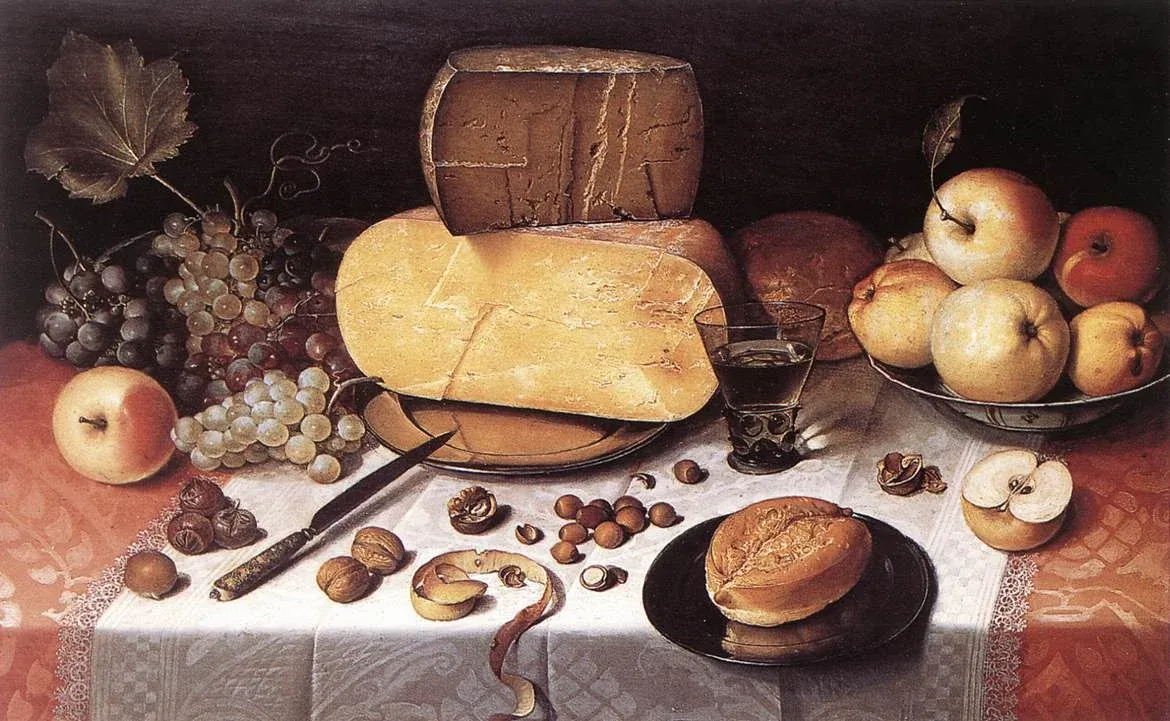
- Variety of type: At least one fresh/soft (chèvre, Brie), one semi-hard (Comté, Manchego), one hard (Parmigiano, aged Cheddar), one blue (Gorgonzola, Stilton). Maximum contrast of texture and flavour.
- Temperature: Cheese should be served at room temperature, not refrigerator-cold — allow 45–60 minutes out of the refrigerator. Cold suppresses flavour release dramatically.
- Accompaniments: Honey with blue cheese and aged cheese; quince paste (membrillo) with manchego and hard cheeses; walnuts and hazelnuts with blues and semi-hards; fresh or dried fruit with soft cheeses.
- Order: Taste from mildest to strongest — ending with the blues and most pungent washed-rinds.
Related: Goat Milk: The World's Most Widely Consumed Dairy | Milk and Chocolate: The Perfect Partnership